
Temperature with intestinal dysbiosis in adults and children: can it be, is it worth fighting?
On third stages of dysbiosis sometimes the patient's body temperature rises. The severity of the disease is determined by the doctor, but there are some signs that the stage of the disease has passed a relatively safe stage. Temperature 37 is not considered critical. Unfortunately, on the basis of such a complaint, the patient will not be issued a certificate of incapacity for work.
Dysbacteriosis is not considered an officially recognized disease. Classify according to section K59.9 or K63.8. hence the appropriate attitude. In the west, they are firmly convinced that colon dysbiosis is not a disease, and an increase in temperature is impossible.
Content
-
1 Severity of dysbiosis
- 1.1 First degree
- 1.2 Second degree
- 1.3 Third degree
- 2 Fever and fever
- 3 Prescription of antipyretic drugs
- 4 Emergencies
- 5 Than to reduce
Severity of dysbiosis
In hospitals of the Russian Federation, it is customary to follow the classification given by I.N. Blokhina in 1981. There are three grades dysbiosis of the large intestine
, depending on the severity of the disease. Temperature accompanies dysbiosis not constantly, but cases of its increase are described.
First degree
The first degree of the disease lasts without clinical symptoms or manifestations are minimal. Examples of typical complaints:
- Decreased appetite.
- Flatulence.
- Change in body weight.
- Constipation.
- Uneven stool color.
In bacteriological examination of feces, anaerobes dominate. Bifidobacteria and lactobacilli, when diluted, show a concentration of 10 to the ninth degree. There is a decrease in certain strains to the eighth and seventh degrees. E. coli deviate from the norm by an order of magnitude up or down. The population contains altered forms (more than 15% in total). When sowing opportunistic bacteria, the number does not exceed ten thousand. units.
Second degree
At the second stage of dysbiosis, similar symptoms appear, but life becomes noticeably harder. Gastrointestinal tract worries, does not allow sleep. Clinical signs:
- Diarrhea.
- Constipation.
- Flatulence.
- Dyspepsia.
At the second stage, the production of B vitamins is disrupted. A number of indicative signs develop: anemia, hypocalcemia. Feces contain anaerobes approximately equal to aerobes, which is abnormal. When sowing opportunistic bacteria, the density reaches ten to the seventh degree. Normal types of Escherichia coli are replaced by atypical ones (lactose-negative, hemolyzing, etc.).
Third degree
At a new stage, dysbiosis passes into a decompensated stage. Clinical manifestations cease to be general in nature, are determined by the bacteria that caused the malaise. Excessive reproduction of staphylococcus goes along the path of enterocolitis. Intoxication is not recorded. Periodically, the temperature rises to 39 degrees Celsius, chills, sweating appear. In the abdomen - constant or throbbing pain, gases constantly go off, sleep and appetite are disturbed. Loose stools are frequent - up to 10 times a day, admixtures of blood and mucus are noticeable.
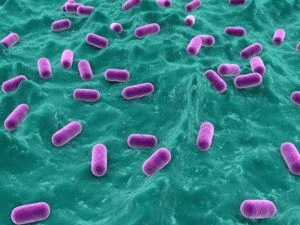
The development of flora from the opportunistic family is accompanied by perforation of the intestinal walls, septicopyemia. Stool analysis is dominated by aerobes. Bifidobacteria and lactobacilli disappear completely. Dominance is often noted:
Bifidobacteria and lactobacilli
- Proteus.
- Staphylococcus.
- Klebsiell.
- Candida yeast.
- Clostridia.
- Pseudomonas aeruginosa.
It is characteristic that the identified strains are not afraid of antibiotics. The development of the disease varies. The variant of staphylococcus is long in time, the symptoms are relatively weak, the treatment is difficult. The patient is recovering with difficulty. Dysbacteriosis caused by enterococci, enterobacteria, Pseudomonas aeruginosa does not differ in violent symptoms. Weak appetite, fever, pain in the abdomen. The stool is variable, there is a lot of mucus, the abdomen is swollen, there is soreness and spasm in the sigmoid colon.
Fever and fever
From what has been said, it is clear that the temperature does not rise in all cases, it can be significant. Doctors note that the bar usually does not exceed 39.5 degrees Celsius. Pediatricians believe that this is not dangerous for children (older than 3 months), with high temperature tolerance.
The increased temperature is due to the presence of inflammation. This is a general clinical sign of infection control. Many patients think that when the mercury column of the thermometer reaches the level of 38 degrees, it is urgent to take action. Action plan if the temperature is manifested in dysbiosis:

- A mark within 37 degrees indicates that the body is aware of the disease and has taken control measures. There is no need to knock down the temperature. General measures are taken to cure (rationalizing the diet, taking medications, prebiotics and probiotics, intoxication).
- When the mark reaches 37 degrees, vomiting is sometimes observed. The first step is to eliminate the signs of dyspepsia. Sorbents that absorb toxins, which are the primary sign of changes in the parameters of the body, help. Then the temperature is measured.
- Upon reaching the level of 38, it is worth for the first time to seriously think about reducing the degree (detailed recommendations are given below in the text). This state of affairs suggests that the body cannot cope with the invasion, additional help is needed Along the way, supplements, food enzymes are taken, the cause of hyperthermia is eliminated.
- When the bar has exceeded 39, you need to call an ambulance so that the doctors remove the fever with an injection.
Prescription of antipyretic drugs
Antipyretics are prescribed in these cases:
- Anamnesis with fibril cramps (extreme expression of muscle tremors, close to epileptic in appearance) - when reaching 38 degrees Celsius.
- The presence of diseases of the cardiovascular system, lungs - when reaching 38.5 degrees.
- Infants up to 3 months - upon reaching 38 degrees.
From the above, the conclusion is that the temperature with dysbiosis does not require a decrease in each case.
Emergencies
When the temperature has exceeded 39 degrees, it is impossible to postpone the reduction measures. Signs (in children):
- The thermometer shows 40 degrees Celsius and above.
- The skin is variegated, grayish-lilac, or marbled.
- The extremities are cold, despite the general high body temperature.
- Violation of blood circulation.
Than to reduce
Dysbiosis is characterized by a peculiarity: not every medicine is absorbed. It is good if the absorption of the drug occurs in the stomach. Aspirin should not be used. Phenacetin, amidopyrine, analgin (metamizole sodium) are not suitable. In the latter case, exceptions are likely. For example, with special indications. Cefekon and salicylamide are not suitable for children.
Instead, you should apply:
- Paracetamol.
- Ibuprofen.
Temperature reduction is carried out using a lytic mixture (for injection), which includes the following components:
- Pipolfen (2.5%).
- Analgin (50%).
- Papaverine (2%).