
Dysbiosis degrees: 1, 2, 3, 4 and their differences
The literature often describes the degree of intestinal dysbiosis. The authors disagree, describing each degree in different ways. In one-year-old children, dysbiosis is constantly present, adding confusion. The only thing on which the researchers are unanimous is the number of degrees. The authors count four or three. The concept should not be confused with the stages of dysbiosis (stages of development).
Let's try to outline the differences according to different sources. In the OST, more attention is paid to the composition of the intestinal flora, analyzes and the clinical picture, and there is no information about the disease. The degree of dysbiosis is not described, the standard is not fixed. The doctor's work would be relieved if the doctor knew: grade 2 dysbiosis is characterized by such signs, and the first - by others.
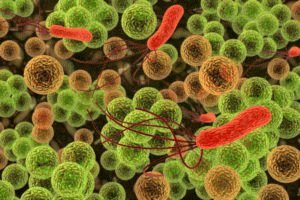
Intestinal dysbiosis
Content
-
1 Microbiological disorders
- 1.1 First degree
- 1.2 Second degree
- 1.3 Third degree
- 1.4 Fourth degree
- 2 Phases and stages
- 3 Clinical manifestations
- 4 Severity and stages
Microbiological disorders
The disease consists in an imbalance in the intestinal flora. The degree of dysbiosis is characterized by the density of the intestinal population. Each strain has unique characteristics, and although the biocenosis is unique for each person on the planet, it is not difficult to identify the average figures by region.
The classification in question is highly dependent on age. The compilers divide people into under sixty years of age and retirees. The content of individual strains in both groups differs by an order of magnitude.
First degree
Bifidobacteria colonize the colon completely. In most cases, the pathogenic flora takes a place from the named group of bacteria, provoking a decrease in the component. For the first stage, researchers characterize the number:
- Decrease in population density in people up to 60 years old - up to 100 million. units in 1 gram.
- In people over 60 years old - up to 10 million. units in 1 gram.
The number of Escherichia is changing:
- Drops to 1 million
- Rises to 10 billion
The number of lactobacilli is falling:
- Up to 1 million in persons under 60 years of age.
- Up to 100 thousand in persons over 60 years of age.
These changes are alarming signs showing the development of dysbacteriosis of the 1st degree.
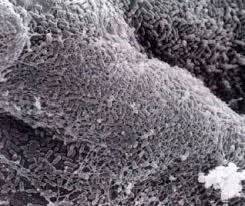
Dysbiosis research
Second degree
Under 60:
- Reducing the population density of bifidobacteria to 10 million. (CFU / g).
- Reducing the population density of lactobacilli to 100 thousand.
- An increase in the concentration of opportunistic flora (hemolytic Escherichia) up to 10 million
- Associations of conditionally pathogenic flora at a concentration of up to 100 thous. units.
Over 60 years old:
- Decrease in the population density of bifidobacteria to 1 mln. units.
- Reducing the population density of lactobacilli to 10 thousand. units.
- Detection of opportunistic flora at a concentration of 100 thous. units.
The criteria for normality vary greatly with age.
Third degree
It differs from the second in a greater concentration of pathogenic flora. The rest of the signs are repeated. Regardless of age, the content of opportunistic bacteria reaches 10 million. units per gram.
Fourth degree
Rarely present in the literature. Researchers claim that during this period, the anaerobic obligate flora disappears completely.
Phases and stages
Doctors say that 90% of the country's population suffers from dysbiosis. The term “suffering” is perhaps a slight exaggeration, because people are not aware of the problem they have acquired. This is the first stage of the disease, called compensated. There are no symptoms, there is a chance that the balance will be restored on its own, while observing a rational daily regimen. The compensated stage corresponds to the latent phase, when the latent course of the disease occurs.
At the subcompensated stage, the first symptoms appear. Diarrhea is interspersed with constipation, sometimes the temperature rises a little, abdominal pains appear, migraines torment. The next stage is decompensated, the body's defenses are noticeably weakened. Together with the subcompensated, it forms the clinical phase: the period when the doctor's help is required. Metabolism is impaired, immune responses are abnormal.
Sometimes there are four phases. The differences are tangible:
- At the initial stage, a certain strain of microflora grows.
- Dysbacteriosis of the second degree brings about the disappearance of a number of populations, which are replaced by others. The emerging cultures are predominantly opportunistic: proteas, fungi (yeast).
- At the third stage, the flora appears in atypical habitats.
- Dysbacteriosis of the 4th degree is characterized by a change in the virulence (danger) of normal strains.
Clinical manifestations
Note that there is often no parallelism between phases and microbiological disturbances. Analyzes show that the process has already started, the patient does not express any complaints. Much depends on the characteristics of the organism. Some of the clinical manifestations of dysbiosis:
- Weight loss.
- Intoxication.
- Dehydration.
- Indigestion.

Separate symptoms:
- Heartburn.
- Belching.
- Nausea, vomiting.
- Flatulence.
- Bloating.
- Rumbling.
- Constipation or diarrhea.
- Decreased appetite.
- Bad taste in the mouth (usually metallic).
- Pain, colic.
- Dry skin, mucous membranes.
- Peeling of the skin.
- Allergic reactions.
- Migraine.
- Eternal weariness.
- Bad sleep.
- Feces of abnormal consistency, appearance and odor.
To this we add the signs of a lack of vitamins: fatigue of vision, poor blood clotting, and so on.
Severity and stages
According to I.N. Blokhina, there are three degrees of severity of dysbiosis, coinciding with the stages. So the doctor wrote in 1981:

- The first degree of dysbiosis is called compensated. Clinical manifestations are absent, with few exceptions. Flatulence is combined with constipation, appetite is almost completely absent. In children, during bacteriological analysis of feces, the anaerobic form dominates. Sometimes there is a decrease in the concentration of the population of Escherichia coli.
- The second degree corresponds to the subcompensated stage. Signs from the list above are periodically observed. Symptoms of a lack of vitamin B and calcium appear. Anaerobes are depressed. The population density is compared to that of aerobes. Conditionally pathogenic flora is widespread everywhere (up to 10 mln. units). E. coli has been replaced by a mostly atypical variant.
- The third degree of severity corresponds to the decompensated stage. Symptoms depend on the composition of the flora in the gut. The dominance of staphylococcus, for example, follows the path of entercolitis. Periodically, the temperature rises to 39 degrees Celsius, diarrhea torments, sometimes with blood or mucus.
Treatment regimens are given according to these severities. For example, grade 3 dysbiosis requires the urgent use of bacteriophages or antibiotics to suppress the pathogenic flora. In the previous stage, the treatment is different. Dysbacteriosis of the 2nd degree, first of all, requires correction of the flora with the help of prebiotics (feeding).
It is clear from what has been described that intestinal dysbiosis so complex that the authors cannot describe the disease in a certain way. The enemy of health is one, but there are differences in the description, and there is no single classification.


