
Dysbacteriosis in infants: symptoms, causes and treatment
Dysbacteriosis in infants differs in the nature of the course. A 2 month old child cannot complain and explain the localization of pain, therefore sometimes it comes to emergency conditions when the symptoms of dysbiosis in infants become truly frightening. The task of curing immediately arises. The mother is the sick child's first medicine. Mother's milk forms the required prebiotics and probiotics. The pathogenic flora is extinguished by antibiotics or bacteriophages.
The main populations of normal microflora in the large intestine are formed in children and adults by anaerobic bacteria of the genera and species Bifidobacterium, Lactobacillus, Bacteroides, Peptococcaceae. The total weight of organisms reaches 99%. Other aerobic organisms (E. coli, saprophytic and epidermal staphylococci, enterococci, yeast) make up the remainder. Some researchers argue that dysbiosis is manifested by a secondary pathology, being caused by diseases of the digestive system. The information does not correspond to the fact that the phenomenon was detected in 90% of the population.
Content
- 1 Features of the microflora of the baby
- 2 Diagnostics
- 3 Bacteriological analysis
- 4 What is obligate microflora
- 5 Microflora functions
- 6 The degree of dysbiosis according to research results
- 7 Newborn
Features of the microflora of the baby
The diagnosis is made based on the results of bacteriological analysis. This is where the professionalism of the doctor is manifested. In a child, dysbiosis proceeds in a different way. Microflora finishes forming at the turn of 1-2 years, before that the quantitative indicators of the biota will not coincide with the tables built for adults. Researchers note differences depending on the diet: whether the child has to eat artificial food or the mother provides the nutrition that the baby needs.

Microflora of the newborn
From this point of view, it is useful to study the readings of normal microflora:
- Up to a year of life in a healthy baby on natural feeding, E. coli with enzymatic properties is not registered. In other categories of the population, including adults, the percentage in the population can reach 10.
- The same can be said about Escherichia coli lactose-negative type. Their number in the population reaches 5%.
- The total density of Escherichia coli in certain cases can reach 100 million. units.
- With natural feeding, there are no Candida proteins and fungi in the bacterial background. With the use of mixtures, the number of these organisms can reach 1000 units.
- Pseudomonas aeruginosa, clostridia, staphylococcus aureus in children under 1 year old are absent.
Other representatives of the obligate flora are present in a similar concentration as in adults. Differences by an order of magnitude are considered normal (from 1 to 10 billion. units). In formula-fed children, the number of bifidobacteria and lactobacilli can drop to 100 million. The number within the normal range is represented by enterococci (1 million), saprophytic and epidermal staphylococci (up to 10 thousand).
After 1 year, the readings of the microflora of an infant are equal to those of the biota of an adult.
Diagnostics
According to the clinical picture, the doctor will not dare to put intestinal dysbiosis in an infant. The reason is the heterogeneity of the microflora composition in an infant. The imbalance appears more often if formula feeding is practiced. Symptoms are too universal, similar are manifested with:
- Food allergies.
- Suction disorders.
- Viral, bacterial infections.
It is enough to single out one of the listed signs, suspecting dysbiosis in infants:
- Diarrhea, constipation, or alternating symptoms.
- Rickets.
- Lack of weight.
- Avitaminosis.
- Circulatory disorders.
- Decreased appetite.
Rickets is manifested as a consequence of vitamin deficiency, or rather, a lack of phylloquinone. Circulatory disorders indicate a deficiency of B vitamins. The sounded factors are superimposed on the toxicosis caused by the emergency conditions. Risk factors for suspecting dysbiosis in newborns:
- Any diseases of the mother.
- Inadequate nutrition or artificial feeding.
- Cesarean section.
- Prematurity.
- Condition after taking antibiotics or antiseptics (mainly of a wide spectrum of action).
- Age up to 1 year.
Since the signs of dysbiosis in infants are poorly discernible, the doctor prefers to be guided by research results.
Bacteriological analysis
To identify dysbiosis in infants, feces are collected, culture is performed. Based on the results of the growth of pathogenic and normal flora, a conclusion is drawn about the real situation. Outside of Russia, the method is rejected for two reasons:
- It is difficult to maintain the required sterility.
- Culture provides information about a small area of the colon.

Feces in an amount of at least 1 gram is collected in a sterile 50 ml container, tightly closed with a lid, or anaerobic bacteria are immediately killed in the air. To lay the sample, use wooden or glass instruments (forks, spoons). It is supposed to be handed over as soon as possible, the sample is supposed to be stored at a temperature of +4 degrees Celsius to block the growth of the original and introduced from the air flora.
The details of the study are as follows. The feces are diluted, then sown on a nutrient medium. Based on the growth rate of bacteria, a conclusion is made about the presence of certain strains. Examples of environments:
- E. coli and other Enterobacteriaecae are sown on Endo, Levin, Ploskirev media, bismuth-sulfite agar, selenite broth.
- Bifidobacteria - Blaurocca.
- Lactobacillus - tomato.
- Enterococci - bile esculin agar with sodium azide.
- Staphylococci - Chistovich.
- Mushrooms - Saburo.
- Blood agar is a versatile medium.
The study lasts a week, as specialists wait for the germination of the strains. Today, the express method, which is more accurate, is often practiced. The evaluation principle is different. Dysbacteriosis 1 degree already demonstrates quantitative changes in population density. At the second stage, atypical varieties of Escherichia coli appear, conditionally pathogenic flora is present.
If at the last stage a frankly harmful population of bacteria is found, not grade 2 dysbacteriosis is diagnosed, but cholera, dysentery, and so on. It is classified by the type of pathogen. The listed diseases are not suitable for the course at home, despite the similar primary symptoms, the baby and the mother are being treated in a hospital.
Researchers are guided by data on intestinal occupancy in their analysis. Minor deviations in the number of Escherichia, or the appearance of a small number of atypical species among the rods are not considered dysbiosis. The lack of enterococci is not critical, the laboratory assistant will not pay attention to the scanty population of opportunistic microflora. Anxiety is raised when the abundance of both the main (obligate) flora and the facultative component of the biocenosis is affected.
What is obligate microflora
Among specialists, it is customary to distinguish three components of the biocenosis:
- Obligate microflora is represented by bifidobacteria, lactobacilli, Escherichia coli. The components are pronounced, have a large number (see. above), perform certain functions of forming immunity, producing vitamins, assimilating minerals, maintaining the acidity of the environment at a level that prevents the development of pathogenic flora.
- Optional microflora is represented by opportunistic strains. The role is to prevent external "enemies" from entering the body. This includes - bacteroids, many Enterobacteriaecae (excluding Escherichia coli). For example, proteas, klebsiella, enterobacteria, citrobacters, serrations, staphylococci, yeast, streptococci.
- The transient microflora does not linger in the intestines for a long time, the doctor does not expect to see such in a month-old baby. But pathogenic strains are being investigated.
The classification does not include pathogens that are not part of the normal microflora of infants. The division is understood according to the location of bacteria. So, the feces are represented by the cavity part of the population.
Microflora functions
Obligate microflora (partly optional) maintains the necessary parameters of the environment, releasing formic, lactic, acetic, succinic acids as metabolites. Low pH-factor interferes with the reproduction of pathogenic flora (gas-forming and putrefactive). It is a major factor in gut health. In such conditions, through the blood, the body is not poisoned by toxins.
An incomplete list of microflora functions:
- Production of B vitamins (B12, B2), folic and niacin, K.
- Promotes the absorption of vitamin D, calcium, iron.
- It produces a mass of enzymes that terminate the breakdown of polysaccharides, fats, cholesterol, bile acids, DNA, RNA, proteins.
- Participates in water-salt metabolism.
- Deactivation of alkaline phosphatase, enterokinase.
- Absorption of toxins.
- Synthesis of immunoglobulins.
- Accelerates the synthesis of amino acids.
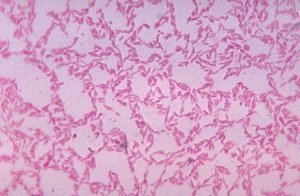
Human microflora
The degree of dysbiosis according to research results
- In the first degree (mild form), the changes relate to the population density of E. coli. Growth and decline are allowed. Conditionally pathogenic flora is recorded in a concentration of up to 1 million in two species at most.
- Moderate form. A noticeable decrease in bifidobacteria and anaerobic flora. Atypical (for example, hemolytic) forms of Escherichia coli are recorded. Further increase in the concentration of representatives of the conditionally pathogenic flora.
- Severe form (grade 3). There is a decrease in the number of anaerobic bacteria against the background of the conditionally pathogenic flora reaching the threshold of 10 million. units. In the population of E. coli, atypical forms prevail.
In parallel, the categories of manifestation of clinical signs are distinguished. The strength of external manifestations is individual. If the first patient is already holding on to the stomach, dysbiosis is manifested in full force, the second slowly begins to show a characteristic picture. According to individual indicators, a decision is made on the hospitalization of the patient. List of categories:
- Compensated form. There are no (or short-term) symptoms, you can cure dysbiosis at home.
- The subcompensated form is characterized by an alternation of attacks of the disease with a state of relative health. Doctors call the stage clinical. You should consult a doctor.
- The decompensated form necessarily includes the external manifestation of the disease. Depending on the specific cause, the symptoms take on a specific shade. For example, with the rapid reproduction of Pseudomonas aeruginosa, feces are filled with mucus of the corresponding color.
Treatment of dysbiosis in newborns is necessary. Many parents cannot wait, they need to clarify in the clinic's registry whether there is an opportunity in the clinic's laboratory to implement the express analysis method. Two criteria are selected for analysis:
- The presence of tissue protein in the stool.
- The presence of bifidobacteria.
The first means the presence of inflammatory processes. The second indicator is measured quantitatively, making it possible to understand whether the presence of proteins is explained by dysbiosis. The absence of bifidobacteria means a positive answer to the question. The next step involves detecting an overgrown pathogen, examining the microflora for antibiotic resistance. The first step in treatment will be the destruction of the harmful strain.
Newborn
According to the latest data, in the prenatal period, the fetal gastrointestinal tract is already inhabited to a small extent by some bacteria that get there through the phenomenon of translocation. In the first weeks of breastfeeding or artificial feeding, the baby will go through a stage of dysbiosis. Most bacteria pass through the intestines. The dominance of bifidobacteria is observed, bypassing several weeks. At the age of two months of the child, an express analysis will show adequate results.
Depending on the method of feeding, the predominance of different strains has been established:
- Natural - bifidum.
- Artificial - longum, breve, infantis.
These strains are present in certain medicinal products. Moreover, the very fact of availability is important, which allows to carry out analyzes, to draw conclusions. After birth, it is advisable to immediately attach the baby to the breast, in the first 2 hours. This simple action doubles the amount of immunoglobulins A in the intestine.
As a result, the period of transient dysbiosis is successfully overcome, and the child is gaining weight. Human milk is rich in nutrients, contains not only immunoglobulins A. Other bacteria appear when complementary foods are introduced. For example, the population of lactobacilli begins to grow. The final formation of the biocenosis ends only by two years, at the age of 12 months, the composition of the microflora is already close in terms of indicators to those of an adult organism.
Health criteria are highlighted and risk groups are outlined. The child should have a mother from the first hours of life. Preparing for childbirth will help you avoid a caesarean section. Natural food is encouraged, after a few months it is allowed to start giving adapted milk formulas. Other factors, regardless of age, are undesirable:
- Any troubles with the gastrointestinal tract in the baby or mother.
- Improper use of medications. It is enough to drink unsuitable pills for three days to disrupt the balance of microflora.
- Violation of intestinal absorption due to any pathology.
- Chronic illnesses.
- Improper diet, imbalance in the composition of proteins, fats and carbohydrates.
Dysbiosis treatment in infants does not imply experimentation. Let the doctor decide how to treat the baby's illness.


