
Smecta for dysbiosis: how to take, reviews
The human body contains a lot of bacteria, two thirds live in the gastrointestinal tract. The biocenosis performs a lot of functions, among the known is the synthesis of vitamins. The balance is easily disturbed by the action of a number of exogenous factors. Stress of any kind causes disorder in the internal life of the body. It is customary to divide human mucous membranes into biotopes, ecological niches for bacterial strains, according to their inhabitants. Each contains a unique family. Smecta for dysbiosis is used to restore balance.
Let's consider the principle of the drug's action. Dysbiosis treatment methods divided into two groups. In the first case, they try to introduce living bacteria into the gastrointestinal tract, but the gastric juice kills most of the biosubstrate. This is the body's normal defense in response to an invasion. Small fractions of a percent reach the intestines, they are entrusted with the task of restoring balance. The second group of methods creates favorable conditions for the reproduction of the desired flora, while the development of pathogenic is inhibited. Dietary fiber and various metabolites of bacteria fall into the category of drugs.
Content
- 1 What will we treat
- 2 Dysbiosis reasons
- 3 What is Smecta
- 4 Appearance
-
5 Operating principle
- 5.1 Adsorption
- 5.2 Enveloping action
- 6 Why do you need Smecta
- 7 How to use
- 8 Reviews
What will we treat
Microflora is usually divided into three groups:
- Obligate is constantly part of the mucous membrane. It is irreplaceable in the metabolism, the formation of the protective properties of the body. Synonyms: resident, indigenous, autochonic.
- Optional is present periodically, does not play a significant role. Representatives are called commensals or conditionally pathogenic population. Some of the flora is harmful, but is not able to multiply due to the presence of obligate.
- Transient is represented by microorganisms that live freely outside the human body. The degree of harm is very different.
Aerobic and anaerobic bacteria live in the mouth. The latter sometimes cause an unpleasant odor. There are no permanent inhabitants in the esophagus (under normal conditions), the stomach is poor in inhabitants due to the presence of hydrochloric acid. Mainly they treat intestinal dysbiosis, the density of the population increases greatly as it moves towards the anus.
This state of affairs is explained by the reduced speed of movement of the masses in the sections of the large intestine. It takes 70 hours to travel the length of the organ. Bacteria make up half of the dry matter of feces. Imbalance leads to the reproduction of pathogenic flora, disruption of the synthesis of vitamins and the formation of immunity.
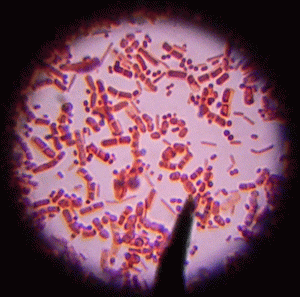
Reproduction of pathogenic flora
Dysbiosis reasons
Dysbacteriosis is caused by a number of external factors:
- Stress.
- Alcohol and cigarettes, other harmful substances.
- Improper nutrition.
- Antibiotics, medicines.
- Violation of internal conditions: pH factor, free radical activity, the rate of intestinal cell regeneration, mucosal health.
- Pathology of internal organs.
- Unsuccessful childbirth.
- Wrong daily routine.
- Magnetic storms.
- Food with preservatives.
As a result, immunity decreases, the liver is exposed to increased stress. There is an effect on the blood, the lymphatic system.
What is Smecta
Smecta is called a natural sorbent. The drug is able to absorb toxins formed inside the gastrointestinal tract by pathogenic flora and other mechanisms. The tool enhances the enveloping effect of the mucous membrane, entering into a bond with compounds of carbohydrates and proteins. Both factors are provided by the working substance - Dioctahedral smectite. To give the preparation a pleasant taste, vanillin is added to the powder.

There is a separate article on Diosmectite on the Wiki. The composition of the substance is a silicate of magnesium and aluminum, insoluble in water.
Appearance
Light powder with pleasant (vanilla) taste.
Operating principle
The effect of the drug is based on two qualities of the working substance:
- Selective adsorption of pathogenic flora.
- Strengthening the enveloping effect of the mucous membrane.
According to the generally accepted classification, Smecta falls into section A07BC05 enterosorbents. Let's consider the meaning of the terms in detail.
Adsorption
Smecta is built on natural ingredients that exhibit selective absorbing properties against pathogenic bacteria. In a similar way, a gradual transfer of harmful flora to the side of the large intestine is ensured, where the unnecessary is excreted from the body with feces.
Wikipedia provides a description of enterosorbents. The history of substances dates back to the turn of 3 thousand years BC. Already in ancient Egypt, coal was used to cleanse the gastrointestinal tract. The inhabitants of the country were anxious about the stomach and cleansed the organ at least once a month.
Along the way, we note a feature: about enterosorbents, it is said that substances are able to bind metabolites of pathogenic flora, but not bacteria. It turns out that the lines copied from documentary sources should be treated with a certain degree of skepticism.
Due to the specific action of Smecta, the intake of the drug is divided with other drugs, which, otherwise, will be partially absorbed, the effectiveness of the treatment will decrease.
Enveloping action
Combining with glycoproteins, diosmectite enhances the enveloping effect of the mucous membrane, protecting the intestinal walls from a number of substances:
- Gastric juice.
- Acidic environment.
- Bile salts.
- Bacteria.
- Toxins.
The absorption of harmful substances into the blood stops, facilitating the general condition of the body.
Why do you need Smecta
On the dysbiosis treatment a set of measures is directed, carried out in stages or in parallel:

- Diet correction. Perhaps the appointment of enzymes to improve digestion.
- Restoration of motor function (peristalsis).
- Adsorption of toxins, other harmful substances.
- Restoration of normal flora through the use of prebiotics and probiotics.
- Correction of the density of the settling of strains by using antibacterial drugs.
Smecta is taken at the third stage as part of the complex treatment of dysbiosis. Without correction of nutrition and daily regimen with simultaneous restoration of motor functions of smooth muscles, taking medications is ineffective. For this reason, the purpose is shown in the complex.
How to use
Adults are prescribed a sachet (weighing 3 g) three times a day. The contents are stirred with 100 ml of water. The course lasts from 3 days to 1 week. For children, the dosage is made according to age:
- up to 1 year - 1 sachet daily;
- up to 2 years - 2 sachets maximum;
- over 2 years old can also take an adult dose.
Reviews
The drug collects extremely positive feedback from patients. This is a time-tested effective remedy.


