
Medicines for dysbiosis for children: what do doctors recommend?
Moms often try to find a cure for dysbiosis for children. Treatment is hampered by the paucity of information about the disease. Disease prevention recommendations are simple. The first is early breast training. Avoid bottle feeding from the first days of life. The mother's breast contains strains of bacteria that are useful in the formation of microflora in babies. And no treatment is required.
The connection between breastfeeding and the absence of dysbiosis in a baby is direct. A properly formed microflora serves as an excellent protection against diseases, taking part in the formation of immunity. Bacteria produce vitamins, help to assimilate nutrients, and prevent uninvited guests from settling and reproducing in the intestines. For example, Shigella with salmonella, which causes diarrhea. Conditionally pathogenic bacteria are constantly present in the intestines, the imbalance becomes a reason for the multiplication of unwanted microbes.
Content
- 1 Who lives in the intestines
- 2 What are the diseases associated with dysbiosis
- 3 The formation of microflora in the child's body
- 4 Microflora composition
- 5 Balance regulation by bacteria
-
6 Treatment process
- 6.1 Natural products and blends
- 6.2 Decontamination
- 6.3 Probiotics and prebiotics
- 6.4 Other drugs
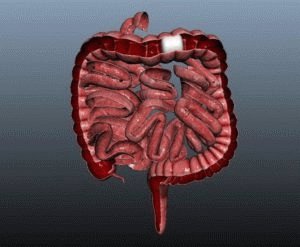
Who lives in the intestines
Most of the microflora exists in the colon, where 90% is accounted for by anaerobic bacteria:
- bifidobacteria;
- lactobacilli;
- peptostreptococci;
- bacteroids.
The rest are bacteria that can exist in oxygen environments: enterococci, fungi, staphylococci. Violation of the normal quantitative relationships between the listed species leads to an imbalance in the absence of external invasion. Reproduction of opportunistic strains causes certain types of diseases.
What are the diseases associated with dysbiosis
When a pathogenic strain multiplies, expect trouble. A short list of related diseases:
- Salmonellosis can be contracted by cleaning, for example, an aquarium without rubber gloves. There are individuals who are not sick, but are carriers of bacteria. The disease affects the kidneys, liver, spleen, and nervous system. There is a loss of fluid, often the disease is accompanied by loose stools. Salmonellosis exhibits a number of symptoms that do not allow for a diagnosis.
- Escherichiosis is caused by certain types of E. coli. Depending on the pathogen, the manifestations differ, the cases are united by the presence of loose stools. The disease is common among travelers.
- Dysentery is caused by shigella and amoeba. A high percentage of deaths have been recorded. Mostly children are ill.
- Colitis and entercolitis.
Disorders of the intestinal flora are often caused by helminths. Dysbacteriosis is provoked by a number of reasons, among the known ones are ecology, improper lifestyle, stress. The balance is disturbed by the use of antibiotics, alcohol, cigarettes. Risk factors include prematurity, caesarean section, artificial feeding, and late breastfeeding. The baby takes a large share of the microflora from the mother.
Difficulty in making a diagnosis in changing the composition of microflora by region. A similar condition is caused by diarrhea in travelers receiving new strains on travel.
The formation of microflora in the child's body
The formation of microflora begins in the prenatal period. The birth canal is overgrown with the desired strains, a similar process occurs around the nipples of the breast during lactation. The mechanism of these phenomena has not been studied. Babies born in the wrong way or not breastfeeding are at risk. A similar phenomenon is observed when prescribing antibacterial drugs to women in labor. The mother must be completely healthy, which is ensured by the absence of bad habits.
For the prevention of dysbiosis, special drugs are sometimes prescribed: prebiotics and probiotics. The dominance of aerobes is a feature of strains of newborns, among which there are conditionally pathogenic forms of bacteria. A host of species pass through the infant's intestines. In the third week, the baby is already dominated by bifidobacteria (anaerobes), as expected, provided that there is no artificial feeding.
Breast milk contains a ton of nutrients for the right bacteria and immune-boosting nutrients:
- Immunoglobulins.
- Lymphocytes.
- Macrophages.
The listed components help to form the intestinal barrier, contribute to the establishment in the gastrointestinal tract of a normal environment for the development of the desired strains. For the baby's health, it is important to latch on to the breast in the first 2 hours after birth. Simple action provides better mass gain. The biocenosis finishes forming by the age of two.
Microflora composition
It is customary to divide the microflora into four subgroups, according to the purpose:
- Obligate performs the main functions of forming vitamins, immunity, and helps digestion.
- Optional includes opportunistic flora.
- Transient remains in the body for a short time, under normal conditions it is excreted.
- The pathogenic causes various diseases.
Despite the difference in the composition of microflora by region, there are average values. When prescribing funds for dysbiosis for children, it is customary to be guided by the test results and special tables. By comparing the data, the doctor tries to prescribe the correct course. Use medications only after consulting your doctor.
A biochemical study of feces is suitable for making a primary diagnosis. It is possible to apply express diagnostics. The goal is to understand the balance shift. Diarrhea with dysbiosis is a common thing, but the reasons are different, hence the treatment differs.
Balance regulation by bacteria
The intrinsic microflora provides regulation in two ways:
- Through competition. "Own" strains do not allow aliens to occupy their own territory.
- The metabolites of the vital activity of the normal flora interfere with the reproduction of harmful agents (by maintaining the pH factor).
The second way of regulation occurs due to a number of acids: succinic, formic, lactic, acetic. Physical activity to a certain extent interferes with the development of the invasion.
Treatment process
Treatment is prescribed complex, not every component of the diet is a medicine. For example, for babies, the first recommendation is to switch to breastfeeding. Later, special preparations are prescribed, in the form of powders. There are drops against dysbiosis, for example, Hilak Forte. For children, the dosage is slightly reduced.
Natural products and blends
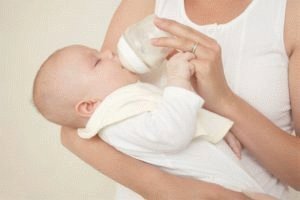
Breast milk contains ingredients that are used by the normal bacterial background for growth. A healthy diet is supplemented with prebiotic and probiotic fortified formulas. Examples of adapted (for babies) mixtures:
- Bifidobact.
- Gallia lactofidus.
- NAN fermented milk.
- Bellakt.
- Semper Bifidus.
- Nutrilon.
In the first month, artificial impurities are prescribed half of the daily diet. At the age of 35 weeks, unadapted formulations are already prescribed. Later they begin to include natural products. For example, laxative effects are:
- Honey.
- Sugar.
- Syrup.
- Juices.
- Black bread.
- Vegetables.
Decontamination
Before colonizing the intestine with the necessary strains, the organ is cleaned, special antimicrobial drugs are used:
- Nifuroxazide.
- McMiror.
- Intetrix.
- Metronidazole.
- Negro.
Probiotics and prebiotics
Probiotics are live microorganisms or metabolites. With skillful use, they help to solve the problem of diarrhea. Children are prescribed the type of bacteria, the number of which has suffered the most. There is an option: with the help of one species (outsider) to suppress the pathogenic, to populate the vacated territory with the necessary. Mechnikov suggested a similar thing for the fight against cholera. According to the above, a series of drugs is produced:
- Baktisuptil.
- Bifidumbacterin.
- Bifiform.
- Bificol.
- Colibacterin.
- Lactobacterin.
- Lacidophilus.
- Linex.
- Enterol.
Prebiotics, for the most part, are carbohydrate compounds: oligosaccharides and polysaccharides. Fiber, for example: certain types of fiber are better for nourishing bacteria, others are worse. The fibers of the substance pass to the large intestine, becoming food for bifidobacteria and lactobacilli. A large proportion of prebiotics are taken from common foods.
Due to the rational combination of the above two types of drugs, he receives the third - synbiotics. For example, Normoflorin and Biovestin.
Other drugs
Listed drugs against dysbiosis in children, but a number of remedies cannot be ignored. Bacteriophages destroy foreign cells, penetrating in the same way as viruses in relation to healthy cells. A distinctive feature is the fact that after each unit destroyed, the phages multiply. An avalanche-like process of eating alien bacteria is generated. According to the number of directions of action, bacteriophages are divided into:
- Monovalent (one goal).
- Bivalent (two goals).
- Polyvalent (multiple targets).
The duration of admission does not exceed a week. To restore the body's defenses, immunomodulators are used: KIP and interferon, supplied in the form of suppositories for the anus.
If the child is unable to digest food, the treatment is supplemented with enzymes. If there is a large amount of fat, the proteins of the pancreas are taken. Enzymes are used for carbohydrates, fiber, proteins.
Diarrhea with dysbiosis - a standard sign, do not delay the visit to the doctor. Children are assigned a comprehensive course in the image and likeness of the recommended ones. For any age and case, there is a typical selection of drugs.
The summary sources of information describe the mechanism of action for each drug. Along the way, the scheme of application is noted. Individual drugs can be combined, others come into conflict with each other. An important skill is the doctor's ability to take everything he needs from his usual food: onions, carrots, cereals, bread.


