
Treatment of dysbiosis in infants
With dysbiosis in an infant, the mother's milk or formula is not completely absorbed. The child has loose stools, bloating, and weight loss. Treatment of dysbiosis in infants should be carried out in a timely manner in order to avoid possible negative complications. Therapy includes the use of medicines and traditional medicine.

Treatment of dysbiosis in infants
Content
- 1 Symptoms of the disease
-
2 Breast milk
- 2.1 Video - Dysbacteriosis
-
3 Medication
- 3.1 Popular remedies for dysbiosis
-
4 Blends with beneficial bacteria
- 4.1 Video - How to treat dysbiosis in infants
- 5 Traditional medicine
Symptoms of the disease
Loose stools are not always considered the first sign of dysbiosis.. Diarrhea can result from poisoning, infection, and diseases of the digestive organs. Dysbacteriosis has a number of characteristic features that help diagnose the disease. These include:
- the presence of foreign particles in the feces;
- the child's feces become liquid, there is foam, foreign particles, an unpleasant odor;
- frequent regurgitation;
- plaque on the tongue and gums;
- skin rash;
- bad breath;
- bloating;
- lethargy and apathy;
- lack of appetite;
- dry skin;
- vomit;
- abdominal pain;
- intestinal obstruction.

Symptoms of dysbiosis in children
On a note! With the introduction of complementary foods, some of the symptoms characteristic of dysbiosis may appear. If the symptoms do not go away on their own in 3 days, you must urgently consult a doctor..
Breast milk
The main cause of the disease is considered to be a violation of the microflora in the intestines of an infant.. In the first months of life, the intestinal microflora of the baby is not fully formed, some of the bacteria die under the influence of toxins that have entered the body. Dysbiosis treatment is based on replenishing the correct microflora with intestinal friendly bacteria.
A sufficient amount of beneficial bacteria ensures the protective function of the intestines, prevents the spread of pathogens, eventually reducing their number to an acceptable level. The bacterial composition is restored with the help of pharmacy medicines or probiotics. During the treatment period, it is necessary to give the child food, which contains a sufficient number of bifidobacteria and lactobacilli. Fiber is an essential component for the survival of beneficial bacteria.

The main cause of dysbiosis is considered to be a violation of microflora in the intestines of an infant.
Breast milk contains the amount of lactic acid bacteria necessary for the viability of an infant. It contains all the necessary enzymes responsible for the absorption and digestion of food. Amyase, lipase and protease are involved in the breakdown of milk substances. The components convert fats into acids, which speeds up the digestion process.
With regular breastfeeding, dysbiosis can go away on its own. The more often the baby sucks, the better the chances of recovery. It is necessary to observe changes in the behavior of the child and regularly examine the baby.
Attention! Breast milk has no analogues, and there are no enzymes and enzymes in milk formulas. The beneficial substances contained in breast milk are lost during expression and subsequent storage.
Video - Dysbacteriosis
Medication
The pharmacy has several categories of drugs used for medicinal purposes for dysbiosis. These include:
- Symbiotics. The composition of medicines contains pro- and prebiotics.
- Probiotics. Medicines containing bifidobacteria and lactobacilli. The concentration of beneficial bacteria is different for each product, this is indicated in the annotation.
- Prebiotics. The components that make up this category of medicines are responsible for stimulating probiotics.
Popular remedies for dysbiosis
| Name | Image | Description | Composition | Application |
|---|---|---|---|---|
| Hilak Forte | 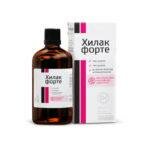 |
The drug is available in the form of drops for oral administration. Approved for medicinal use in infants with dysbiosis | The active components in the composition of the dosage form include water embryo-free substrates of metabolic products of lactobacilli | The drug is taken orally. Reception is carried out 2-3 times a day, 15-20 drops once |
| Rotabiotic for children |  |
The medication is marketed in the form of a water-soluble powder. There is no age limit. Due to its unique composition, the medicine has an anti-inflammatory and antimicrobial effect. | The composition of the drug contains extracts of medicinal plants (fennel, chamomile) and live bacteria (bifidobacteria and lactobacilli) | The dosage regimen directly depends on the age of the baby. The approximate dosage is 1 packet once a day. The powder must be dissolved in breast milk or warm water (75-100 ml) |
| Bifiform | 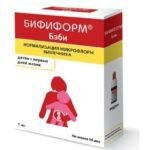 |
The drug has an unusual dosage form. The use is permissible for children who have been diagnosed with lactose intolerance. Belongs to the 5th generation of probiotics | Contains two active components, which include fermented milk staphylococcus and live bifidobacteria | Open the bottle with oily liquid. The lid contains a container with a powdery substance. Combine the two components and mix thoroughly |
| Linex |  |
Children's analogue of an adult Linex. Produced in powder form, it has no age restrictions. Belongs to the 3rd generation of probiotics | The main components of the probiotic include lacto- and bifidobacteria | Dissolve the contents of 1 sachet in 100 ml of warm drinking water. Take no more than 2 times a day |
| Colibacterin |  |
Powdered medicinal product approved for medicinal use in infants | The composition contains Escherichia coli, useful for the child's body | Dissolved in water or milk (100 ml) powder (1 sachet) give the child twice a day |
| Normoflorin |  |
Supplement from a domestic manufacturer. It is produced in the form of a solution poured into a transparent glass container. There is a special dropper | The composition contains live lacto- and bifidobacteria | Before use, it is necessary to unpack the bottle, use a dispenser to measure the required amount of the drug (0.5 tsp) and give it to a child under one year old. Apply no more than 2 times a day |
| Enterol |  |
Probiotic from a manufacturer from France. Produced in powder form, belongs to the 4th generation of dietary supplements. There are contraindications | The main active elements include saccharomycete boulardi (yeast fungus). Lactose acts as an auxiliary component | The recommended therapeutic dose should not exceed 1 sachet per day. The powder must be dissolved in 100 ml of liquid |
Attention! Self-selection of a medicine is prohibited. The child must be shown to a specialist and, if necessary, be tested.
Blends with beneficial bacteria
If there are contraindications to the use of pharmacy medicines, dysbiosis can be treated with infant formula. Artificial nutrition is easy to use, the manufacturer has calculated the recommended dose. Each serving contains the correct amount of essential minerals, vitamins and bacteria of the intestinal microflora.

Baby formula Baby
Pre- and Probiotic Blend:
- Baby. Formula containing nucleotides and dietary fiber.
- NAS fermented milk. The mixture has all quality certificates, it is enriched with vitamins (tocopherol, retinol), contains niacin, folic and pantothenic acids, probiotics.
- Nutrilak. Food contains proteins, carbohydrates, fats, pro- and prebiotics.
- Similac. Baby food is enriched with minerals (iodine, calcium, magnesium), probiotics and carbohydrates.
- Humana. Artificial nutrition with prebiotics. Vitamins, proteins and carbohydrates are present.
On a note! Formula milk can cause an allergic reaction, so before starting complementary feeding, you should consult a pediatrician.
Video - How to treat dysbiosis in infants
Traditional medicine
Treatment of an infant from dysbiosis with folk remedies should be carried out with extreme caution.. The child's body, due to its lack of formation, is susceptible to external factors and stimuli. It is necessary to choose hypoallergenic herbs and foods that are not capable of harming the child's body. Such means include pharmacy chamomile and kefir:
- Chamomile broth. Concentration should be low. The tool is used not only for dysbiosis, chamomile helps to eliminate bloating in infants. To prepare the broth, you need to brew 0.5 tsp. chamomile flowers in a half liter of boiling water. The broth should have a light yellow tint. It must be given to the baby to drink before each feeding.
- Kefir. Regular consumption of fermented milk products helps to restore the intestinal microflora. A child under 6 months old should not drink kefir. The product is injected into the rectum with a small enema. The amount of kefir directly depends on the weight of the child. The recommended dose is 10 g per 1 kg of body weight. Enough 2 procedures per day.

With intestinal dysbiosis, a weak chamomile decoction will help
Regular use of kefir by a nursing mother allows the child to “transfer” the required amount of lacto- and bifidobacteria together with breast milk. The diet of a nursing woman is subject to adjustment, it is necessary to include dairy products in it. Fermented baked milk and natural yoghurt enrich breast milk with vitamins.
Dysbacteriosis in an infant can occur for a number of reasons. Before starting treatment, it is necessary to identify the cause of the disease. A timely diagnosis helps to avoid complications. The mother's nutrition indirectly affects the intestinal microflora of the child, therefore, the quality of the products must be carefully monitored. Before starting treatment measures using pharmacy medicines, you must carefully study the instructions for use.


