
Ulcerative colitis of the intestine: causes, symptoms and treatment of the disease
Ulcerative colitis is an inflammatory disease of the colon of the human intestine. The disease is also called nonspecific ulcerative or abbreviated - NUC. ICD-10 code under the number K51.
It is believed that this type of colitis is incurable, since 50 percent of its occurrence is influenced by genetic factors. The spread of peptic ulcer disease is small. There are only 50-60 people per one hundred thousand patients. This is not much, but the symptoms are rather unpleasant. The disease affects the mucous and submucous layers of the intestine. The lining of the intestine becomes covered with ulcers. They are varied in shape and size, but with smooth edges. Long sores are common. Deterioration is observed in the distal direction. The defeat is most pronounced in the region of the sigmoid, descending intestine.
The inflammatory process of colitis can be characterized by a latent form. Unnoticed or ignored symptoms of the disease provoke chronic colitis.
Ulcer disease affects not only the mature generation. The disease is also found in children. One fifth of all patients are children. Boys are affected at an early age, and girls are prone to illness during adolescence.
Content
-
1 Varieties
- 1.1 Types of ulcerative colitis by location
- 1.2 Types by severity of colitis
- 1.3 Types depending on the course of the disease
- 2 Symptoms
- 3 Etiology of the disease, causes
-
4 Diagnostics
- 4.1 X-ray examination
- 4.2 Microbiological examination
- 4.3 Pathological examination
- 4.4 Laboratory research
-
5 Treatment
- 5.1 Alternative medicine
- 6 Complications
Varieties
The classification of types of colitis is divided into the following categories, including colitis by severity, location and course.
Types of ulcerative colitis by location
- The defeat of a small area, the intestine still looks almost healthy, in the absence of treatment turns into a chronic one, called regional (local) ulcerative colitis.
- Unpleasant symptoms, in which total inflammation of the intestine begins, is called total nonspecific.
- Left-handed.
- A pronounced inflammatory process of the end section of the large intestine is a nonspecific ulcerative proctitis.
Types by severity of colitis
- Mild - manifestations are in rare cases of stool with blood, no other symptoms are found.
- Moderate - clinical manifestations: frequent bloody stools, weakness, fever.
- Severe - frequent diarrhea, fever, fever, poor condition.
Types depending on the course of the disease
- A pronounced, suddenly arising symptomatology of a peptic ulcer characterizes acute colitis.
- Lethargic symptoms in the background indicate a chronic form of the disease.
- A disease that periodically reminds of itself has symptoms similar to an acute form, and with a decrease in the intensity of symptoms - chronic - a recurrent ailment.
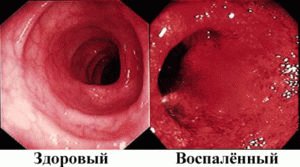
Colitis of the intestine
Symptoms
The clinic depends on the severity of the form of the disease. If the disease is in development, symptoms may be absent altogether. Medium, severe forms give off the following symptoms:
- Elevated human body temperature (the higher, the more severe the form).
- Weakness in the body.
- Symptom of decreased appetite.
- Diarrhea with blood, mucus, pus (depending on the severity).
- Painful sensations, cramps in the abdomen (more often on the left).
- Frequent urge to defecate, most of which are false.
- Flatulence.
- Weight loss against a background of decreased appetite.
- The intestinal tract is broken.
- Urging to the toilet after eating.
- It hurts in the left abdomen (in the area of the sigmoid intestine).
Extraintestinal manifestations are distinguished, but they are not an unambiguous sign of the disease:
- Rash on the mucous membrane of the oropharynx.
- Eye diseases (conjunctivitis, uveitis, keratitis).
- Damage to the joints.
- Problems with the skeletal system (the fragility of the bone is greatly increased).
- Lung damage (chest pain on inhalation).
- The work of the liver and pancreas is affected.
- It often happens that the stomach suffers from colitis. After eating in the stomach, heaviness, pain is possible.
Etiology of the disease, causes
The pathogenesis of colitis is unknown. Scientists associate the occurrence of the disease with various reasons:
- The first reason is related to genetic inheritance. The chances of getting ulcerative colitis are high, provided that they have suffered from it in the family.
- The second is the presence of infections in the intestines. The human intestine is teeming with a variety of microorganisms that can improve or disable it. Those that impair performance cause inflammation.
- The third includes disturbed nutrition.
- The fourth reason may be the consequence of trauma, stress.
- Fifth - autoimmune effects - the inflammatory process is caused by the death of cells that include antigens.
Diagnostics
The diagnosis can only be made after a complete examination. Diagnostics includes:
- Conversation with the patient, including a detailed description of the symptoms, lifestyle.
- The medical history described in the medical record must be reviewed.
- Physical examination (temperature, pulse, pressure, examination of the skin, oral cavity).
- Perianal examination, finger diagnostics.
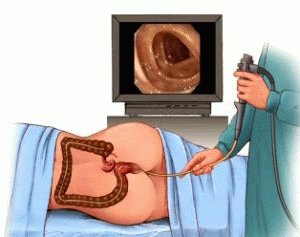
According to the diagnosis, it will become clear what diagnosis, what treatment to resort to.
X-ray examination
This method helps to identify the inflammatory process of the intestine. With ulcerative colitis, the intestinal lumen decreases, ulcers and irregularities are formed, which indicates the presence of the disease. If signs of the disease are present, and the X-ray examination has not yielded results, then the patient is sent to an oncologist.
Microbiological examination
Feces culture, smears are taken for testing, which should exclude or confirm the development of other diseases. The diagnosis is established by the method of exclusion. The check is carried out for changes in microflora. An overgrowth of certain bacteria confirms a problem. The intestinal microflora is checked even in the stomach area.
Pathological examination
This study should be done to check the degree of damage to the intestinal wall. It happens that the lesion occurs not only in the upper mucous membrane, but affects the submucosal layer along with the muscle layer.
Laboratory research
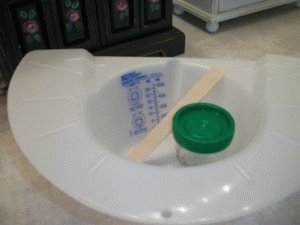
To get a complete picture, laboratory diagnostics are carried out, including a blood test, feces analysis.
When a patient has a disease, a decrease in erythrocytes is released in the blood during analysis, hemoglobin decreases, it is easier, anemia develops. The presence of a large amount of C - reactive protein is a direct indicator of the inflammatory process of the human body. A decrease in the amount of magnesium, calcium and an increase in gamma globulins - speaks of the intensive production of antibodies by the body.
Feces are checked for pus, mucus, blood, pathogenic microflora.
Treatment
If the diagnosis is made, treatment is started. It is possible to cure nonspecific colitis forever, but it is a complex and complex process. There is no point in treating without medication. If you combine medicines and traditional medicine, colitis can be cured.
Also, in the absence of symptoms or in the initial form, prevention with alternative methods will not harm.
Alternative medicine
Treatment related to traditional medicine is discussed with the doctor. All recommendations or contraindications are given by him. Why a doctor? Because side effects, exacerbation of the disease or complications are possible. Pregnancy, the presence of any other diseases of the stomach, intestines. During pregnancy, it is not necessary to self-medicate at all - it threatens to harm the fetus.
The disease is not immediately cured, especially if we are not talking about traditional methods of treatment. For ulcerative colitis, there are a lot of ways, only it is worth choosing the right one individually.
For ulcerative form, propolis is used. The plant has antibacterial properties, it also acts as a healing and regenerating agent. This is important for damaged intestines. This unconventional method of treatment is used in the form of alcoholic tinctures. Enemas are made with propolis.
The next method is treatment with a mummy. This atypical method is considered one of the ones that have shown excellent results in the treatment of an ulcerative type. This specific component is simply mixed with water and consumed in a specific dosage.
Enemas have been recognized as a common treatment. Most often they are made with sea buckthorn and rosehip oils.
The effectiveness of the methods depends on the severity of the disease, the difference in individual symptoms. At the first symptoms, it is worth going to the hospital, since the disease has a rapid pace of development.
Complications
- Perforation. The enlargement, deepening of ulcers leads to a breakthrough of the intestinal membrane, loss of its contents.
- Stretching. This is the cause of the spasm of the lower intestine. The consequences of stretching are stagnation, intoxication, death.
- Bleeding. Bleeding ulcers in a neglected version spew up to three hundred grams of blood per day, which can be fatal.
- Stricture. Healing ulcers form strictures - adhesions between two ulcers. As a consequence - intestinal obstruction. The necrotic nature of the intestinal lining is also possible with an advanced form of the disease.
- Crayfish. If the ulcerative form of colitis is not treated, or if it is treated, but it is sick for ten years, there is a risk of getting colon cancer.


