
Erosive bowel colitis: symptoms and treatment of the disease
Erosive colitis is an inflammatory process of the mucous membrane, accompanied by the occurrence of erosions in the initial part of the small intestine. First, the patient develops a superficial lesion, which initially affects only the upper layer, then the inflammation worsens and passes to the inner layers.
This form can last for years, and in the absence of a diet, the presence of chronic pathology, erosion turns into ulcerative formations, which aggravates the course of the disease.
Causes of pathology:
- Improper diet: the use of junk food in excess quantities, expired products; a large amount of alcohol;
- Taking medications that negatively affect the gastrointestinal tract: antibiotics, anti-inflammatory drugs;
- Prolonged stress and, as a result, an increase in the acidity of gastric juice, due to which the mucous membrane becomes thinner;
- Chronic inflammatory processes: gastritis, decreased production of enzymes by the pancreas, called pancreatitis, congenital enzymatic insufficiency of the intestine - all this leads to insufficient digestion of food and development inflammation;
- Acute diseases: dysentery, salmonellosis, helminth infection;
- The presence of pathology in relatives.
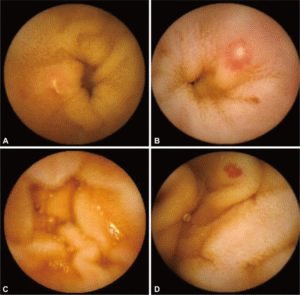
Erosion in the small intestine
Content
-
1 Clinic
- 1.1 Specific signs
- 1.2 Nonspecific signs
-
2 Therapy
- 2.1 ethnoscience
-
3 Diet therapy
- 3.1 Nutrition in the acute process
- 3.2 Nutrition for a chronic process
- 4 Conservative therapy
- 5 Operational technique
Clinic
This type is rather difficult to confuse with other diseases. An ulcerative form similar to the flow, the difference from which is the low severity of pathological changes, easy diagnosis and low probability of perforation. An additional feature is the presentation of complaints of abdominal pain, which is why the pathology is confused with gastritis, which is fraught with inadequate treatment.
Specific signs
- Pain in the abdomen, the cause of which is often hidden inside the sigmoid colon with a long course of the disease, localized in the left side; the epigastrium is rarely affected;
- Symptom of heaviness in the stomach after eating;
- Frequent stool disturbances;
- "Melena" (the more blood, the worse the inflammation proceeds, the faster anemia and other complications develop);
- The presence of pus, mucus on the feces;
- Feeling of heaviness and incomplete emptying;
- Bloating due to pronounced gas formation;
- Rumbling.
Nonspecific signs
- Weakness, fatigue, poor performance, drowsiness or insomnia, feeling unwell;
- Nausea, vomiting;
- Belching, decreased appetite, bad breath;
- Symptoms of complications: fever, pallor of the skin, dizziness, fainting.

The acute process is often accompanied by specific symptoms, the chronic one includes additionally nonspecific ones. In 10% of cases, patients complain of various rashes due to liver damage, arrhythmia, joint pain, eye disorders. The more the intestines are affected, the more pronounced the symptoms.
When the above signs appear, it is forbidden to self-medicate. Thus, you can aggravate your condition. An adult should seek immediate medical attention. The doctor will prescribe the necessary comprehensive diagnostics, which is designed to show abnormalities.
Therapy
Treatment includes a variety of techniques. The basis should be conservative methods, with the ineffectiveness of which they switch to operational ones. The folk method of healing is not excluded, but only as an addition.
ethnoscience
Before use, you need to consult a gastroenterologist, since any remedy has side effects.
- Aspen bark decoction;
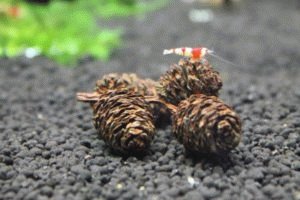
- Mix the infusion of alder cones with 5 parts of alcohol, leave inside a warm, dark place, stirring occasionally, strain, take half a teaspoon before meals;
- Dissolve 100 gr in a liter of fresh apple juice. honey. Take 1 glass several times a day;
- Eat three walnuts, drink flaxseed infusion instead of water;
- Dissolve 30 drops of propolis tincture in a glass of water, take every 4 hours;
- Chicory diluted in a glass of milk;
- A decoction of blueberries helps well;
- Infuse water on several quince seeds.
Diet therapy
It is an integral part of the treatment. Without its observance, the effectiveness of conservative methods decreases and spreads to other parts of the intestine. With disruptions in the diet, it is not possible to achieve a stable remission, relapses of the disease become more frequent. The likelihood of using surgery increases.
General principles:
- Food in fractional portions at least 6 times a day. Eliminate salty, fried and fatty foods from the diet. Food should be pureed or finely chopped, boiled or steamed.
- Eat food that is not too hot or too cold.
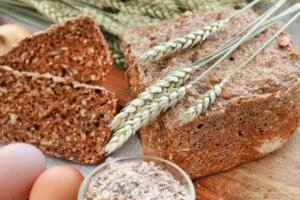
- Eat less plant foods, no more than 1 time, reduce the amount of fiber (legumes, bread), this additionally irritates the mucous membrane.
- Reduce the amount of fruits, especially raspberries, as they can negatively affect digestion.
- Drink water, at least 250 ml at a time, but if you have heart problems, you must reduce the amount to a liter.
- Add fermented milk products to improve digestion.
- Limit the consumption of meat products, as they take the longest to be processed and are capable of rotting processes.
Nutrition in the acute process
An acute illness requires the elimination of any meals for the first 2 days, it is allowed to drink water, decoctions of rose hips or blueberries. Gradually, after stopping the inflammation, the above products return, at first the portions are small for the adaptation of the digestive tract.
Nutrition for a chronic process
The chronic form requires adherence to the recommendations for a long time to achieve remission. With an exacerbation, food intake is also limited, at first the portions are reduced, then gradually increased. With a complete cure, the diet does not stop, since its absence can provoke the re-development of colitis.
Conservative therapy
It should be considered effective only at the initial stage. If an ulcer develops with further perforation, proceed to surgical treatment.
- Anti-inflammatory drugs containing acetylsalicylic acid (Pentasa, Salofalk, Sulfasalazine). Additionally, they reduce local immune reactions.
- Autoimmune drugs (Cyclosporin, Methotrexate). Used when an autoimmune process is confirmed.
- Glucocorticosteroids (Prednisolone, Hydrocortisone) with the development of a pronounced inflammatory process with the development of complications.
- Antibacterial treatment is rarely prescribed, with the addition of bacterial complications. By themselves, they negatively affect the intestinal mucous layer.
- Analgesics (Ketorol, Analgin) with severe pain.
- Vitamins of groups A, B, D, C.
- Sedatives (Valerian) to normalize the mental state.
Operational technique
It is indicated for frequent recurrence, disease progression, serious condition of the patient. Refusal can provoke malignancy of the process. Patients are hospitalized. Additional examinations are being conducted. The operation is radical with the removal of the affected intestine, followed by reconstruction.
The intervention can be uncomfortable, but temporary. Requires lifelong adherence to a diet, registration for a year with a gastroenterologist.