
Pancreatic surgery for pancreatitis: acute phase surgery
Pancreatitis is an inflammation of the pancreas that occurs either in acute or chronic form. When a person is confronted with a disease, the tissues become inflamed and begin to deteriorate. To stop the process, you need to achieve complete relaxation of the gastrointestinal tract, then engage in treatment. Sometimes doctors have to use surgical treatment for pancreatitis. We will find out what are the indications for surgical intervention, how the operation takes place, what awaits the patient later.
Content
-
1 When the operation is justified
- 1.1 Complications that require surgery
- 1.2 Symptoms of purulent abscesses
- 1.3 Contraindications to the operation
-
2 How is the operation going
- 2.1 What is resection
- 3 Rehabilitation
When the operation is justified
If chronic pancreatitis has sharply jumped into an acute form, it does not mean that surgery will be required. The attack will be cured by the usual measures: to weaken the digestion with a hunger strike, then follow a therapeutic diet. Then the pains go away.
Often, when diagnosed with "acute inflammation of the pancreas", the patient is hospitalized with the appointment of a treatment course. Doctors pay great attention to:
- individual characteristics of the patient;
- medical history;
- the presence of complications in the past.

Treatment takes a conservative approach - at first, they approach getting rid of the disease through medication and a therapeutic diet. It happens that purulent-destructive mechanisms appear - and you cannot do without an operation. 20% of patients face such a recommendation.
Surgical treatment of pancreatitis is always a last resort. Doctors are fully aware of how strong the effect of the operation on the internal organs is. Such procedures are resorted to in extreme cases.
Elementary inflammation periodically turns into the stage of gland decay. It is no longer possible to be treated with improvised means and conservative methods, the formation of pus on the gland can no longer be stopped, it is also not possible to remove it from the body.
Other indicators for surgical intervention include:
- severe pain, pain reliever does not help;
- further spread of the disease;
- mechanical jaundice;
- the appearance in the gallbladder, ducts of stones or stones.
The operation for pancreatitis is performed even in the early stages; certain indicators must correspond to such a decision. Surgical intervention is aimed at preventing possible complications and stopping chronic pancreatitis at the stage of disease development.
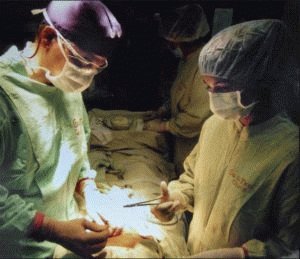
Pancreas surgery
Complications that require surgery
Chronic pancreatitis is able to proceed quietly and imperceptibly in the body until a severe attack occurs. It happens that a patient with a diagnosed acute form undergoes a full-fledged medical examination, as a result of which it is revealed:
- fistulas;
- the appearance of a pseudocyst;
- the appearance of purulent abscesses;
- pancreatic pleurisy;
- pancreatic ascites.
In any of the cases described, surgical acute pancreatitis treatment becomes mandatory. The progress of complications will not bring benefit to the body; it is required to deal with complications as soon as possible.
Symptoms of purulent abscesses
Among the complications requiring immediate surgical intervention is the appearance of purulent abscesses - the most common form of complications. It is likely to recognize what is happening in advance by the following symptoms:
- incessant fever;
- in the pancreatic region (in the localization of inflammation), a seal is found on palpation;
- the leukocyte formula shifts to the left;
- hyperglycemia is observed;
- X-ray recognizes cavities with gas content;
- The ultrasound detects fluid-filled cavities.
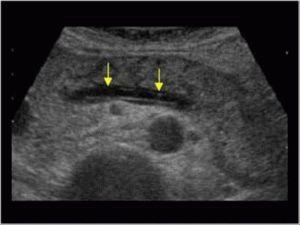
Pancreas ultrasound
The earlier the complication is recognized, the higher the likelihood of maintaining healthy tissue.
Contraindications to the operation
In addition to indications for surgical intervention, there are contraindications:
- sharp jumps in blood pressure;
- constant state of shock, which is impossible to cope with;
- lack of urine;
- increased content of enzymes in the body;
- increased urinary glucose;
- low blood levels in the body, unsuccessful attempts to restore the previous one.
With any of the mentioned signs, surgical intervention is prohibited. Initially, it is necessary to put the patient in order, getting rid of the unpleasant pathology, then carry out a surgical intervention.
Due to such phenomena, doctors closely monitor the patient, conduct various tests and only after the research, they decide whether the services of a surgeon are needed or the need missing.
How is the operation going
Surgical treatment of acute pancreatitis takes place in two days. In the first, the patient is intensively prepared, in the second, the surgical intervention is performed directly.
Tasks of doctors performing surgical treatment of acute pancreatitis:
- relieve pain;
- prevent possible complications;
- preserve / restore the functioning of the gland;
- rid the body of pus and other decay products.
Surgical treatment of chronic pancreatitis stops the progress of the disease, bringing it into a stable form. Chronic pancreatitis will not go away completely, this happens extremely rarely. Patients with once diagnosed inflammation of the pancreas have to follow a special diet and take pills for life.
There are many procedures carried out during the operation: the production of manipulations depends on the patient's medical history. The abscesses are certainly drained. If the surgeon notices an impaired flow of bile into the duodenum, cholecystostomy is performed.
The priority for the surgeon is the patient's condition. If massive bleeding occurs, the doctor decides to stop there and not seek to cure several diseases at once. If necessary, doctors carry out from 8 to 10 operations, completing the work to the end.
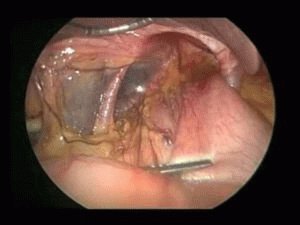
Pancreatitis surgery
What is resection
Sometimes the surgeon has to perform a resection - partial removal of the pancreas. It is done in cases of localization of inflammation in a specific part of the gland. If the focus of inflammation is small, the foci of necrosis are also removed. More often it is necessary to get rid of tissues, the lesion of which is too extensive - avoiding the situation of poisoning the body with decay products and the spread of inflammation to other tissues. The spleen is removed according to indications.
Rehabilitation
The doctor prescribes procedures that are mandatory after the operation, including regular flushing of the abdominal cavity.
After the operation is completed, the patient is closely monitored. The patient's condition is of great importance - the following are considered positive signs:
- reducing the intensity and frequency of pain;
- improvement in blood flow;
- an increase in the amount of urine (which means that the processing of products is favorable).
Surgery is performed under general anesthesia. The person does not feel anything, the professional surgeon is doing the job. If you follow the rules and follow medical recommendations, the disease will not begin to progress and will recede away.
