
What doctor treats pancreatitis: who to contact with pancreatic inflammation
The most common disease affecting the pancreas is pancreatitis. The disease manifests itself in the form of inflammation and secretory dysfunction of the organ, that is, the pancreas, in fact, cannot fulfill its purpose normally. People who are faced with epigastric discomfort or symptoms of inflammation of the pancreas are wondering which doctor is treating pancreatitis? In this text, this issue will be considered in detail, as well as the symptoms of the disease themselves, which should alert a person, and methods for accurately diagnosing pancreatitis.

Which doctor treats pancreatitis
Content
- 1 How can a person know if they have symptoms of pancreatitis?
-
2 Acute pancreatitis: which doctor will cure?
- 2.1 Surgeon's help
-
3 Chronic pancreatitis: we act according to the situation
- 3.1 Endocrinologist assistance
- 3.2 Video - Chronic and acute pancreatitis
- 3.3 Oncologist assistance
- 4 Let's summarize
How can a person know if they have symptoms of pancreatitis?
Above, we mentioned about the unique functionality of the pancreas, which is inaccessible to other organs. The pancreas plays an important role in the digestive process, which means that the normal existence of the human body and a high quality of life with its dysfunction is impossible.

The pancreas plays a vital role in the digestive process
The pancreas has two main functions: it produces insulin and enzymes that break down fats, carbohydrates and proteins from food. With inflammation (pancreatitis), the gland begins to destroy itself due to the fact that the enzymes cannot go out through the duct and simply digest the organ itself instead of food lumps. There are two types of such inflammation: acute and chronic pancreatitis. Consider these types of disease.
Table 1. Acute and chronic course of pancreatitis
| Type of pancreatitis | Symptoms | What measures to take |
|---|---|---|
| Spicy | A sharp destruction of the cells of the pancreas. Pain in the upper abdomen of a shingles nature, on which pain relievers have little effect. Pain shock is possible with the rapid development of the disease. Nausea, vomiting (possibly bloody) that does not bring relief, lethargy, the skin and whites of the eyes become jaundiced. Flatulence, bloating, fever. | Do not take painkillers, food, limit activity. Seek medical attention immediately; in case of severe pain syndrome, an ambulance team should be called. Without delay, go through all the necessary tests and diagnostics. |
| Chronic | A gradual decrease in the functioning of the organ. Permanent moderate pain on the left in the navel area (aggravated by eating sharp, fatty, smoking, taking alcohol), heaviness, nausea after eating, weight loss even with abundant nutrition, stool disorders, subfebrile (jumping) temperature. Lethargy, trouble falling asleep, headaches, intoxication of the body. | Make an appointment with a local therapist. Before visiting the doctor, switch to dietary food (the basis is table No. 5 P). Undergo a complete examination and heed the doctor's recommendations. |
Acute pancreatitis: which doctor will cure?
Severe, burning and intense pains in the abdomen on the left, in the epigastrium or around the girdle, radiating to the lower back are a sign of an intensely developing inflammation of the organ. In the acute form of pancreatitis, the pain syndrome can develop to such an extent that the patient is not able to endure for some time, not to mention the long wait for an appointment to the clinic. In addition, the lack of medical care can lead to severe irreversible consequences, since pain indicates not only the rapid destruction of pancreatic cells, but also can develop into pain shock.

Acute pancreatitis is accompanied by girdle pain radiating to the lower back
In this situation, you need to immediately call an "ambulance" who will conduct an examination and provide assistance on the spot, and then hospitalize the patient to clarify the diagnosis. Outside of hospital conditions, without the absence of equipment and a laboratory, it is impossible to carry out competent diagnostics, therefore, it is impossible to refuse a trip to the emergency hospital, even if the anesthetic injections are temporarily removed pain.

Do not delay calling the "ambulance"
An attack of pancreatitis is a reason for placing a patient in intensive care, where doctors on duty of several specialties will examine him. If it is not possible to take the patient to the intensive care unit, he is placed in a therapeutic or gastroenterological department. Based on complaints received from a person, the diagnosis is clarified. If the patient is admitted unconscious or if an acute attack is confirmed, differential diagnosis in order to exclude ailments with a similar symptomatic picture - to for example, inflammation of the appendix, duodenitis, gastritis, inflammation of the duodenum and several other diseases.
Most often, several types of research are assigned at once, most fully capable of telling about what happened to the person. Depending on the information provided to the patient, doctors will choose the tactics of examinations.
Table 2. Diagnostics of the acute pancreatitis
| Name | What shows |
|---|---|
| Coprogram | In acute pancreatitis, the amount of neutral fats, creatorrhea, muscle fibers, and extracellular starch increases in the feces. |
| ECG | Differentiates the disease from a heart attack, since the symptoms of these pathologies can be similar, and sometimes "acute pancreatitis" and a heart attack run in parallel. Shows the functioning of the cardiovascular system. |
| Amylase enzyme assay | The study shows the content in the urine or blood of enzymes produced by the pancreas. Indicators of pancreatic amylase for adults - up to 50 units per liter. Exceeding the norm by seven to ten times indicates an acute form of pancreatitis. |
| Ultrasound | Ultrasound examination of the abdominal organs. Inspection of the size and contours of the pancreas. It must be understood that a healthy organ has smooth, clear contours and certain parameters. If at least one of them is exceeded, this indicates inflammation. The lumen of the pancreatic duct is also assessed. |
| KT | Computed tomography shows the condition of the organ with an accuracy of 90 percent. CT scan helps to detect edema, inflammation, fluid accumulation in the gland, tissue condition, the presence of tumors, cysts, vesicles. Allows you to determine the location and degree of damage. |
| Cholecystopancreatography | A contrast agent is injected into the organ through a catheter, after a while a series of images is taken with the help of an X-ray machine. So you can see the state of the pancreas in several projections (from the side, from the back, from the abdomen). |
| Angiography | Reveals circulatory disorders in the acute course of the disease. Allows you to distinguish between necrotic and edematous forms of the disease, shows the presence of an enlarged gland syndrome. |
Having compiled the obtained data, doctors will confirm or deny the diagnosis of acute pancreatitis. If the disease occurs, treatment or emergency care will be prescribed in an emergency, up to and including surgery.

Acute pancreatitis may require surgery
Surgeon's help
If extensive progressive foci of necrosis were found in the tissues of the pancreas, the patient's life is at risk. In this case, an urgent intervention by the surgical team and an emergency operation are needed. It can be done in two ways:
- Laparotomy, through peritoneal incisions (a classic method used for extensive organ damage, purulent formations, cysts or tumors, peritonitis).
- Laparoscopic, through peritoneal punctures (a less traumatic method for the patient).

Both methods involve immersing the patient in general anesthesia.
As a result of the operation, depending on the indications, part of the gland or its body, most of the head or the tail can be removed completely. Surgeons save only the areas adjacent to the duodenum. Also, the purpose of surgical intervention may not be to remove parts of the organ, but to flush it. If too much fluid has accumulated in the pancreas, during the operation, doctors will puncture the organ and drain the excess.
It should be noted that any operation on the pancreas entails a rather long recovery period and a large list of restrictions. So, the first days after the intervention, the patient is on complete hunger, then, with good dynamics, dietary products are gradually introduced into the diet.

Nutrition after pancreatic surgery
When the patient's condition is stabilized, he will be transferred to the gastroenterology department, where a conservative treatment plan will be prescribed. The gastroenterologist will monitor the patient's condition, conduct repeated tests and studies to study the dynamics of the disease. At the time of discharge, the patient will be provided with a home treatment plan: taking medications, compulsory diet.

To endure pain in acute pancreatitis is life-threatening!
Chronic pancreatitis: we act according to the situation
The development of chronic pancreatitis can develop in two scenarios:
- The inconspicuous development of the disease without an acute form.
- Acute pancreatitis, which has developed into chronic.
Even with a sluggish course of the disease and unexpressed pain syndrome, a sharp regression can still occur. In this case, the patient will feel the symptoms characteristic of acute pancreatitis. In this case, you need to act as described above - call an ambulance. Doctors will take anamnesis and decide whether the patient needs emergency hospitalization, or can visit a gastroenterologist at the clinic the next day.

Ambulance doctors will decide on hospitalization
In fact, the methodology for the diagnosis and treatment of chronic and acute pancreatitis is the same, the only difference is in the speed of these measures, which is important for preserving the life and health of the patient. Therefore, a gastroenterologist, to whom a person turns with symptoms of chronic pancreatitis, will prescribe the same studies, but in a smaller volume and in a less urgent manner:
- Complete blood count and biochemistry.
- Coprogram.
- Urine analysis, in particular, for amylase.
- Ultrasound of the peritoneal organs.
- MRI or CT.
Endocrinologist assistance
In the case of pancreatitis, a chronic patient may need consultation and conversation with an endocrinologist. This is due to the necrosis of pancreatic cells that produce not only enzymes, but also hormones that regulate the metabolic processes of glucose in the blood. If these hormones are not produced enough, the patient may acquire another diagnosis - diabetes mellitus.
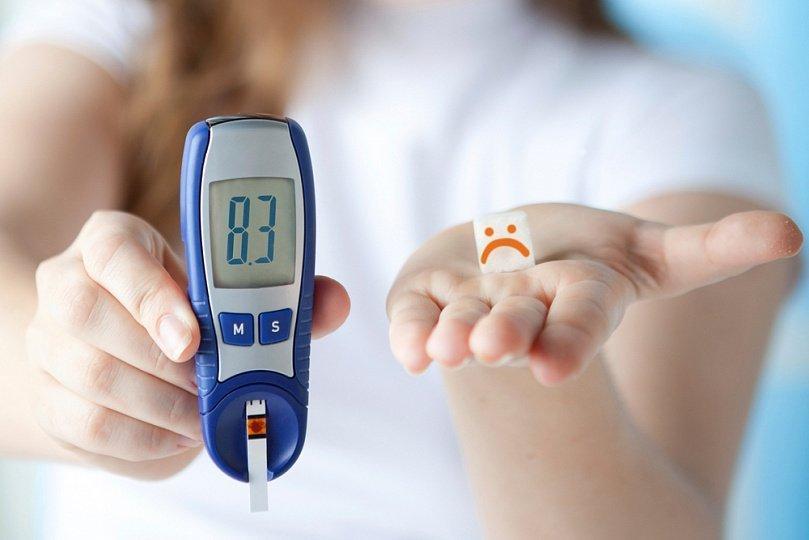
Diabetes mellitus can develop with pancreatitis
It is this specialist who will prescribe the necessary tests, will monitor the dynamics of the patient's condition, and, if necessary, will write out prescriptions for insulin or hormone replacement pharmaceuticals, choosing the exact dosage and dosage regimen.
Video - Chronic and acute pancreatitis
Oncologist assistance
A person who has been suffering from chronic pancreatitis for a long time and who does not know about his diagnosis, or ignores the disease, is a potential patient of the oncology department. Long-term illness, without adequate treatment, transforms into tumors inside and on the walls of the pancreas.
Also, the tissues of the inflamed pancreas are prone to the formation of cysts and pseudocysts, cysts and formations of a benign and malignant nature. If a gastroenterologist or therapist suspects such a complication in his patient, he must immediately write a referral for a consultation with an oncologist.

It is impossible to detect an ailment and choose a treatment regimen without diagnostics.
Neoplasms can be detected by ultrasound, computed tomography or magnetic resonance imaging, after which an oncologist prescribes conservative therapy or a course of chemotherapy, and in some cases makes a decision on the need for intervention surgical.
Let's summarize
Pancreatitis is a serious diagnosis that requires a similar attitude towards itself. A patient who wants to say goodbye to relapses of the disease forever should be vigilant about his health, regularly undergo outpatient examinations with your attending physician, strictly follow all recommendations regarding medication and diet.
Diet for patients with pancreatitis is a key moment, without which recovery and normalization of well-being are impossible. Thus, the patient himself helps the doctor to cure pancreatitis, carefully fulfilling all the appointments, not forgetting about prevention and preventing the development of complications during the course of the disease.


