How the pancreas works
A very important organ is the pancreas, which takes an active part in the course of digestive work, as well as in other important processes.
Many people do not take the organ seriously, thinking about its small role and minimal functions.
The internal organs of the dough are intertwined with the pancreas, therefore, if it malfunctions, problems appear in functions of other organs, therefore you need to know how the human pancreas works, what are its main functions.

Content:
- 1 Organ structure
- 2 The role of the organ in digestion
- 3 The work and regulation of the organ
- 4 The role of the organ in the hormonal system
- 5 Possible violations
- 6 Measures for determining violations
- 7 Normalization of work and stimulation of the gland
- 8 Useful video
Organ structure
Before analyzing the work and functions of the gland, it is important to understand the structure of the organ and its location.
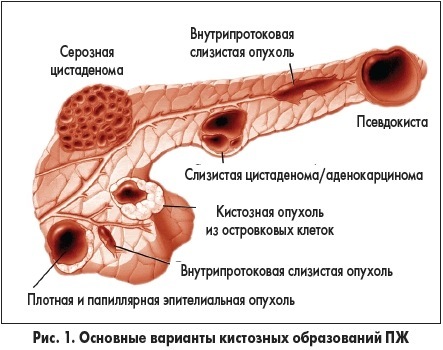
This part is localized behind the abdominal cavity, approximately between 1 and 2 vertebra. All gland has 3 main parts:
- The head is the widest area that is encircled by the duodenum. This part has a groove that separates it from other parts, it has a portal vein. In addition, a pancreatic canal emerges from the head, which connects to the intestine, through which the necessary enzymes for digestion enter. In a healthy person, the width of this part of the gland will be 3-7 cm, the size fluctuates as a result of individual characteristics.
- Body - the part is located slightly to the left of the vertebra, visually resembles a triangular shape. The body has anterior, posterior, and inferior surfaces. The width will fluctuate around 2-5 cm.
- The tail is the narrowest area, about 3 mm, but can go up to 3 cm. This section is needed to connect the main channel of the gland, after which the duct flows into the intestine.
In addition to individual parts of the gland, it contains many vessels and capillaries, ducts. If we consider the organ from this side, then there are 2 main zones:
- Endocrine.
- Exocrine.
The blood supply to the gland is very active and strong, which is generally very good, since the organ has many functions and due to this, the work of the pancreas is achieved.
But in case of violations, there is a possibility of bleeding, a rapid increase in the inflammatory process and other complications.
People who do not have a medical education cannot immediately understand the structure, because it seems complex, and all possible terms are almost unknown.
You need to know the structure in order to accurately understand the functions that are assigned to the body and its work.
The role of the organ in digestion
Despite the fact that the gland belongs to the endocrine organ, it has a relatively simple structure from a medical point of view, but this does not mean that the tasks and functions are simple.
In this case, everything is more complicated, since the gland plays an important role in the course of digestive work.
The main task is to release enzymes, with the help of which food products are broken down into small particles, vitamins and minerals, which are easily absorbed and perceived by the gastrointestinal tract.
The pancreas secretes the following types of enzymes:
- Amylase - the essence of such an allocation is to reduce diseased carbohydrate chains. When carbohydrate products are ingested, they are broken down into glucose, which can later be easily absorbed in the intestines. Due to the enzyme, when eating foods with starch, a person can feel sweetness in the mouth, but the ingredients themselves are not sweet.
- Lipase - an enzyme involved in the breakdown of fats into simple forms, namely acids and glycerin. In this form, the human body can assimilate nutrients, and the fatty foods themselves are normally digested and pass through the digestive system. In addition, the substance is needed to excrete vitamins A, D, K, E from food.
- Nucleases - with the help of an enzyme, the cleavage of nucleic acids begins, which can be normally digested, and also due to the release, new genetic structures are formed.
- Trypsinogen - the substance itself does not take part in digestion, but is necessary for the activation of other enzymes. Thanks to this, protein metabolism begins.
- Profhospholipases are a group of enzymes that are needed for the assimilation of complex fats.
You can see that the work of the pancreas in the digestive system is irreplaceable.
In case of any violation and the impossibility of isolating a certain enzyme or producing it in a small amount, there may be negative consequences.
First of all, metabolism, metabolic processes are disturbed, the assimilation of useful and nutrients is disturbed, and a sick person with severe disruptions will not be able to live for a long time.
The work and regulation of the organ
The work of the pancreas is regulated by the nervous system, like the rest of the internal organs.
Scientists in the course of research have found that in the presence of a pleasant aroma of food, especially during hunger, iron and its main functions begin to activate.
In addition, the vagus nerve is responsible for the functioning of the organ, and the decrease in activity regulates the sympathetic nerve.
An equally important role in the work and activation of the organ is played by gastric juice. With an increase in its concentration and secretions, the work of the gland begins.
In addition, the gland itself can naturally adapt to certain factors. A lot of people eat off-schedule, don't use the right ingredients, so there are a lot of certain ingredients in the food.
For example, if the diet contains a lot of carbohydrates, then the body secretes more amylase. If the food is fatty, then lipases are released, with protein food trypsin appears.
If you follow the regime and correct, balanced diet, enzymes will be produced in about equal parts, in addition, the gland will understand when it needs to be activated and start its work.
This is very important to know, especially in the presence of organ diseases. Compliance with this rule allows you to normalize the work, as well as the condition of the tissues and reduces the load on the pancreas.
The role of the organ in the hormonal system
Another main function of the gland is endocrine, namely the production of hormones that are vital for any person.
The gland secretes from 5 hormones, depending on individual characteristics. The islets of Langerhans are responsible for the release of such substances.
Among the main hormones secreted by the pancreas are:
- Insulin is an essential element for the metabolic process, the absorption of amino acids and other essential substances. Due to the hormone, all substances broken down by enzymes are correctly distributed in the blood, penetrating into the desired cells and organs. If there is a violation of insulin secretion, then the necessary elements are not able to properly distribute, they simply do not reach the right place, which causes intoxication. The most common disease with such a failure is diabetes.
- Glucagon is the exact opposite of insulin. The hormone's job is to activate carbohydrates and convert them into energy. Without such a function, people will not be able to function normally. In addition, the hormone keeps blood sugar levels normal, and even with fasting, harsh diets and other measures, glucagon stabilizes the main processes.
With an increase in blood sugar, the activation of insulin production begins, with a decrease in the indicator, the release of glucagon in large volumes begins.
In order for the described processes to proceed correctly, the body worked normally, it is important to control the diet and the state of the organ itself.
Possible violations
Quite often, the pancreas can malfunction. Even if the secretion of one enzyme occurs in small or large quantities, then the digestive and other systems fail.
After this, characteristic symptoms appear, which indicate problems. Among the main ones that make it possible to determine the violation are the following:
- The appearance of pains of varying intensity under the ribs on the left or right. As a rule, the pain syndrome is quite strong.
- The spread of pain, they begin to give over time to the back and other parts of the body.
- An attack of nausea and vomiting develops. The more intense the pain, the more severe the nausea and vomiting.
- During bending forward movements, the strength of the attack subsides, and in the supine position it can increase.
- The use of pain relievers rarely produces noticeable results.
- Temperature rise is possible.
- The appearance of dryness in the mouth, bitterness or acid taste.
The described symptoms should be quickly stopped, therefore, if one of them appears, you should consult a doctor who will establish an accurate diagnosis and the cause of the disorder.
The described signs may indicate inflammatory processes, the development of serious pathologies, including:
- Pancreatitis
- Fistulas.
- Tumors of a different nature.
- Diabetes.
- Cysts.
- Muscoviscidosis.
- Pancreatic necrosis.
Despite the different methods of treatment, which are modern and can cure almost any disease, the development of pancreatitis cannot be completely cured.
Patients have to follow a strict diet all their lives, use medications, and also monitor the condition of the organ with a doctor.
Cure is possible only in the early stages of disease detection. That is why it is important to keep track of your regimen, lifestyle and diet.
Measures for determining violations
If you listen to the body and the characteristic manifestations, then you can quickly determine the inflammation of the pancreas or the presence of other diseases in the early stages.
When exocrine functions fail, the following symptoms are observed:
- Decreased appetite.
- Rapid fatigue appears even with light exertion.
- Weakness and lethargy begin.
- Nausea is common.
- Stool is disturbed, as a rule, diarrhea appears, and the stool itself has a mushy consistency.
- Bloating, flatulence.
The general state of health deteriorates and the disturbed work of digestion begins. If you do not pay attention to the initial symptoms, then they begin to intensify and become permanent.
In the most severe cases, severe pain and vomiting are added, after which there is no improvement. This indicates pancreatitis. According to statistics, the disease is more often diagnosed in men, since it is they who do not eat properly, often drink alcohol and are overweight.
In case of malfunctions of the intrasecretory work of the organ, dysfunction begins, which is noticeable by the increased use of water and constant thirst.
Urination becomes frequent, and the amount of excretory fluid is very large.
Normalization of work and stimulation of the gland
What to do to exclude a sharp deterioration in the work of the gland can be indicated by the doctor during the examination.
Depending on the identified problem and the diagnosis, a gastroenterologist or endocrinologist will deal with the treatment.
The specialist indicates the treatment that will improve the general condition, tell the basic rules of nutrition and lifestyle.
First of all, if there are no pathological processes, but a normal malfunction appears, you need to adjust the diet, eat at the same time, in small portions and make small intervals between meals.
Such a simple measure can regulate the work of the gland. It is equally important to stick to a strict diet for a certain time. For stimulation, you can:
- Change your lifestyle, make a regimen and constantly carry out therapeutic exercises
- Use medications to restore organ functions.
- Taking folk remedies that can eliminate symptoms improves secretory ability.
To normalize the pancreas, it is necessary to completely abandon alcohol, which is the main cause of violations.
Abuse leads to damage to the vascular system, which delivers nutrients to the gland.
In case of blood supply failures, the death of pancreatic cells begins. In addition, ethyl alcohol directly affects the gland and other internal organs.
Every day you need to monitor the drinking regime, use 2-3 liters of water. Mineral alkaline waters without gas, rosehip broth give good results.
Drinking this way improves organ function and helps in the release of enzymes.