Diffuse changes in the liver and pancreas: parenchyma, its treatment and signs of diffuse changes
Diffuse changes in the liver and pancreas can indicate the beginning of the development of pathological processes in the body.
This pathology is not considered an independent disease. Nevertheless, its presence negatively affects the quality of human life.
Before proceeding with therapeutic measures, you need to understand what diffuse changes in internal organs are, and what effect their development has on the deterioration of the functioning of the body.
The choice of therapy, in this case, depends on the reason why there was a deviation in the work of the pancreas or liver.
To understand this, the patient should pass the appropriate tests, undergo an examination, and for this, at least, he will have to stop ignoring the deterioration of his own health.
After reading this material, you will learn the specifics of this pathology, which leads to moderate diffuse changes, what symptoms this pathology is characterized by, which leads to its appearance, as well as features treatment.

Content:
- 1 Diffuse changes - general information
- 2 What provokes diffuse changes in internal organs
- 3 Symptoms of diffuse changes
- 4 Classification of pathology
- 5 Diagnostic measures
-
6 Diffuse Change Therapy
- 6.1 Traditional therapy
- 7 Useful video
Diffuse changes - general information
It is a mistake to believe that the pancreas and liver are paired organs. Each of them performs specific functions. Without the presence of one of them in the body, a person partially loses his ability to work.
However, life is impossible without a liver. Diffuse changes in the parenchyma of the liver and pancreas are always associated with a violation of the integrity of the structure of the tissue surface.
Interesting! Despite the fact that the pancreas and liver are not paired organs, in the human body they are connected by special ducts. Therefore, a failure in the functioning of one organ always leads to a disturbed work of another.
One of the serious pathologies is the parenchyma of the liver and pancreas. As it develops, the internal organs lose their density, the structure of their tissue surface is gradually destroyed.
Also, in the presence of this ailment, organs can deform and lose weight. It is worth noting that this pathology is similar in its symptoms to other hepatic ailments.
For this reason, trying to get rid of it yourself at home is highly discouraged.
Getting rid of one pathology on your own can negatively affect your health, because you can suffer from a completely different disease.
Timely diagnosis of the parenchyma is almost a 100% guarantee of a speedy recovery. Those patients who turned to the hospital for medical help on time have practically no complications.
One of the most frequent factors provoking diffuse changes in the parenchyma of the liver and pancreas is the deterioration of metabolism (metabolism).
Disruption of metabolic processes in the body always leads to disruption of the functioning of internal organs.
As a result, a person is faced with a number of unpleasant symptoms, for example, rapid weight gain.
As for the violation of the tissue surface of the pancreas, this often becomes the result of an improper lifestyle.
For example, a diagnosis such as a violation of the parenchyma is often given to patients who abuse fatty foods and alcohol. Also, pathology can be caused by psycho-emotional stress.
Let's talk about the causes of this problem in more detail.
What provokes diffuse changes in internal organs
Parenchymal changes are a serious problem. A person who encounters it needs treatment.
However, before embarking on therapeutic measures, you should figure out what triggered the appearance of this problem.
Fundamental factors:
- Acute condition of the body.
- Infectious disease (acute form).
- Metabolic disorders.
- Inflammation of the internal organs.
The parenchyma of the liver and pancreas often appears as a complication of another, no less dangerous disease, for example:
- Fibrosis of the pancreas.
- Diabetes mellitus.
- Tachycardia and other heart diseases.
- Obesity, metabolic disorders.
- Cholecystitis, leading to impaired outflow of bile from the gallbladder
The main reasons for the appearance of pathology:
- Long-term treatment of the disease with antibiotics and some antibacterial and antimicrobial drugs.
- Fatty hepatic dystrophy. Its appearance is often associated with long-term diets and unhealthy diet. In this case, the change in the parenchyma is the result of the rapid loss of body weight by a person.
- Fibrous changes resulting from the development of cirrhosis.
- Changes in the structure of the tissue surface of internal organs caused by alcohol abuse.
- Hepatitis.
- Stress, psycho-emotional stress. A strong nervous shock will never pass without consequences. One of them may be a violation of the parenchyma.
It is easy to make sure that in the overwhelming majority of cases, this pathology is a consequence of the pathological process in the body.
To stop it, you should take timely medical measures. Long-term ill health should not be ignored.
Symptoms of diffuse changes
Despite the fact that this pathology is similar in its symptoms to other liver diseases, there are a number of signs by which it can be distinguished.
The first signs of diffuse liver changes:
- Pain sensations localized over the entire surface of the abdomen. Under the influence of external factors, the discomfort increases.
- Increased fatigue, weakness. The longer the patient ignores his illness, the faster he gets tired.
- Nausea sometimes accompanied by vomiting. The symptom does not always appear.
- Migraine that occurs at different times of the day.
- Decreased appetite, as a result of which, a person quickly loses weight.
- Severe heartburn. Present even on an empty stomach.
This is the main symptomatology of a parenchymal disorder. It is worth noting that in some patients who have been diagnosed by doctors with this pathology, belching occurs. In this case, it has a bitter taste.
One of the most difficult to bear symptoms of diffuse hepatic impairment is pain. After eating, it intensifies, which causes the patient a lot of anxiety.
Sometimes the discomfort is so strong that a person resorts to taking pain medication.
Also, this pathology is characterized by the manifestation of specific symptoms for each sex.
In men suffering from diffuse changes, a decrease in sexual function is often observed. But the beautiful half of humanity often has a hormonal imbalance.
Important! If, due to a failure of the monthly cycle, a woman turned to a gynecologist who did not notice any problems with "women's" health, it is likely that another pathological process is taking place in her body. etymology. In this case, the likelihood of a violation of the parenchyma is not excluded.
Another specific symptom of this ailment is a change in the shade of the eye proteins and epidermis. Diffuse changes in the parenchyma of the liver and pancreas are often accompanied by darkening of feces and urine.
Classification of pathology
Treatment of a parenchymal disorder should be based on the diagnosis. After the doctor establishes that the patient's poor health is the result of diffuse processes, it is necessary to classify the type of pathology.
Doctors distinguish 3 main types of liver and pancreas damage:
- Insignificant. Basically, it is diagnosed to the younger generation. The internal organs of adults and the elderly are rarely slightly affected. This type of damage to internal organs is present at the initial stage of the development of hepatitis and other hepatic diseases of viral origin.
- Average. Intense lesion. It arises as a result of an improper lifestyle, for example, due to the abuse of alcoholic beverages. To stop the symptoms of diffuse damage to the pancreas and liver of moderate intensity, it is enough to take a complex of vitamins and adjust the diet.
- Intense. The maximum degree of damage to internal organs. It is often diagnosed in patients over 60 years of age. In most cases, this type of pathology is provoked by diabetes mellitus, liver cancer or obesity.
Regardless of the type of parenchymal disorder, at the first sign of malaise, you should visit a medical facility.
You should not try to stop the symptoms of diffuse disorders on your own, otherwise, you can cause irreparable harm to your health.
Diagnostic measures
If the doctor suspects his patient has pathologies of the gland and liver, he conducts the following diagnostic measures:
- Analyzes the composition of blood, urine and feces.
- Examines the patient's clinical picture and collects anamnesis.
- Does an x-ray of the pancreas.
- Conducts computed tomography.
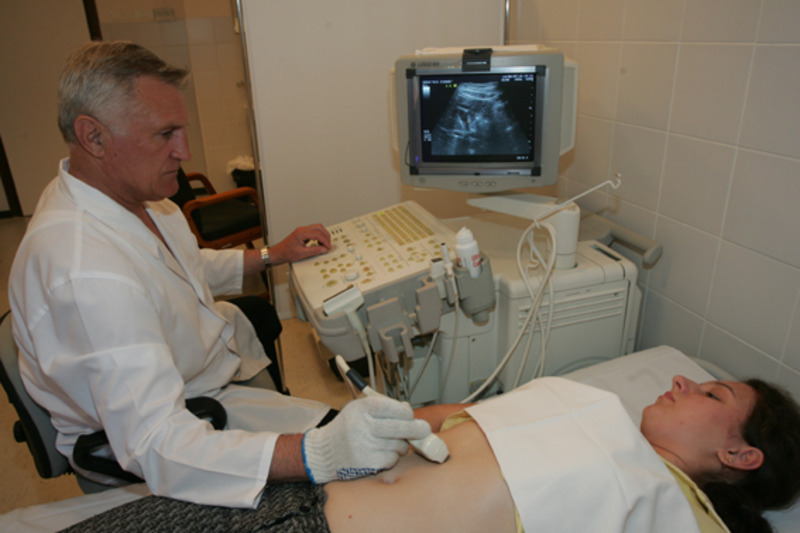
- Does an ultrasound of the abdominal cavity.
- Directs the patient to a biochemical blood test.
Important! If liver cancer is suspected, the doctor prescribes an analysis for tumor markers for his patient.
Only after a detailed diagnosis, a medical specialist can accurately determine the cause of his patient's discomfort. If these are diffuse changes in the gland and liver, appropriate treatment is prescribed.
Let's consider this issue in more detail.
Diffuse Change Therapy
Basic treatment is prescribed to all patients who have been diagnosed with a parenchymal disorder by doctors.
Such therapy is necessary for recovery, regardless of the type of pathology and the degree of liver dysfunction.
If the disease has arisen as a result of a viral lesion of the body, the patient is prescribed antibacterial drug therapy.
In addition to taking medications, the patient needs to follow a strict diet. Without this, you will not have to count on the complete relief of the symptoms of pathology.
What should be eliminated from the diet?
- Fast food.
- Fatty foods.
- Salted, smoked, canned.
- Carbonated drinks.
- Alcohol.
- Spices and herbs (minimal salting of dishes is allowed).
During the period of treatment, the patient is contraindicated to do any vaccines. This can negate the healing effect.
As for the universal dietary rules for diffuse changes in internal organs, they are absent. The diet is prescribed by the doctor individually.
Nevertheless, the patient will have to give up the use of chemical and toxic additives.
As for physical activity during treatment, they are allowed only in the absence of severe damage to internal organs.
It should be remembered that the diet during the treatment period should be gentle. The gastrointestinal tract should not be overloaded.
It is for this reason that all "heavy" foods are excluded from the diet. A person's performance depends on the speed of treatment, that is, the sooner he is given the correct diagnosis and the appropriate therapy is prescribed, the faster he can regain his usual rhythm of life.
The main task of basic therapy is to normalize digestion. This is especially important when there is a violation of the outflow of bile in the body.
With the manifestation of such a symptom, a gastroenterologist prescribes a diet to the patient. Also, an important role in this therapy is played by the normalization of the balance of bacteria.
The microflora inhabiting the human intestine takes an active part in ensuring the digestive process.
If a person is faced with such an unpleasant phenomenon as dysbiosis (which is not uncommon in diffuse changes in the liver and gland), it becomes necessary to restore the bacterial intestinal balance.
In this case, the therapeutic effect is achieved by taking appropriate medications. Doctors prescribe probiotics and prebiotics to patients.
Their main task is to "populate" the intestine with useful microflora. Also, bacteria that enter the intestines due to the intake of these drugs contribute to rapid export from the body of pathogenic microbes that could cause disruption parenchyma.
As a result of such therapy, a person who has been diagnosed with this ailment will recover faster. Also, for the patient's recovery, he is prescribed the use of antibacterial and enzyme medicines.
The type of drug depends on the cause of the appearance of diffuse changes in internal organs.
For example, if a parenchymal disorder is a complication of hepatitis, the person will definitely be prescribed antibacterial drugs.
The optimal duration of taking such medications is from 2 to 4 weeks. To reduce the muscle tone of the affected liver and pancreas, the patient is prescribed antispasmodics.
They are also drunk in order to relieve painful sensations in the abdomen. Usually, after eating, the pain intensifies and you cannot do without taking antispasmodics.
To stop the pain syndrome, you can take Spazmolgon, Baralgin, No-shpu or Riabal. Each of these funds has a powerful antispasmodic effect on the body.
Non-steroidal drugs are prescribed only if the violation of the parenchyma is the result of the development of such dangerous ailments as liver cirrhosis or fibrosis.
Traditional therapy
As mentioned above, diffuse changes in internal organs are not an independent disease. Therefore, it is possible to stop its symptoms with the help of the advice of traditional medicine.
The most effective ways:
- Pumpkin honey. Of course, honey is not made from pumpkin, but medicine is often used. So, you need to take out all the pulp from the fruit cut in half and pour it with liquid honey. The infusion period is 2 weeks. Now you can take pumpkin honey 3 tablespoons several times a day.
- Phytotherapy. Herbal infusions perfectly relieve the symptoms of parenchyma disorders. There are a lot of options for such treatment. You can insist in boiling water oats, mint, medicinal chamomile or St. John's wort. Each of these medications should be taken daily for less than half a glass.
- Lingonberry infusion. Lingonberry leaves should be poured with boiling water. The infusion time is 15 minutes. Cool the infusion and drink. Treatment period is 7 days.
As for surgical intervention, the need for it arises only as a last resort, if the implementation of conservative treatment methods has been unsuccessful.