Inflammation of the pancreas in a child
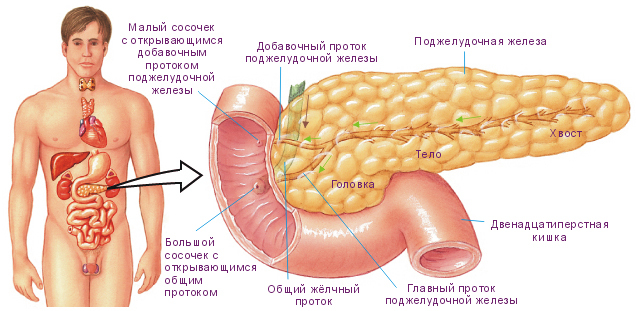
During the detection of pancreatitis, it is often found that the pancreas is changed in children. Inflammation of the pancreas in a child can proceed with the formation of a reaction in the tissues of the organ in question.
In children, such a pathological process is often disguised as various diseases of the gastrointestinal tract, it is capable of proceeding for a long period of time with unexpressed symptoms.
If manifestations of pancreatitis occur in a child, you need to contact a specialist.
Without therapy, the pathological process will become chronic and provoke adverse consequences, including pancreatic necrosis (death of pancreatic tissue).

Content:
- 1 Types and nature of the course
- 2 Causes
-
3 Symptoms
- 3.1 Acute pancreatitis
- 3.2 Chronic pancreatitis
- 3.3 Reactive pancreatitis
- 4 Diagnostics
-
5 Treatment
- 5.1 Sharp form
- 5.2 Chronic form
- 5.3 Reactive pancreatitis treatment
- 6 Medication
- 7 Diet and recommendations
- 8 Phytotherapy
- 9 Prevention
- 10 Useful video
Types and nature of the course
According to the course of inflammatory changes in children, specialists distinguish 3 types of pancreatitis:
- Spicy. It often manifests itself in a child of 10-12 years old. The disease is dangerous because it is associated with swelling of the tissues of the pancreas, excessive soreness. Often the provoking factor will be an allergic reaction to a medicine or food. With improper therapy, purulent-necrotic damage to an important organ is formed. In some cases, you will need urgent surgery.
- Chronic. Prolonged flow in childhood is not common. The provoking factor of pathology is an unbalanced diet. With constant tension, the influence of aggressive components of the pancreatic tissue lose their properties, reborn, reduce activity. As a result, the body will not be able to function properly.
- Reactive. The disease often occurs between the ages of 10-14. The pathology can be provoked by the influence of infectious agents in other organs that cause complications in the functioning of the gland. In addition to viral diseases, reactive pancreatitis is formed as a reaction to the use of antibacterial agents and other potent drugs.
Causes
Any factor can provoke a similar pathological process in children. Basically, the cause is directly enzymes in the pancreas, which harm the gland during stagnation of the secretion.
This phenomenon is called the effect of digesting the organ itself. The most common causes of the appearance of pathology in a child:
- unbalanced diet, overeating, excess fatty, spicy and overly spicy foods on the menu;
- complex allergies to medicines, food products, external factors;
- congenital or acquired abnormalities in the formation of the digestive organs;
- abdominal wall lesions;
- development of other diseases of the digestive tract;
- education of a benign and malignant nature in the pancreas;
- helminthiasis;
- endocrinological pathologies;
- infectious diseases;
- hormonal imbalance;
- chaotic use of medications.
Regardless of the factors in the formation of the disease in a child, he needs the qualified help of doctors and the implementation of comprehensive diagnostics.
After the examination, doctors establish the reasons that provoked inflammation in the organ in question, choose an effective therapeutic regimen, take preventive measures to prevent subsequent recurrence.
To date, in 20% of situations, it is not possible to detect a provoking factor in the formation of a pathological process.
Symptoms
Symptoms are observed only in a situation when an increase in the pancreas is accompanied by acute inflammatory processes.
With a chronic course of pancreatic disease, the baby has a slight discomfort, heaviness, in particular after eating, painful sensations of a dull aching character, violation of the stool.
A child is able not to pay attention to such a manifestation, therefore parents should monitor his well-being. The main symptoms of the disease in children will be:
- complaints of sudden pain in the upper abdominal cavity, often radiating to the hypochondrium;
- nausea;
- gas formation;
- stool disorders;
- white bloom on the tongue;
- development of other pathologies of the digestive tract;
- frequent gag reflex.
Acute pancreatitis
This form of the disease develops as a result of viral damage to the body, with lesions of the pancreas.
Pathology is often manifested as a result of overeating and the consumption of overly fatty foods, with infections and helminthiasis.
An acute inflammatory process in the gland is associated with intense destructive-inflammatory changes.
The child must be hospitalized in order to avoid the formation of adverse consequences and dangerous disorders in the functioning of the digestive tract.
A timely visit to a specialist helps prevent the occurrence of adverse complications, for example, the formation of purulent peritonitis (an infectious inflammatory process in the abdominal cavity).
Chronic pancreatitis
The manifestations of chronic inflammatory changes in the pancreas in childhood are established primarily by the form of the disease and the tone of the remaining organs of the gastrointestinal tract.
Mostly children are worried about painful sensations of a aching nature in the hypochondrium, which grows after eating fatty and spicy foods, physical and emotional stress.
This form of the disease in children is often formed as a result of a negative hereditary background. When parents and relatives have such a disease, the likelihood of its occurrence in a child increases significantly.
The chronic course of inflammation can provoke changes in the tissues of the organ of an irreversible nature and disorders of the functioning of the gland.
In the event of clinical manifestations of exacerbation (pain in the abdominal cavity, bitterness in the oral cavity, gag reflex, frequent and loose stools), you should immediately consult a doctor.
Self-therapy can increase inflammation.
Reactive pancreatitis
This form of the disease is formed in a child in the presence of other pathologies of the digestive tract, toxic damage (for example, as a result of drug intoxication), allergies.
In many cases, the provoking factor of inflammation lies in the exacerbation of gallstone disease and hepatic pathologies.
The disease can develop 3-5 hours after the negative influence of various factors. The following manifestations are observed:
- pain sensations that increase after eating;
- flatulence;
- heartburn;
- nausea, which turns into a gag reflex;
- traces of bile and mucus in vomit.
Diagnostics
It is impossible to identify the exact factor of painful sensations, nausea, cramping discomfort yourself without specialized education.
If there are complaints in children that resemble any kind of pancreatitis, it is imperative to consult a qualified gastroenterologist. For the purpose of the survey, carry out:
- Ultrasound of the abdominal cavity and gland;
- clinical and biochemical blood test;
- coprogram;
- urine analysis;
- CT or MRI of the abdominal cavity.
Treatment
To eliminate the symptoms of inflammation in the pancreas in children, it is necessary to provide:
- Full hunger, which is prescribed for a day after the last attack, then a sparing diet.
- The use of a variety of antispasmodics, anti-inflammatory, anthelmintic drugs.
- The use of a substitutive nature of enzyme drugs, hormonal in nature, anticholinergic drugs and duspatalin.
These techniques are aimed at eliminating pain and getting rid of inflammatory changes in the pancreas in children, in extremely difficult situations, intravenous drip is performed medications.
Sharp form
In childhood, it rarely manifests itself, but in some cases it is observed. In such a situation, it is required to immediately hospitalize the baby.
Therapy for this form of the disease involves absolute starvation for the first 3 days and complete physical and psychoemotional rest.
It is permissible to drink only non-carbonated warm mineral water. Drinking liquid should be carried out in small sips and in small single doses.
Such a menu allows you to eliminate hunger and get rid of painful sensations.
Already from 3-4 days, it is permissible to gradually diversify the menu with grated buckwheat porridge, steam omelet and unsweetened warm tea.
It should be borne in mind that the acute form of the disease needs to follow a sparing temperature regime (all food products must be warm).
On days 5-6, it is allowed to drink non-acidic grated cottage cheese, milk jelly and dried white bread. A day later, it was recommended to diversify the diet with mashed vegetables and grated soups.
A little later, it is permissible to switch to boiled lean meat, which is cooked as mashed potatoes.
Approximately on the 15th day of the diet, it is recommended to try to eat baked apples and fruit jelly.
Fresh vegetables and fruits can be introduced into the diet with extreme caution, observing the well-being of the baby.
In parallel with dietary nutrition, therapy of acute pancreatitis in childhood requires the use of medications to eliminate viral infection and painful discomfort.
In such a situation, the attending specialist prescribes:
- Spasmolytic and analgesic agents - no-shpa, platifillin, analgin, etc.
- Disinfectant treatment - intravenous plasma administration, 5-10% glucose solution.
- With a complex course of the pathological process, therapy involves the use of corticosteroids.
The acute form of pancreatitis in childhood needs to follow a strict individual diet for 10-15 days. Then it is possible to gradually expand the child's diet.
Chronic form
A sluggish chronic course of the disease in a child needs an integrated approach and involves the following therapy:
- Diagnostic period and rehabilitation inpatient treatment.
- Further dispensary control by a specialist.
- Passage of a course of health-improving treatment in specialized sanatorium conditions.
Therapy of chronic pancreatitis in children in stationary conditions is carried out according to the following scheme:
- In order to maintain the proper psycho-emotional background, sedatives are prescribed.
- With the appearance of pulling pains, this disease should be eliminated by means of antispasmodic and analgesic agents.
- The main therapy for chronic pancreatitis involves adherence to dietary intake.
During the first 2 days after hospitalization, it is recommended to starve, using only still mineral water.
On the 3rd day, it is possible to diversify the menu with weak unsweetened tea and white breadcrumbs, grated mucous cereal soup, rosehip decoction.
Reactive pancreatitis treatment
This type of pathological process is mainly caused by the course of a large number of processes inside the body.
For example, acute respiratory infections, flu or tonsillitis. In addition, the pathological process sometimes carries out its own activity due to the intensive use of food products that provide intense irritation to the gastrointestinal tract.
Therapy without fail will be carried out in stationary conditions, where qualified specialists are watching the baby.
They select dietary food, its duration, which is designed to help in the presence of the disease in question.
In addition, specialists carry out treatment with special medicines, which:
- They inhibit the functioning of the pancreas;
- Includes enzymes that reduce discomfort;
- Eliminate spasm.
Medication
A child with an inflamed pancreas should be under the continuous supervision of a specialist, and also use medications that are prescribed directly to him.
Mostly the child is prescribed the following drugs:
- Which contain somatostatin, which soothes the affected gland. This includes Octreotide.
- From the subgroup of anticholinergics, which are designed to reduce the release of pancreatic juice. This is considered Pirenzepine.
- Enzymes of the gland. These are Pancreatin, Festal, Mezim and others.
- Duspatin, which reduces cramping.
- Various antibacterial agents, corticosteroids, etc.
Diet and recommendations
Tips for following a diet for pancreatic pancreatitis in children:
- an acute stage with intense symptoms requires a hospital stay;
- bed rest is necessary, a sufficient volume of liquid;
- after food adaptation, a diet is prescribed that reduces the production of gland enzymes;
- for 3 days, porridge with milk, jelly, boiled vegetable puree is allowed;
- after a while, it is possible to diversify the menu with an omelet made from proteins, soups from cereals, vegetables;
- when the therapy was successful, a week later they recommend vegetable casseroles, baked apples.
A similar diet is maintained for 4 weeks. With an adequate response to dietary products, new dishes are gradually introduced into the menu. The following will be useful for the child:
- pudding;
- beef, low-fat fish products;
- cottage cheese casseroles;
- pasta;
- omelet / boiled eggs;
- a small amount of sour cream;
- butter.
New dishes are introduced into the menu carefully. It is necessary to observe the reaction of the body.
A food diary is kept in which it is noted what the child ate, whether there was a reaction to food. These records must be shown to the gastroenterologist. They will help you adjust your diet.
Phytotherapy
Traditional medicine for pancreatitis in a child is an indispensable component for a quick recovery. Experts advise decoctions of medicinal plants, vegetable juices, medicinal water.
The use of jelly from sprouted oat grains will be effective. Medicinal treatment and diet are supplemented with herbal medicine, in which case the little patient will quickly recover.
Helpful hints:
- juices, medicinal plants are used only after the recommendations of specialists;
- when visiting doctors, the age indicators of the child are indicated without fail: some of the plants actively affect the production of enzymes that have limitations;
- only a doctor will recommend the necessary raw materials.
Prevention
Tips for preventing inflammation in the gland:
- a balanced diet, the required amount of vitamins;
- exclusion of fast food;
- timely therapy of pathological processes in the digestive tract;
- counteraction to parasites, helminthic invasions;
- control over the well-being of patients when using potent medications;
- control over the quality / freshness of products for baby food.
If diseases of the pancreas are detected in children, you should immediately contact a specialist to find out the provoking factor of pathology.
With inflammation in the pancreas, you need to adjust the diet. Traditional medicine is used to treat the disease, effective medicines.
With a timely visit to the doctors, it is possible to prevent the occurrence of adverse effects.