
Pancreatic necrosis: what is it, types, symptoms and treatment
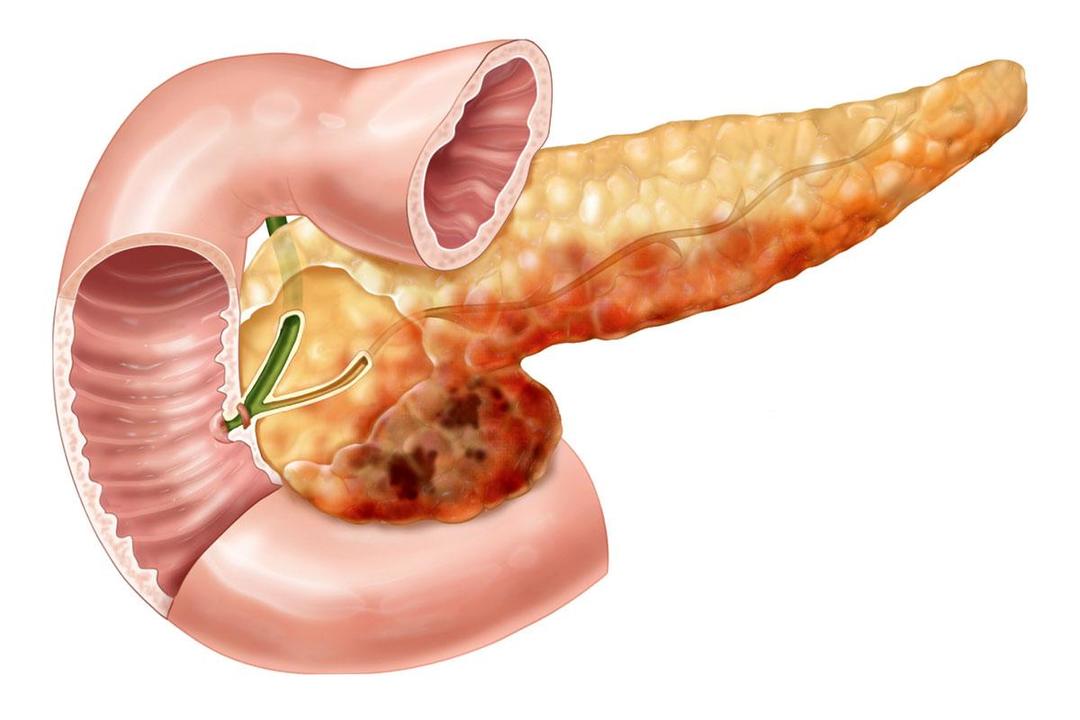
Pancreatic necrosis is a terrible disease, usually diagnosed not by a therapist or gastroenterologist, but by a pathologist who opens the body of an already deceased person. It turns out that this is often not a medical, but a pathomorphic diagnosis associated with local death of cells in the pancreas.
The ailment in question is an extreme and destructive stage of pancreatitis in an acute course. Surgeons literally "return to this world" patients with such a diagnosis, but in some cases, pancreatic necrosis leads to disability or death of the patient. The disease has specific risk factors as well as symptoms and different forms. We will talk in more detail about what pancreatonecrosis is in the text below.
Pancreatic necrosis: what is it
Content
-
1 What is pancreatic necrosis?
- 1.1 Types of pancreatic necrosis
- 2 Symptoms of pancreatic necrosis
- 3 Diagnosis of pancreatic necrosis
- 4 How is pancreatic necrosis treated?
-
5 Predictions and prospects for pancreatic necrosis
- 5.1 Video - Pancreatonecrosis. Life after illness
- 6 Summarizing
What is pancreatic necrosis?
Pancreatic necrosis is a consequence of the acute form of pancreatitis, which, in turn, can occur due to the following factors:
- Pathology in the organs of the peritoneum.
- Chronic or untreated diseases of the urinary and biliary tract.
- Excessive consumption of fatty foods.
- Large doses of alcohol, drugs.
With pancreatic necrosis, the walls of the pancreas are destroyed, and the dead tissue immediately throws a huge toxic dose into the body. In this case, not only the gland suffers, but also the vessels, brain, heart and lungs. Therefore, patients with such a diagnosis are considered very “severe”.

Pancreatic tissue necrotization
Very often an attack of pancreatitis, bordering on pancreatic necrosis, occurs after a violent feast with libations. It is worth noting that pancreatic necrosis is rarely found in "chronic" alcoholics - for them chronic pancreatitis is more characteristic. And acute pancreatitis, complicated by necrotization of the pancreatic tissues, often occurs with a large dose of alcohol drunk at the same time. For surgeons and gastroenterologists, the All-Russian holidays are considered "hot at times", after which every fourth team of the "Emergency" goes to patients with characteristic complaints. Below we will look at what they are.

Pancreatic necrosis is rare in "chronic" alcoholics
Also, the cause of pancreatic necrosis can be trauma, serious food poisoning (usually a surrogate alcohol, chemicals, mercury), as well as previous surgery or endoscopic intervention. Pancreatic necrosis can also occur in young children, due to a congenital malformation of the pancreas or a strong infection with parasites.
Types of pancreatic necrosis
Depending on the mechanisms of the disease and the size of its localization, different types and forms of pacreonecrosis are distinguished. So, according to the degree of damage, five types of this ailment can be distinguished:
- total;
- subtotal;
- large focal;
- middle focal;
- small focal.
It is logically easy to understand that these forms are located from a more severe and large-scale organ damage to a lighter one. At the same time, the boundaries of the forms are relatively blurred, since small-focal pancreatic necrosis at any moment can flow into the middle-focal and so on. The subtotal form is the death of most of the organ, and the total is the terminal form, when the gland is affected by 90-100 percent. This type of pancreatic necrosis occurs in about 5-9% of all cases of disease and is fatal for the patient.

Types of pancreatic necrosis
As a rule, small and medium focal pancreatic necrosis can be cured with the help of conservative therapy: antibacterial, analgesic, infusion and antisecretory therapy. More localized necrosis requires surgical intervention.
Depending on whether a pathological infection is present in the affected organ, pancreatic necrosis is divided into sterile and infected. In the second case, the hope for a successful cure is greatly reduced, since with the blood flow through the body toxic products and millions of microorganisms are instantly spread, causing infectious toxic shock.

To get a patient out of an infectious-toxic shock, medical forces are often not enough.
In sterile pancreatic necrosis, three forms can be additionally distinguished:
- fatty;
- hemorrhagic;
- mixed.
The fatty form of pancreatic necrosis is usually caused by the destruction of the adipose tissue of the pancreas. In turn, this is a consequence of increased activity of lipase (an enzyme that dissolves and promotes the digestion of fats). The excess of the enzyme is poured out of the organ, entering the peritoneum, and causing the most severe form of aseptic peritonitis.
The hemorrhagic form occurs due to a violation of microcirculation and severe vasospasm in the pancreas. Edema of the entire organ develops, then blood clots form and ischemic necrosis progresses. In this case, the edema gradually extends beyond the organ, capturing the entire peritoneum. Usually the hemorrhagic form is characterized by bleeding into the abdominal cavity.
In practice, "pure" forms of sterile pacreonecrosis are rare, the mixed form prevails, with which two pathological processes - lipase activity and the formation of spasms and edema, occur simultaneously.

Types of acute inflammation of the pancreas
Symptoms of pancreatic necrosis
In medicine, the picture of clinical manifestations of pancreatic necrosis is divided into three stages. First of all, the patient begins to worry about the increase in body temperature, he is in a fever, there are acute attacks of vomiting and diarrhea. This is due to the intoxication of the body due to the fact that the pancreas ceases to cope with its functions and abruptly produces a large number of enzymes. At the same time, the cells of the organ die off.

With pancreatic necrosis, the first symptoms may be sudden diarrhea, vomiting and fever
Because of the rapidity of the onset of symptoms, many people believe that they have been severely poisoned by food or alcohol. More than half of patients are admitted to medical institutions in a state of severe intoxication, which additionally emphasizes the instant appearance of symptoms of the disease - a person does not even have time sober up.
Simultaneously with the above symptoms, there is a sharp pain in the abdomen, which girdles the body on the left, gives it to the side and scapula. Pancreatic necrosis is never painless. However, the pain with this ailment tends to subside - this is due to the spread of necrosis to the nerve endings. The higher the degree of damage to the pancreas, the higher the intoxication, and against the background of a fading pain syndrome, this is fraught with great danger. For example, if a person is drunk so much that he is not able to control himself, he may simply lose consciousness and no longer come to his senses.

Pancreatic necrosis is never painless
If the degree of localization of necrosis is small, then at the second stage the symptomatology is manifested by unresponsive vomiting, in the masses of which there is blood or bile. Dehydration begins, the skin becomes dry, grayish. Diarrhea is replaced by the absence of stool against the background of flatulence and bloating. Peristalsis slows down.
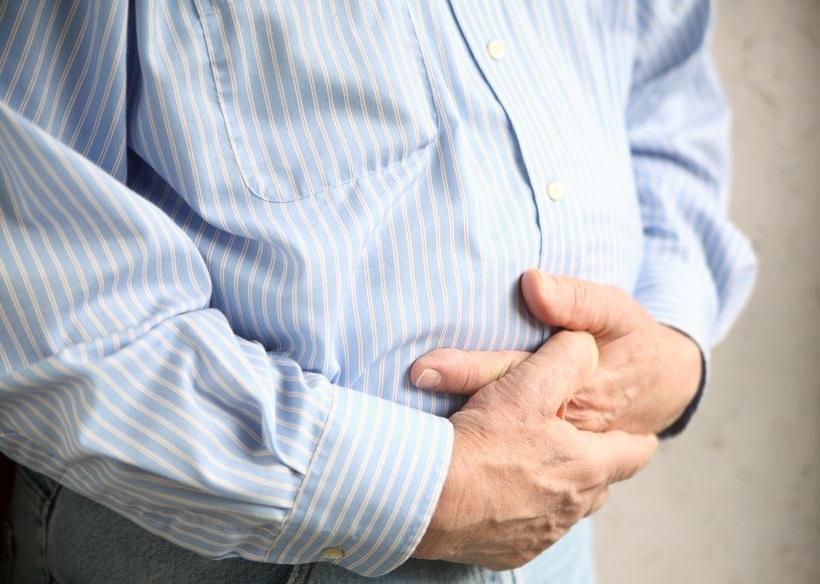
Bloating
At this stage, the patient's abdomen is swollen so that it can be determined visually. On the lateral surfaces of the abdomen, spots of a pinkish-cyanotic hue are formed - this is a consequence of internal hemorrhage or hematomas. Parts of the body acquire a marbled, pale appearance, cool to the touch. A person breathes heavily, against the background of damage to the brain by toxins, complete disorientation can develop, consciousness is confused, and a coma is possible.
Diagnosis of pancreatic necrosis
For any degree and type of this disease, the patient is considered "severe", so immediate hospitalization is necessary. To determine the stage of the lesion, doctors will conduct a series of emergency studies. Note that patients with pancreatic necrosis are admitted to the intensive care unit, where several specialists work with them at once: resuscitators, surgeons, gastroenterologists.
Table 1. Methods for the diagnosis of pancreatic necrosis
| Study type | Why is it carried out |
|---|---|
| Blood tests | The number and dynamics of the increase / decrease in the level of enzymes. |
| Plain X-ray of the abdominal cavity with contrast | Identification of inflammation, visualization of changes in the pancreas. |
| Magnetic resonance imaging or computed tomography | It is used for a more detailed view, as well as in cases when it is not possible for the patient to inject contrast for X-ray images. MRI is the most accurate type of examination, however, a person must lie still, which is not always possible due to severe pain or other factors. |
| Pancreatic ultrasound | Allows you to assess the size and contours of the organ, see changes in the tissues. |
| RHPG | Shows the state of the excretory ducts, makes it possible to identify the causes of stagnation of secretions in the organ. It is not used in all hospitals due to the high cost of equipment. |
| Laparoscopy | It is used in severe cases when it is not possible to make a diagnosis. The method allows you to fully examine the pancreas and adjacent organs and give an accurate assessment of the state of tissues and mucous membranes. |
How is pancreatic necrosis treated?
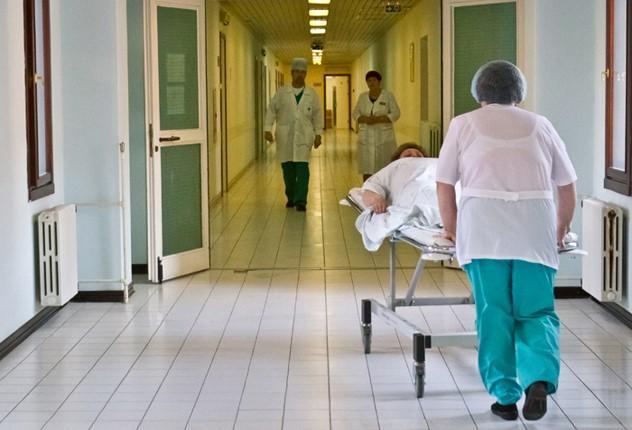
Treatment of this serious disease can only be carried out in a hospital setting. With a small localization, conservative therapy can be prescribed: gastric lavage, droppers with supporting solutions, anesthesia. Prescribed antihistamines to relieve swelling, antibacterial drugs, drugs aimed at "calming" over-produced enzymes. If necessary, proto-shock therapy or blood transfusion is performed.
Treatment of pancreatic necrosis at home is categorically impossible
It is important that with conservative treatment the patient is entitled to complete hunger; if the pancreatic ducts are blocked, it is possible to feed through a dropper (intravenously) for several weeks. Additionally, a hormone that reduces kidney destruction, somatostatin, can be prescribed.

Somatostatin
However, surgical intervention occurs in almost all cases of pancreatic necrosis. If the patient is stable, the operation is performed three to five days after his admission to the department, so that doctors can estimate the extent of necrotization in advance. In addition, after an operation performed in the first hours of the development of the disease, the risk of re-infection of the body may increase.
The work of surgeons with pancreatic necrosis depends on its location and form. As a rule, this is the removal of necrotic tissues, restoration of the pancreatic secretion current, removal exudate of an inflammatory or hemorrhagic nature, drainage of the abdominal cavity, stopping bleeding.
Predictions and prospects for pancreatic necrosis
Even the timely intervention of surgeons and resuscitators cannot guarantee a patient's cure. Unfortunately, this diagnosis is characterized by a high mortality rate. After a successful operation, it is impossible to exclude repeated necrotization and inflammation, internal bleeding and abscesses. Reoperation is possible, but the chances of a cure are very small.

Pancreatic necrosis is characterized by high mortality
At risk are people of the older generation, patients with hypoglycemia or hypocalcemia, suffering from low blood pressure, as well as patients who have lost a lot of blood flowing into the abdominal cavity. The chances of successful recovery are reduced with an increase in blood urea, L-lactate and AST levels. If all of the above factors are present at the same time, medicine is powerless to help a person.
Patients who were able to overcome an acute attack of pancreatic necrosis are forced to be treated and maintain their condition throughout their lives. They are assigned a strict sparing diet, nicotine and alcohol addiction must be completely excluded. For a long time, a person will take courses of certain drugs that support the functioning of the pancreas and relieve the symptoms of pancreatitis.
Video - Pancreatonecrosis. Life after illness
Summarizing
Pancreatic necrosis is a terrible and dangerous disease, because it destroys the pancreas, which has a unique functionality. No other organ is able to take over the work of this organ, therefore, if the pancreas "refused", death will occur with a high degree of probability.
Disease prevention consists in an attentive and careful attitude to your body, as well as timely seeking medical help and observing all the prescriptions of doctors.


