Vomiting in a child at night: reasons for what to do
Vomiting is a reflexive process of ejection of stomach contents through the oral cavity. Various factors influence the occurrence of the body's reaction. The child's body is most susceptible to adverse conditions that can induce a gag reflex. Vomiting at night is the main concern for parents, as it can harm a fragile child's body.
Content
- 1 Causes of occurrence
-
2 Associated symptoms
- 2.1 The nature of the vomit
- 3 First aid
- 4 Diagnostics
-
5 Treatment
- 5.1 Therapeutic diet
- 5.2 The use of folk methods
- 6 Complications
Causes of occurrence
There are a number of factors that can cause vomiting at night. Anything can be the cause. Parallel symptoms are worth paying attention to. If the urge passes without fever, then the causes may be as follows:
- Ingestion of a foreign object into the digestive system. This reason is relevant for young children under the age of 5 years. The stomach tends to get rid of the foreign body, which leads to an attack.
- Unfavorable microclimate in the dwelling. The apartment is stuffy, overheated, there is not enough fresh air.
- Nasal congestion with sputum entering the esophagus.
- Disruption of the usual environment, overwork or stressful situation.
- Vomiting can cause brain disease.
- Appendicitis. The appearance of temperature, pain symptom is possible.

- Eating heavy foods (spicy, fatty foods, soda, chips and other unhealthy foods) or low-quality foods during the day and before bedtime. Analyze what the baby ate during the day. In this case, the level of acetone in the body rises, which should be measured using special testers.
- Overheat.
In an infant, the cause of vomiting can be:
- Sudden climate change, as the child's body is not yet able to protect itself from the effects of weather changes.
- Teething of the first teeth. While eating, the baby swallows air, which, when it enters the stomach, causes an attack.
- The beginning of the first feeding. Due to the lack of the necessary enzymes in the body, unusual food is rejected by the stomach.
- Early introduction of certain foods into the diet.
Also, the cause of night vomiting are diseases of the digestive system:
- Pancreatitis Due to enzyme deficiency, food is not digested well enough, which causes an attack to occur.
- Cholecystitis. There is a stagnation of bile and when it accumulates, the contents of the stomach are ejected along with particles of bile masses.
- Diseases of the liver.
- Gastritis. Due to a violation of gastric motility, food stagnates in the organ and, when accumulated, the contents are ejected.
- An attack can cause prolonged horizontal sleep in the presence of pathologies in the work of the digestive system.
With simultaneous vomiting and an increase in body temperature, the cause can be an infection that has entered the gastrointestinal tract, overheating of the body, flu or SARS. A sharp increase in the temperature level leads to a reflex reaction of the body. If the attack is accompanied by diarrhea, an intestinal infection is the cause.
Associated symptoms
- The attacks are accompanied by acute pain in the abdominal cavity - a sign of an infectious disease or poisoning.
- Vomit contains mucus - in children over one year old, this is a sign of intestinal infection.
- If the child gets the flu, he vomits water.
- Vomit foamy consistency requires immediate hospitalization, as this is a symptom of rotavirus infection.
- For infants, vomiting with a fountain is characteristic as a symptom of overeating or the presence of pathologies in the digestive system.
The nature of the vomit
The color of the vomit can tell the cause of the attack:
- Green: the reason was the violation of the comfortable psychological state of the child, poor sleep.
- Yellow: indicates the presence of poisoning in the body, infection.
- Red: connected with a violation of the normal functioning of the gastrointestinal tract, mechanical trauma to the digestive system.
- Black: Excessive use of absorbents.
First aid
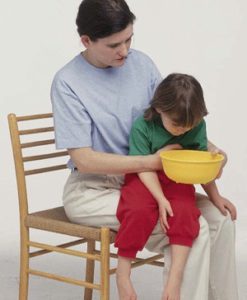
What to do when vomiting has just begun? Turn the baby over on its side, raise your head, and put a towel on. If a baby has an attack in a dream, keep it upright. Vomiting at night can cause fear in a child.
First of all, you need to calm the baby. The child should not be left alone unattended. After the end of the attack, rinse your mouth, give water to drink, as close to body temperature as possible. In the event of an attack in children at night, parents must adhere to a certain assistance algorithm:
- Wash the baby, change clothes, calm down.
- Rinse your mouth, give a teaspoon of room temperature water to drink. Do not give tea, juice or any other drinks.
- Lay infants on their arms on a side or upright on their shoulders. This position prevents the entry of vomit into the throat and nose. Lay older children on their side, slightly raising the headboard.
- The parent should be calm, not panic, not shout, not lament.
- Measure your body temperature.
- With an interval of five minutes, solder the child with water or saline solutions, for the preparation of which, use ready-made mixtures (Regidron, etc.). This is one of the main actions, since with repeated attacks the body becomes dehydrated, which poses a danger to human health. You should also give Smecta to drink, which will help remove toxins from the body. If the baby refuses to drink water, it is allowed to give the juice diluted with water to the most transparent state. Do not give a large amount of liquid to drink.

If the night vomiting is one-off and is not accompanied by other symptoms, you can do without calling a doctor. During the night, observe and follow all changes in the baby's condition - if the baby is sick during sleep, he tosses and turns, whimpers, wakes up periodically.
There are a number of cases in which calling an ambulance is mandatory:
- The child is not yet a year old.
- Attacks of acute abdominal pain, severe intestinal upset.
- A sharp rise in temperature.
- Whitening of the skin, general weakness of the body, fainting.
- Recurrent bouts of vomiting.
Diagnostics
After arrival, the doctor conducts a survey to find out the cause of the seizure. You need to find out the following points:
- Repetition rate gagging.
- The volume of the ejected masses.
- When did the first attack occur?
- What food did the child eat during the day.
- Whether the baby has been ill within the previous 14 days.
- How the baby behaved before bedtime.
- Sleep quality before the onset of vomiting.
Examination of the child allows you to determine if the temperature is elevated, signs of dehydration, the appearance of a rash, seizures, the appearance of symptoms of food poisoning, the presence of rotavirus infection.
Treatment
With repeated bouts of vomiting, the first priority is to take medications that relieve symptoms. Drug treatment includes the use of:
- Solutions that restore the body's water-salt balance.
- Medicines for nausea approved for use in childhood: absorbents to reduce intoxication, Cerucal (drug for vomiting, used in the form of solutions or intramuscularly), Motilium, with rotavirus Enterofuril.
- In order for the stomach to start working in a normal mode, beneficial bacteria are prescribed: Linex, Acipol, Enterol, Bifidumbacterin.
- If diarrhea is a concomitant symptom, Diarol, Imodium are prescribed.
- With an intestinal infection, antibiotics may be taken.
- Drugs that lower the temperature (Cefekon, Ibuprofen).

Therapeutic diet
The first meal is allowed no earlier than five hours after the end of the attack. Don't give a lot of food at once. Dishes should be light, well-digestible. Enveloping porridges on the water, vegetable soups will be optimal. The first days after vomiting, you should avoid eating fried foods, sweets, milk porridge.
The use of folk methods
For infants, a decoction of raisins, rice, dill water, and mint infusion are suitable. Children from one year old are allowed to give pear broth, milk-yolk mixture, soaked rye bread rusks. Children over three years old are allowed to use decoctions of valerian herbs, a collection of lemon balm, mint and chamomile.
Complications
Vomiting at night is a great stress for the child's body. There are three types of complications:
- Weight loss - the body is weakened by attacks, rejects all food, there is no appetite.
- Dehydration - vomiting leads to loss of fluid, disruption of the body's water-salt balance. Signs of dehydration: dry skin, lethargy, crying without tears, lack of urination.
- The ingress of vomit into the nasopharynx - improper body position leads to a delay in vomiting in the airways, which can lead to suffocation.
Sudden nausea at night can cause parents to panic. Stay calm, do whatever is necessary, and seek emergency medical help if necessary.