Nausea with a cold: why it happens, what to do
Colds are accompanied by a symptom - nausea. Children are especially susceptible to this ailment. In a child, the symptoms of the disease appear sharply: a runny nose, redness in the throat, cough, accompanied by vomiting appear.
Nausea with a cold does not always indicate pathology. Banal rhinopharyngitis is sometimes accompanied by vomit from mucus. This is due to the abundant secretion of mucus with a cold.
An emetic symptom is possible with the development of complications: sinusitis, otitis media, arachnoiditis. Vomiting the patient in these cases begins after a cold. In parallel with nausea, a person is worried about: migraine, fever, lethargy, green snot, ear pain, hearing impairment.
Vomiting with a cold, the patient begins due to intoxication of the body.
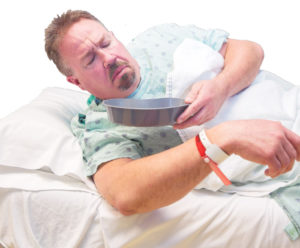
When viral cells enter the human body, harmful substances are produced - toxins. As a result, intoxication of the body occurs. With moderate intoxication, the patient is nauseous. Severe poisoning with toxins is accompanied by symptoms:
- Headache.
- Sleep disorders.
- Exhaustion.
- Fever.
- Increase / decrease in blood pressure.
- Joint pain.
- During severe intoxication, vomiting is possible.
Acute respiratory diseases are accompanied by increased intoxication. The reasons for its appearance and the nature of the symptoms directly depend on the type of disease and the patient's body temperature.
Content
-
1 Flu nausea
- 1.1 Flu intoxication symptoms
- 1.2 Flu vomiting treatment
- 1.3 Nausea after the flu
-
2 Nausea with angina and tonsillitis
- 2.1 Causes of vomiting
- 2.2 Treatment
- 3 Features of the treatment of vomiting in children
- 4 Prevention and recovery from vomiting
Flu nausea
This disease is characterized by a severe form of self-poisoning, since viral cells, entering the body, multiply rapidly. Influenza is dangerous because if it is not treated promptly, its particles can penetrate into the vessels of the central nervous system. Because of what, the work of the brain and the cardiovascular system is disrupted, as a result of which there are attacks of nausea and vomiting.
This condition threatens with serious complications, therefore, it is necessary to consult a therapist at the first manifestations of the disease.
Flu intoxication symptoms
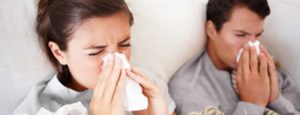
Signs of self-poisoning with flu are felt 2-3 days after infection. The patient is worried about the symptoms:
- Weakness.
- Loss of appetite.
- Dizziness.
- Joint and muscle pain.
- Profuse perspiration.
- The body temperature rises to 39-40 degrees.
- Vomiting urge.
- Breaks the body.
In case of infection with intestinal flu (rotavirus), seasonal flu, the patient develops an emetic symptom along with diarrhea. This is due to the ingestion of poison into the body, which is secreted by the cells of the virus.
With rotavirus, a patient, in addition to profuse vomiting, may have: diarrhea, abdominal pain, runny nose, fever, painful swallowing. In this situation, you must immediately call a doctor to confirm the diagnosis. This condition threatens to dehydrate the body.
Flu vomiting treatment
Treatment of vomiting with medications during the flu is ineffective. The patient's condition is alleviated by antiemetic drugs, together with antiviral agents. Treatment begins when the first signs of the disease appear.
When profuse vomiting occurs, both in adults and in children, it is necessary to drink plenty of fluids in small portions.
With rotavirus, in addition to drinking plenty of fluids, sorbents and diet therapy are prescribed. It is not recommended to bring the temperature down to 39 degrees, since at high temperatures viral cells are destroyed. It is possible to relieve the patient's condition by rubbing and cooling compresses.
Nausea after the flu
Untimely treatment, violation of bed rest, neglect of prescribed treatment lead to serious complications after the flu.
Nausea that occurs after recovery, accompanied by a headache, is a reason to see a doctor. These symptoms indicate damage to the central nervous system.
Nausea with angina and tonsillitis
Tonsillitis is an infectious disease characterized by inflammation of the tonsils. The patient's condition with tonsillitis depends on his own microflora and the nature of the growth of viral bacteria. With a moderate growth of bacteria, a person does not feel the symptoms of the disease. With intensive growth, the palatine tonsils suppress and remove the infection. If the microflora of the body is disturbed, there is a sharp growth of bacteria, the disease takes on an acute form - bacterial tonsillitis (tonsillitis).
Angina proceeds with vomiting mainly in children. It is extremely rare in adults.

Causes of vomiting
Vomiting with angina is provoked by a number of factors:
- Self-poisoning of the body with toxic substances produced by pathogenic microflora.
- Swelling of the tonsils, causing inflammation of the throat tissue. The formation of plaque and purulent plugs on the throat.
- Heat.
- Side effect of taking antibiotics.
Treatment
If a sore throat proceeds with vomiting, for the treatment to be effective, it is necessary to understand the cause of its occurrence. In accordance with this, take due measures:
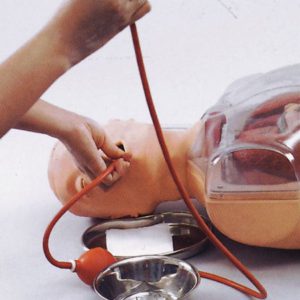
- With intoxication, the vomiting symptom is accompanied by migraine. Get rid of toxic substances. During the first two hours, be sure to drink 2-3 liters of warm drink together with a diuretic and sorbent. After that, be sure to empty the intestines after a couple of hours. If it is not possible to cleanse the intestines, an enema is needed.
- With swelling of the soft tissues of the throat, treatment begins with taking an antihistamine and rinsing the mouth. After that, anti-inflammatory drugs are taken.
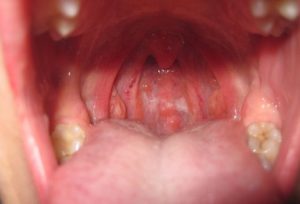
Swelling of the soft tissues of the throat
- If the malaise is caused by plaque and purulent plugs, gargle with antiseptic solutions is prescribed. The procedure is repeated every half hour. Purulent plugs are removed mechanically (with a cotton swab dipped in iodine solution), no more than 1-2 times a day, be sure to rinse the throat with an antiseptic after the operation. It is worth remembering that this method, if carried out incorrectly, contributes to the penetration of infection and the expansion of the focus of inflammation.
- If vomiting is a reaction to temperature, it is necessary to take an antipyretic agent, preference should be given to candles and rubdown. The use of alcohol for wiping children is unacceptable, alcohol will enter the bloodstream and, in addition to sore throat, the child will be intoxicated.
- If nausea is a side effect of antibiotic use, dosage or route adjustments are necessary. If there is no improvement, the drug will have to be canceled and replaced with a similar drug.
Features of the treatment of vomiting in children
If the child is vomiting, no medication should be given for a couple of hours. The child's body needs to recover. You can not make sudden movements, otherwise the attack of vomiting will be repeated. Do not feed your baby for 6 hours. During this period, give the child to drink decoctions of mint, lemon balm, chamomile. Start feeding in small portions, broths or steamed food.
If vomiting is intense and accompanied by diarrhea, prevention of dehydration is necessary. Water the child with boiled water and the "Regidron" solution.
If vomiting continues to worsen, call an ambulance immediately!
Prevention and recovery from vomiting
Prevention of a vomiting symptom during a cold includes preventive measures for colds:
- Compliance with the rules of personal hygiene.
- Elimination of bad habits.
- Healthy food and lifestyle.
- Vaccination.
- Periodic moistening of the mucous membrane with saline.
- Taking vitamins and immunostimulating drugs.
A sick family member is given separate dishes. Wet cleaning and airing are regularly carried out in his room.
You can not stop treatment immediately after the disappearance of symptoms. After vomiting, it is necessary to take medications to stabilize the intestinal microflora.
Malaise is caused by dehydration of the body due to high temperature. Warm tea and herbal decoctions will help to cope with the disease in this situation.
If gagging occurs, the patient should immediately consult a doctor. Do not forget that this symptom may indicate the presence of pathologies.