The child is sick: reasons for what to do
The article describes the causes of nausea, symptoms, first aid; features of manifestation, treatment in different periods of a child's life.
Nausea is evidence of an imbalance in the body. A person periodically experiences discomfort, a feeling of an unpleasant aftertaste, a desire to empty the contents of the stomach. Symptoms mean a violation of the activity of individual organs, organ systems.
Content
- 1 Why is the body bad?
-
2 Features of the course of the disease in children
- 2.1 The course of the disease in infants
- 2.2 The course of the disease in preschoolers
- 2.3 Features of the disease at school age
-
3 How not to miss the onset of the disease
- 3.1 Danger alerts
- 4 What treatment is needed
Why is the body bad?
There is a group of diseases that cause discomfort and impair the quality of life. Common causes of occurrence:
- Reception of stale food. Disease-causing bacteria, pathogens cause intoxication of the body. The severity of the disease is proportional to the amount of toxins.
- Acute surgical pathologies - acute pancreatitis, an attack of appendicitis, intestinal obstruction.
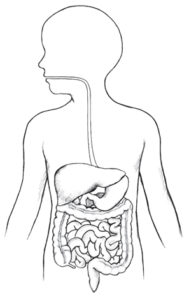
- Chronic inflammation of the digestive system: stomach ulcer, gastritis, colitis, cholecystitis. Diseases of the gastrointestinal tract are considered the most common causes of discomfort.
- Neurological disease, brain pathology - concussion, intracranial pressure, migraine. Disruption of the functioning of the brain, central nervous system harms the work of other systems.
Features of the course of the disease in children
Features of physical development, nervous regulation of the child's body give reason to identify characteristic causes that are objective, subsequently gradually disappear.
The course of the disease in infants
Increased attention should be paid to infants. Improving the functioning of the digestive system takes time. Development imbalance can be considered a natural phenomenon in the first year of life.
Infant nausea is caused by:
- The specific work of the gastrointestinal tract of a small child in the first months. Too active, "greedy" sucking, weak contact of the mother's nipple contributes to the swallowing of air by the baby. The consequence is regurgitation of food. The growth of the child eliminates the imbalance, the inconvenience disappears, the digestion is normalized, the symptoms disappear.
- Premature introduction of complementary foods. The child's stomach is experiencing difficulties in digestive adaptation. The different composition of the products results in regurgitation, intestinal upset. Parents must properly organize food for 1 year of life, observe the schedule for the introduction of the new menu. Compliance with the rules will help avoid problems.
- Teething causes nausea in infants, accompanied by pain and copious amounts of saliva.
The course of the disease in preschoolers
The causes of illness in preschool age are increased physical activity, curiosity, and an expansion of the circle of friends. The child has increased sources of danger:
- A foreign body swallowed by a child.
- Infectious diseases of the upper respiratory tract (tonsillitis, flu). There is a release of toxins by the virus, the ingestion of purulent discharge (tonsillitis).
- Helminthic invasions. A child exposed to pinworm infection, contacting, transmits the infection through toys, clothes. Poor health, loss of appetite, lethargy are the result of poisoning with the waste products of helminths.
- Poisoning with drugs, household chemicals. Gagging can be a lifesaver. The poisonous substance will be eliminated naturally.
- Excessive afternoon activity upsets the balance of gastric juice - alkali. It is necessary to distinguish between the alternation of outdoor games, food intake, control the amount of food eaten.
Features of the disease at school age
School age is characterized by the reasons, characterized by the consequence of physical, mental stress. Increased emotionality, lability of the nervous system result in stress.
- Psychogenic nausea is the result of adaptation of a growing organism, increased requirements of the children's team. It is common for a teenager to experience nervous tension. The skillful behavior of the parents, the help of teachers will help restore the psychological background of the student, the nervous nausea will pass.
- Irregularity of food intake, non-compliance with the regime, quality of food.
- Violation of the vestibular apparatus, "seasickness". The center of balance in the inner ear is sometimes underdeveloped. "Sea sickness" is capable of disrupting the usual rhythm of a person's life. Symptomatic treatment is necessary: restricting food intake before the trip, the presence of a drug containing mint, valerian, mint leaf.
The classification of causes of different age groups is due to the specific diversity of manifestation. Children, adults can be poisoned, swallow a foreign body, get sick with the flu.
How not to miss the onset of the disease
Many are susceptible to nausea for no reason. The human body is a complex mechanism of interaction between internal organs and systems. Mechanism deviations are the result of various reasons. The task of parents is to objectively assess the situation, weigh the clinical picture and complaints.
It is difficult to diagnose the condition of a preschooler. With nausea, it is difficult for a baby to describe the sensations. Parents should pay attention to appearance, lack, increased appetite, and behavioral changes. Nausea proceeds without temperature, without vomiting, stops after elimination of the sources of occurrence (ate, rested, calmed down). It is enough to feed in a balanced way, to exclude colds, to create a favorable psychological environment.
Danger alerts
The child is sick, there is a constant fever, vomiting appears, abdominal attacks are regular - the complication of symptoms requires the help of a specialist.
- It is possible to determine the deterioration of well-being when the child begins to vomit. Frequent vomiting causes dehydration. There are irreversible changes in the kidneys, brain, then - convulsions, renal coma, death.
- You should pay attention at what time of day baby vomits. If morning - an increase in intracranial, blood pressure. Neuropathologist's diagnosis is imperative.
- The child has vomited, mobility is reduced, there is a desire to lie down, to fix the body - a dangerous signal of an acute surgical disease.
- Are the symptoms complicated by lethargy, weakness, lack of appetite, drooling, seizures, clouding of consciousness? An ambulance call is required immediately.
What treatment is needed
Temporary deterioration allows you to continue playing, watching TV, walking - the prognosis is good. Close ones should urgently become a "doctor". First aid is recommended. The following is to be done: give the baby a lateral position. It is important to prevent the airways from clogging up with residues of undigested food. Vomiting will help empty your stomach. The disappearance of malaise, the normalization of general well-being will gradually resume the usual daily routine.

After vomiting, it is recommended to help restore water balance by taking plenty of fluids throughout the day. Usually clean warm boiled water. An infant should drink more often: give water every 3-5 minutes; starting from 2-3 years - every 5-10 minutes. The scheme of fluid intake is determined by the ratio "body weight - the amount of water drunk." 1 kg. body weight requires 100-150 ml. drinking.
Rehydration solution perfectly restores strength - Rehydron compensates for the loss of mineral salts, glucose. Rehydron is easy to replace with a similar household solution. Dissolve 0.5 teaspoon of salt, a little soda, 4 teaspoons of sugar in 0.5 liters of warm boiled water.
Within 12 hours after the onset of the disease, it is useful to give enterosorbents: activated carbon, Enterosgel, Polysorb, which have a high level of absorption. Dyspeptic manifestations are eliminated by the drug Motilium. Mint tea, lemon balm, lemon, dill seed decoction will give a soothing effect due to the antispasmodic effect, vasodilation.
Doctors advise taking bifidobacteria. The use of gastric, potent drugs is contraindicated, it is forbidden to forcibly induce vomiting, to inject. Acute surgical disease requires surgical intervention. Every parent should know: self-medication is dangerous with the loss of time, worsening of the condition of the little patient. Delay costs life. It is necessary to say: immediate hospitalization is the only correct decision. The doctor will establish the cause, prescribe an examination, appropriate treatment, and prescribe an operation.