
Ranitidine for heartburn: does it help, how to take, instructions
Patients constantly suffering from heartburn are trying to find a remedy: affordable, effective in use, fast-acting. To fulfill all conditions, Ranitidine is excellent for heartburn. Indeed, in this condition, a person's state of health worsens, appetite disappears. The medicine is used to treat diseases in the gastrointestinal tract: ulcers, gastritis, and other serious diseases.
The product is freely available in every pharmacy. But it is worth noting that taking any medication without consulting a doctor can lead to the opposite results! Instead of improving the state of health, the person will create undesirable consequences.
Content
-
1 Effects of ranitidine for heartburn
- 1.1 Acid neutralization
- 1.2 Decreased acid production
- 1.3 Recovery function
- 2 Forms of issue
-
3 Appointment
- 3.1 Proper use for heartburn
- 3.2 Use during pregnancy
- 4 Contraindications
- 5 Side effects
- 6 Analogs
Effects of ranitidine for heartburn
The ingestion of food and acid from the stomach into the esophagus causes heartburn, but cannot be the main source of the phenomenon. The reason that provoked the onset of the reflux phenomenon lies in the damage to internal organs:
- Overeating contributes to the stretching of the organ and its overflow. The stomach, increasing in size, is not able to function normally.
- The motor activity of the tract is markedly reduced, which leads to stagnation of food and other undesirable consequences. Food remains in the stomach without moving further along the channels.
- In the stomach, the acid-base balance is disturbed and an acidic environment prevails in the organ, which negatively affects the state of the mucous membrane and the lower part of the esophagus.
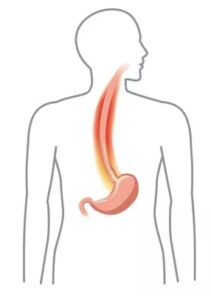
Consider the actions performed by the drug when it enters the body.
Acid neutralization
The medication belongs to a group and is called a histamine blocker of cell receptors. The impact is on the inner walls of the organ, where the H2 components are located. The blocked receptor of the cell is responsible for the production of the acidic component of gastric secretions. The presence of juice is necessary, in addition to digesting functions, it destroys pathogenic microbes and infections.
As a rule, there are no negative effects on the stomach walls. However, the mucous membrane of the esophagus is not prepared and is not adapted to counteract hydrochloric acid, therefore, when a secretion enters the canal walls, a person develops heartburn. Esophagus receives a particularly severe burn when the contents of the digestive organ are acidic. Ranitidine removes acid residues from the esophagus and neutralizes the harmful component and reduces its volume in the stomach.
Decreased acid production
If the acidity is normal, then the acidic component activates the substance pepsinogen, which turns into the active digestive enzyme pepsin. If this substance enters the esophagus, it has the same irritating effect as hydrochloric acid. Ranitidine acts on cells that produce hydrochloric acid, reduces production and reduces the quantitative content. At the same time, it was noted that the protective mucous layer of the organ continues to be produced.
Recovery function
It has been proven that the drug Ranitidine not only relieves acidity and helps get rid of heartburn, getting into the esophagus and into the stomach, it helps to restore damaged areas of the mucous membrane.
Forms of issue
Today, there are two pharmacological forms supplied to the shelves of pharmacies: tablets and ampoules containing the drug for intravenous administration. The ampoule can be used if it is impossible to take pills or because of internal bleeding from ulcerative foci.
The active form in the preparation is ranitidine hydrochloride.
Appointment
The initial use of the remedy is the treatment of ulcerative phenomena in the digestive tract. Then, after the research carried out, the drug began to be used not only as antiulcer drug, but also for the treatment of burning in the thoracic region and for eliminating the symptoms of other diseases of the internal organs responsible for the digestive process.
Today, the use of Ranitidine is aimed at eliminating the following ailments:
- Ulcer. The disease, as a rule, affects two organs at the same time: the stomach and the adjacent duodenum is affected. The defeat of the mucous membrane leads to the appearance of small foci with an inflammatory process. The medicine is used during periods of exacerbation of diseases.
- Damage to the esophagus. Esophagitis is a disease of the irritated mucous membrane of the canal as a result of the regular reflux of food residues and an acid component.
- The defeat of the pancreas by a variety of ulcerative phenomena, the so-called. Zollinger-Ellison syndrome. The disease occurs due to increased acidity, which provokes an increase in the release of hydrochloric acid.

- Ulcers of the digestive system, formed due to severe stress. Also, taking medications can cause the appearance of foci of inflammation. Such drugs as antibiotics, aimed at destroying the pathogenic flora, before entering the stomach, have a negative effect on the state of the protective layer of the organ.
- Gastritis. The period of exacerbation of the disease is characterized by the occurrence of spasm in the epigastrium, heartburn and belching with a sour taste in the mouth. Ranitidine is also used to treat Mendelssohn's syndrome: leakage of the acidic component of the stomach into the respiratory organs when anesthesia is initiated.
Proper use for heartburn
The dosage, duration of use is prescribed by the doctor after receiving the answers from the tests, examination and based on the individual characteristics of the patient's body.
- To reduce the intensity of exacerbation of peptic ulcer disease in the internal organs, accompanied by a strong burning sensation in the chest, use Ranitidine in the following dosages: for adults, take 1-2 tablets per day. The maximum daily dose is 3 tablets. The drug is strong.
- It is possible to take the medication for prophylactic purposes, before the onset of an exacerbation. No more than 1 tablet per day. It is advisable to take at night.
- When symptoms of inflammation of the pancreas appear, with increased volumes of gastrin production, take 3 tablets of the drug 3 times a day. If necessary, and after consulting a doctor, an increase in dosage is possible.

- Side effects in the postoperative period. Perhaps, after surgery, the mucous membrane of the organ is broken. Then appoint 1 tablet, drink 2 times a day. In this case, the course of treatment reaches 1 month.
- Prevention of peptic ulcer disease due to nerves and prevention of internal bleeding - intravenous administration of the drug is used. The procedure is carried out in a hospital. Assign, depending on the patient's condition, 50-100 ml, observing the frequency of 8 hours.
- You can get rid of heartburn that has arisen against the background of physiological disorders not associated with diseases - take Ranitidine 1 pill twice a day. Positive feedback from every patient.
Use during pregnancy
Numerous studies carried out with the participation of many pregnant women confirm that Ranitidine helps fight the exhausting burning sensation in the chest. At the same time, no negative effects on the growing fetus were noticed. It is worth noting that during pregnancy, you can take the medication from the first weeks of conception.
But not only the reception of Ranitidine will allow you to forget about the unpleasant sensations provoked by heartburn. It is necessary for expectant mothers to follow a diet and maintain a healthy lifestyle, reduce portion sizes, clothes should not squeeze, squeeze. Exclude strong black tea and coffee from the diet. Try to sleep on multiple pillows to prevent backing up the esophagus.

Contraindications
In addition to useful properties, medicines have a list of categories of people who do not use the medicine:
- Children under the age of 12;
- Breastfeeding period;
- Individual intolerance to certain components of Ranitidine;
- Dysfunction of the kidneys, dysfunction of the liver.
Side effects
When a patient does not follow the doctor's recommendations, ignores the advice offered by the instructions for use, then you should not be surprised at the occurrence of side effects:
- The patient's appetite suffers, disappears or worsens.
- Feels nausea and vomiting.
- Stool disorder. Lack of bowel movements or liquid feces.
- The appearance of noise effects in the ears is rare, but it is.
- Incessant throbbing pain in the head - migraine.
- A sharp increase in body temperature.
- Feeling of dry mouth.
- Rapid fatigue and low efficiency.
If Ranitidine is taken uncontrolled, then other serious consequences are possible:
- Pain in muscles and joints.
- For men, an overdose threatens with a violation of potency.
- The pulse quickens, the pressure drops, the heart begins to pulsate rapidly.
- Blood problems may occur.
- Allergic reaction, brought to a spasm of the bronchi.
Analogs
If Ranitidine is not currently on sale in the pharmacy, patients can offer an analogue of the drug:
- Zantak;
- Ranisan;
- Atsilok;
- Ulran;
- Ranitidine-AKOS.


