Why does the stomach hurt in the middle of the cycle, as before menstruation
Every woman is familiar with periodic pains in the lower abdomen. Appear before menstruation or during menstruation. Often women complain that their stomach hurts in the middle of the cycle. Pulling pain occurs for a number of reasons, the main one being the onset of ovulation.

Ovulation occurs every month. At this point, the egg is released from the ovary. The period of maturation of the egg is considered a favorable moment for the conception of a child. A regular menstrual cycle depends on the timing and presence of ovulation.
Statistics show that most of the fair sex do not know when the time for the release of the egg comes. In a healthy woman, this is usually the middle of the cycle. During this period, the basal body temperature rises. There are minor pains in the lower abdomen, swelling of the mammary glands. To clarify the onset of ovulation, it is recommended to do a special test (sold at the pharmacy).
Content
- 1 Pain during ovulation
- 2 Pain diagnostics
-
3 Possible reasons
- 3.1 Increased estrogen levels
- 3.2 Elevated prostaglandin levels
- 3.3 Enlargement of the thyroid gland
- 3.4 The use of intrauterine contraceptives
- 3.5 Possible pregnancy
- 4 Visit to the doctor
Pain during ovulation
Pain in the abdomen during ovulation occurs due to rupture of the ovarian follicle, a mature egg is released. The release process takes several minutes. But the sensations can last up to several days. The reason for this is rupture of blood vessels and minor bleeding.
The localization of pain depends on the location of the ovary from which the egg came out. Has a varied character: it can be pulling or sharp. The duration of the pain sensation is influenced by:
- The presence of adhesions of the fallopian tubes;
- Scarring;
- Endometriosis;
- Inflammation in the pelvic organs.
Only a gynecologist is able to identify the cause of pain in the middle of the cycle.
Pain diagnostics
It is difficult to establish the exact moment when the egg will leave the ovary. A woman will need some time to observe her own body, to measure basal temperature.
Measure it immediately after waking up. A mercury thermometer is inserted into the anus. Before ovulation, the temperature norm is 36.4-36.7. At the time of the release of the egg, the temperature will rise to 37-37.3 degrees, and will hold out until the beginning of the next menstruation. The method allows you to accurately determine the day of the onset of ovulation. For safety reasons, it is recommended to do a test.
It is important to establish the length of your menstrual cycle. It is considered from the first day of menstruation until the next. The cycle length of each woman is different. The norm is considered to be a duration of 28 - 35 days.
Ovulation is accompanied by symptoms:
- Mood swings;
- Increased sexual desire;
- Profuse transparent vaginal discharge;
- Heaviness in the mammary glands.
Ovulation does not require medication. Slight pain is normal. During this period, it is recommended to drink more fluids, walk in the fresh air, eat vegetables and fruits more often, avoid stress and strong emotional stress.
Possible reasons
The absence or missed ovulation affects menstruation. It is considered normal to pass two or three times a year. From birth, a woman lays a certain number of eggs. As the reproductive function decreases, the number decreases. Menses go, but scanty.
If ovulation is absent at a woman's fertile age, this indicates that the reproductive system is impaired. The consequence may be infertility or inability to bear the child. If the release of the egg does not occur for two to three months in a row, you should see a doctor. After conducting research, the gynecologist will identify the causes of ovulatory dysfunction.
Increased estrogen levels
Pulling the lower abdomen in the middle of the cycle can be due to low estrogen levels. The activity of the uterus and the sensitivity of a woman are directly dependent on hormones. The maximum increase in estrogen is observed in women closer to 40 years. During this period, menstruation is accompanied by especially strong pain.
Changes in hormonal levels cause PMS and algodismenorrhea (lower back hurts, sharp pains in the lower abdomen appear). Dizziness and nausea, weakness begin. To alleviate the condition, it is recommended to drink analgesics.
Elevated prostaglandin levels
Pain is the main symptom of high prostaglandin levels. Because of their increase, there is a disruption in the hormonal background. It is accompanied by pain in the back and lower back during menstruation.
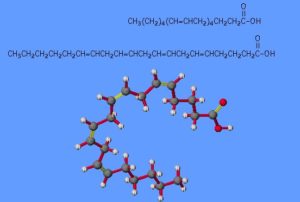
The purpose of prostaglandins is to cause contractions of the uterus during childbirth. Enzymes are produced in the uterus. When the follicle ripens, the pressure increases, it ruptures. Therefore, in the middle of the menstrual cycle, cramping pains occur.
Gynecologists call the process ovulatory syndrome. Often accompanied by headache, palpitations, nausea, chills, and vomiting.
The cause of the syndrome can be an infectious disease, which causes an inflammatory process in the ovary. Its walls are compacted, the release of the egg is difficult. It takes a lot of pressure on the follicle to release the egg. This is how the blood vessels are injured.
Enlargement of the thyroid gland
The thyroid gland is responsible for the work and creation of hormones in the human body. With its increase, the hormonal background is disrupted. During menstruation, a woman experiences pain syndromes, insomnia appears.
An enlarged thyroid gland leads to disruption of the whole body. Pathological inflammatory processes occur in the uterus and vagina. There are infectious and bacterial diseases, uterine fibroids, endometriosis.
The use of intrauterine contraceptives
Intrauterine contraceptives can cause pain in the middle of the cycle. Pain is caused by the presence of a foreign body. Also, the syndrome is sometimes triggered by the synthesis of prostaglandins.
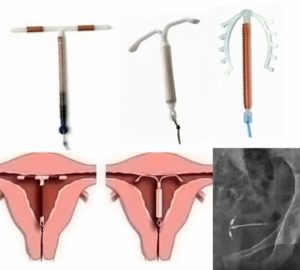
If pain occurs often, it is better to abandon the intrauterine device. Seeing a doctor is required if:
- Throughout menstruation, there are sharp pulling pain in the abdomen and lower back.
- The painful sensations intensify and do not go away for more than 2 days.
- The syndrome is accompanied by discomfort, itching, burning of the genitals. Urination is accompanied by sharp pains. Vaginal discharge has a pungent odor.
- There was severe bleeding during menstruation (the gasket is completely filled in an hour).
- An increase in temperature against the background of an inflammatory process.
Possible pregnancy
Pregnancy is the cause of pulling pain after ovulation. After fertilization, the egg is attached to the wall of the uterus. During this period, pains in the lower abdomen appear, which resemble pain syndrome as in the days before menstruation. In the early stages of pregnancy, the side from which the egg came out hurts.
- The syndrome appears due to increased blood circulation in the uterus. With the blood, oxygen and nutrients are supplied to the embryo. But increased blood circulation increases the tone of the uterus, the consequence will be a spontaneous miscarriage or its threat.
- Pulling pain sensations appear due to softening and stretching of the tissues and ligaments of the uterus. It increases and shifts. Rapid growth occurs in the first months of pregnancy. As a rule, the syndrome disappears by the second trimester.
- Increased progesterone levels cause pain. In this case, the sensation extends to the legs, back, lower back.
In order not to confuse pregnancy with illness, a woman should listen to her own body. As soon as conception has occurred, the body of the expectant mother prepares for the birth of a child. The chest begins to enlarge and hurt whenever you touch it.
Visit to the doctor
A doctor's consultation is necessary if the pain persists for a long time. The difficulty lies not only in ovulation and in the pathology of the pelvic organs. The stomach hurts due to diseases of the gastrointestinal tract, appendicitis and a number of other diseases.
When treating pain in the middle of the cycle, you should not rely on anesthetic drugs. Their action is aimed at relieving the symptom. If soreness appears within two or three cycles, it's time to see a gynecologist. The doctor will prescribe the necessary tests and studies.
An immediate hike will be required if a woman has one or more symptoms, accompanying painful sensations: nausea, vomiting, weakness, a sharp rise in temperature, itching and burning genitals.