Bowel hurts: reasons, what to do, treatment
According to medical statistics, pathologies in the work of the gastrointestinal tract are constantly associated with problems in the intestines. But medicine does not stand still. Many diseases have learned to identify and fight successfully. The main thing is to consult a doctor on time and not leave abdominal discomfort unattended.
The human intestine is a set of organs within the body that are responsible for the digestion of food and the release of nutrients from it. Each of the components can cause discomfort and pain in different places. It is worth considering each symptom separately, identifying the sources.
Content
- 1 The stomach hurts on the right
-
2 Stomach on the left hurts
- 2.1 Nonspecific ulcerative colitis
- 2.2 Diverticulitis
- 2.3 Sigmoiditis
- 2.4 Dyskinesia
- 3 Pain in the abdomen with a return to the back
- 4 Pain after bowel movements, eating
- 5 Girdle abdominal pain
- 6 Stomach hurts near the navel
- 7 Bowel pain during pregnancy
- 8 First aid for intestinal pain
- 9 Which doctor to contact
-
10 Treatment
- 10.1 Medicines
- 10.2 Surgical intervention
- 10.3 Natural pharmacy
The stomach hurts on the right
Most often, pain on the right side of the abdomen is associated with appendicitis. Accompanying sharp stabbing pain radiating to the right leg. Rarely accompanied by pain in the left leg. In addition to sensations, there are also visible signs:
- Diarrhea, gag reflex.
- Increased pressure and temperature 37 and above.
A patient with an inflamed appendix experiences increased pain when coughing, turning, or walking. An operation is needed to resolve the situation.
Discomfort is caused at times intestinal infection: ulcerative colitis, ileitis, Crohn's disease, diarrhea. The cause is amoeba or worms.
Stomach on the left hurts
With pains on the right, everything is quite simple, but the abdominal area on the left side gives many options for diseases.
Nonspecific ulcerative colitis
Colon disease associated with chronic inflammation of the mucous membrane of the organ. Bleeding non-healing ulcers can appear on the surface. In this case, with inflammation, ulcerative defects are formed, which subsequently develop into cancerous formations. The upper intestine is the source of pain. The cause of the disease is hereditary factors and environmental influences. With the disease, the rectum is affected, gradually spreading the inflammation to the colon. Accompanied by symptoms:
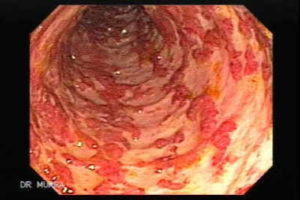
Ulcerative colitis of the intestine
- Desires for emptying, often false.
- The feces contain pus and blood.
- Increased body temperature.
- Malaise.
- Cutting pain.
Diverticulitis
It is a bag-like growths with a diameter of 5 mm to 10 cm. Most often formed on the walls of the large intestine, mainly in the sigmoid and colon (left half) intestine. Much less often, diverticulitis affects the small intestine. It can hurt in the lower left abdomen. The danger is that food gets clogged into the sacs - diverticula - bacteria multiply, and the process becomes inflamed. Symptoms accompanying the disease:
- Increase in body temperature to a state of fever.
- Liquid and watery stool.
- The presence of blood in the stool.
In women, diverticulitis is recorded more often than in men, 1.5 times. An adult organism is more susceptible to disease than a child's.
According to medical data, hernia-like processes are observed in more than half of the population, but only 10-15% become inflamed, and symptoms of the disease appear.
Sigmoiditis
The disease affects the sigmoid colon, which is the penultimate part of the large intestine. Sigmoiditis is able to act as an independent disease and become a manifestation of another ailment.
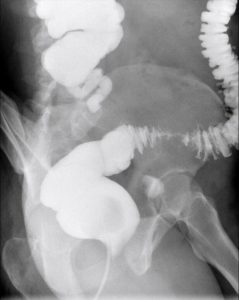
Intestinal sigmoiditis
The reason the disease develops is in the anatomy and physiology of the gut itself. Food in the process of digestion passes through the intestinal tract and, getting into sigmoid colon, finally forms feces, which contributes to irritation of the mucous membrane and the appearance of microtraumas. Due to the curved shape in the intestine, the contents of the intestine are retained and this also creates a predisposition to the appearance of inflammation.
But not only the structure of the sigmoid gastrointestinal tract leads to sigmoiditis:
- Intestinal infections. The toxins produced by bacteria act destructively on the cells of the digestive system and lead to the appearance of erosions and ulcers. The sigmoid colon is especially affected.
- Dysbacteriosis. Microflora performs a protective function, when the balance is disturbed, harmful bacteria and inflammation develop.
- Intestinal ischemia, in which the blood supply to the organ is disrupted. Most often, the cause is atherosclerosis, in which plaques form in the vessels that do not allow blood to pass in sufficient volume. This leads to poor nutrition of cells and tissues. Areas of necrosis appear - the first sources of inflammation.
- Radiation sickness. Excessive doses of radiation received by a person destroy the structure of cells, lead to the appearance of toxic compounds that damage healthy cells in the body.
Dyskinesia
A complex of diseases arising from the intestines, the lack of its motor function. The large intestine suffers more often. Drawing pains are characteristic.
There are two types: hypermotor and hypomotor. At the first, spastic contractions and intestinal tone increase sharply, constipation occurs, along the way - acute pain and colic. In the second type, the motor function and tone of the organ periodically decrease, food stops moving. Putrefactive processes begin, intestinal obstruction, the stomach is bursting and hurts.

Pain in the abdomen with a return to the back
With a duodenal ulcer, pain syndrome worries at night and between meals. Inflammation and wound appear as a result of acid exposure to the mucous membrane of the organ. Sensitive people are most susceptible to ulcers. In conjunction with the duodenum, the stomach is also prone to the appearance of an ulcer. The disease manifests itself in periods: exacerbation (spring, autumn) and remission. Mostly men are susceptible to diseases. The main causative agent of the disease is called a bacterium - Helicobacter pylori. Less common sources of duodenal ulcers are: taking anti-inflammatory drugs, cirrhosis of the liver, and renal failure.
Pain after bowel movements, eating
The feeling of discomfort after using the toilet is associated with a fissure in the anus. This significantly increases the likelihood of inflammation. A person feels severe, intense pain in the intestines, radiating to the sacrum or tailbone. When urinating - cramps. The situation is feminine, when the lower abdomen hurts - a violation of the menstrual cycle.
What else is indicated by abdominal pain after a bowel movement, as well as after eating:
- For injury to the coccyx or perineum.
- Intestinal cramps.
- Oncological disease of the rectum.
- Venereal disease.
- The formation of thrombosis in the intestine.
- Cramping.
Girdle abdominal pain
The symptom indicates the presence of enterocolitis in the body. The small and large intestines become inflamed, which leads to pathological changes in the mucous membrane of the organ and its dysfunction. Reasons for the appearance of enterocolitis:
- Intestinal infections.
- Eating disorders, including the use of large quantities of spicy food, alcoholic beverages.
- Poisoning at work or drugs. The patient took antibiotics for a long time and without control.
- Allergy to food.
- Radiation.
- Worms and other intestinal parasites.
Stomach hurts near the navel
In this case, the symptoms indicate difficulties in the small intestine - enteritis. This disease, as a result of which the mucous layer of the organ decreases, is a violation of the process of digestion of food and absorption of nutrients.
The reasons for the development of malaise:
- Parasites and infections that develop in the small intestine.
- Accumulation of toxic substances: arsenic, lead, etc.
- Uncontrolled intake of medications.
- Eating disorder. Abuse of spicy food, fast food. Poor chewing, food allergies.
- An insufficient amount of enzymes is produced for high-quality digestion of food.

In addition to internal abdominal pain, enteritis also has external manifestations:
- Sudden weight loss, the patient is losing weight.
- Irritability and insomnia appear.
- There is a decrease in activity.
- The skin becomes dry, flakes, hair falls out. Nails break easily and the nail plate becomes thicker.
- Uneven work of the heart.
- Muscle pain, weakness in the body, cramps.
In addition to enteritis, pain in the navel area may indicate a not so serious ailment. Discomfort can be provoked by an intestinal disorder caused by a violation of the internal microflora. The phenomenon is temporary; after the balance is restored, the symptoms disappear.
You should pay more attention to the pain in the navel area if the pain also spreads to the right side. This may indicate the onset of an inflammatory process in the appendix of the large intestine.
A dull pain on the right or in the right hypochondrium indicates a problem with the gallbladder, and the girdle pain is the pancreas.
Bowel pain during pregnancy
Discomfort in the intestinal tract of women carrying a child deserves special attention, since any disturbances in the health of the expectant mother pose a potential threat to the life and health of the baby.
Physiological changes in the body lead to a feeling of discomfort in the abdomen. Reorganization of the hormonal background, increased production of estrogen and progesterone lead to the following consequences:
- Relaxation of the muscles of the internal organs of the abdominal region.
- The motor function of the intestines decreases, the passage of food through the canal slows down.
- In a state of stress, muscle spasms of the tract intensify.
- As you approach childbirth, the uterus with the fetus enlarges. Internal organs are displaced, compressed, and their functional activity is disrupted.

Organ diseases also become the cause: impaired motor function colon (irritable bowel syndrome), inflammation of the ileum, colon and rectum (Crohn's disease), infections (cholera, dysentery).
Stress and poor diet also lead to pain in the abdomen of a pregnant woman.
When carrying a fetus in the body, adnexitis may occur in the chronic stage. These are inflammatory processes in the fallopian tubes, but it can spread to the peritoneal organs and cause peritonitis. It is not difficult to determine the symptoms that manifest themselves with this ailment:
- Aching pain radiating to the sacrum and rectum.
- Increased body temperature.
- Unpleasant sensations during inspection and when feeling.
First aid for intestinal pain
When a patient has a stomach ache, and going to a doctor is currently impossible, then you need to know how to provide first aid:
- The patient should lie on a flat surface for 30 minutes.
- Help get rid of stagnant feces. To do this, you need to massage the abdomen and take laxatives or micro enema. After an enema, the patient should feel better, but they cannot be abused, since intestinal motility will be disturbed.
- If bloating and the formation of excess gases are observed, then take activated carbon or Smecta.
- For severe cramps, take pain pills, such as Papaverine.
Severe pain and the inability to relieve the syndrome even after taking medication indicates the need to call an ambulance.
To prevent recurrence of problems with the intestinal tract, it is necessary: to observe the diet, to consume a sufficient amount of liquid, to undergo a comprehensive examination.
But it must be remembered that it is not permissible to relieve a spasm for all diseases. For example, if you anesthetize with appendicitis, the specialist may not recognize the ailment due to a blurred picture of symptoms.
Which doctor to contact
If the patient feels abdominal discomfort, they suggest contacting the following specialists:
- Gastroenterologist. With colitis and duodenitis, when the intestines hurt, and inflammatory processes take place in it. Dysbacteriosis, enterocolitis, the presence of parasites inside the organ.
- Proctologist. Deals with malfunctions of the rectum, colon and adjacent organs. This doctor is consulted in the presence of persistent constipation or, conversely, with regular diarrhea. If swelling has formed in the anal area, blood blotches have appeared in the feces, and the hemorrhoidal node has come out.
- Oncologist. Treatment of malignant and benign tumors in the intestines and in the internal organs of the abdominal cavity.
Treatment
To successfully combat diseases of the intestinal tract, the patient must be examined and tested, and only after that the doctor will decide how to treat and prescribe the necessary drugs. It is undesirable to take medications on your own without consultation.
Medicines
Depending on the symptoms observed, laxatives, pain relievers, sorbents, and medications that normalize the microflora are prescribed.
- Pain relievers. No-shpa, Drotaverin, Duspatalin - help to quickly remove pain, help to normalize the general condition of the patient.
- With a laxative effect. Duphalac, Guttalax, Regulax - have an irritating effect on the walls of the intestinal tract, enhance the motor activity of the organ. The medicine helps relieve constipation.
- With increased gassing. Espumisan - fights excess gases. The agent helps to reduce intestinal motility, collapse of part of the gas balls with subsequent absorption, and the other part is excreted naturally.
- Sorbents. Medicines aimed at removing toxins from the body. Of the tablets, the most popular are Activated Carbon, from suspensions - Smecta.
- Probiotic medicines. They normalize the microflora in the intestines. Bifiform, Linex.
- Anti-inflammatory. Trichopolum, Tsiprolet, Metronidazole.
Surgical intervention
Sometimes surgery is needed to help a patient or save his life. For removing:
- Diseases of the small intestine. Short bowel syndrome, adhesion, malignant tumor, blockage of the blood vessels supplying the organ.
- Ailments of the large intestine. Appendicitis, diverticulitis, mucosal polyps, cancer.
- Diseases of the rectum. Hemorrhoids, anal fistula.
Natural pharmacy
Alternative methods are also able to alleviate the patient's condition at home. As well as taking medications, folk recipes should be discussed with the attending physician.
Herbal decoction. Consists of: peppermint, yarrow, sage, motherwort, oak bark, St. John's wort. Ingredients in equal proportions are poured into 0.5 liters of hot water. Boil over low heat for 2 hours. After cooling, drink half a glass for 3 days (four times a day). It is taken for diarrhea and irritated mucous membranes. If the patient is diagnosed with pancreatitis, then taking herbal decoction is strictly prohibited.
With a weak motor activity of the intestines, an infusion of toadflax is recommended. 1 teaspoon of chopped herbs is mixed with a glass of boiled water and infused for 10 minutes. Take three times a day.
Aloe and honey. Honey in the amount of 300 g is melted, pre-chopped aloe leaves (3 pcs) are added. The mixture is infused throughout the day and taken warm before breakfast (1 hour). If aloe is not available, potatoes or cabbage can be used.