The large intestine: where it is and how it hurts
90% of people are susceptible to diseases of the gastrointestinal tract, based in the large intestine. The intestine is divided into two areas: the thin and the thick. The large intestine is the lower gastrointestinal tract. The length is two meters. Its wall is covered with a serous membrane.
Digestive organ structure:
- The ascending colon. Is an extension cecum. It is not involved in the digestive tract. Its role is to absorb water and electrolytes. The location is changeable. The diameter is approximately 24 centimeters. Located in the right abdomen.
- Descending colon. Located on the left side of the abdominal cavity. Like the ascending one, it does not participate in the digestive tract. The function, however, as in all departments, is to absorb water and electrolytes. The diameter is approximately 23 centimeters.
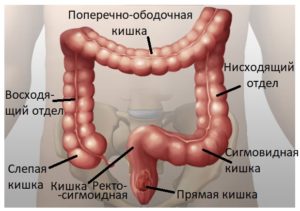
- Sigmoid colon. It resembles the letter S because of its curvature. The sigmoid section is located on the left side behind the abdominal cavity. The length is approximately equal to one and a half meters. The main function is the absorption of nutrients. In the presence of abdominal pain in the lower left, they speak of pathology.
- Rectum. The final section of the digestive tract. Stays in the pelvic cavity. The diameter is approximately 14 centimeters. Function - defecation, emptying.
- The cecum with the appendix. Located in the right iliac fossa, the sides of which are closed by the peritoneum. It resembles a bag with a diameter of 3-8.5 centimeters. The main task is to absorb the liquid contents of the stomach.
A common disease that subsequently causes abdominal pain that radiates to the leg is appendicitis. In this case, the intestine on the right hurts.
Various parts of the intestine carry out the function allocated to them. In order for the intestines and the digestive system to work properly, it is required that the leaving parts work smoothly.
Content
- 1 Colon functions
-
2 Colon diseases
- 2.1 Ulcerative colitis
- 2.2 Proctitis
- 2.3 Ischemic colitis
- 2.4 Colon tumors
- 2.5 Irritated colon
- 2.6 Diverticulosis
- 2.7 Dolichosigma
- 2.8 Megacolon
-
3 Treatment of diseases
- 3.1 Drug treatment
- 3.2 Traditional methods of treatment
- 3.3 Diet
- 3.4 Surgery
- 4 Disease prevention
Colon functions
Performs a number of important functions in the human body:
- Digestive. Final processing of end products with molecules that accelerate chemical reactions, as well as the release of nutrient residues from it.
- Suction. Useful substances are assimilated.
- Muscular. Promotes the movement of the contents of the colon. Responsible for the removal of harmful substances from the body.
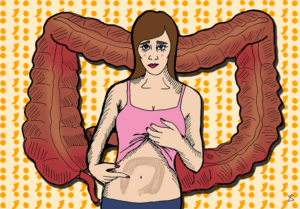
The health of the body directly depends on the full functioning of the large intestine. Most people develop slagging. This does not always depend on a person's constitution. Cleansing is considered the most important among other body cleansing.
Colon diseases
Usually, with pathology, pain is localized on the side of the abdomen. A lot of complaints from patients come to pain in the intestines on the left, this is due to infectious inflammations, which intensify with movement.
Ulcerative colitis
Pathological disease. With this disease, the mucous membrane of the large intestine suffers. A symptom of the disease is a long course with aggravation of symptoms. Painful symptoms are localized at the bottom left.
The etiology of the disease is still unknown. Suggestions are made about the involvement of hereditary pathology of the immune system. Complaints of patients about weakness, weight loss, general malaise are characteristic. Disease management continues for a long time. It is recommended that dairy products be phased out due to their hypersensitivity to milk proteins.
Proctitis
Inflammatory process due to constipation, trauma, infection. Often, cancer and benign formations of tissue above the mucous membrane progress in the rectal region. The anus is prone to pain that increases with walking.
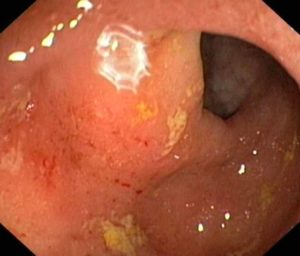
Disease proctitis
Causes of proctitis:
- Nonspecific ulcerative colitis.
- Diseases that are not pathological.
- Infectious etiology.
- Sexually transmitted infections.
- Frequent use of certain groups of drugs.
- Food allergic reactions.
- Various pathologies.
Ischemic colitis
The main symptom is stenosis, which provokes inflammation. At the initial stage of the disease, there are short-term pains in the left abdomen. Subsequently, ulcers may develop. Mostly ischemic colitis progresses in the sigmoid and transverse colon.
Colon tumors
Two types of tumors are known: benign and malignant. The most common type is malignant. Today rectal and colon cancer is the most common cancer among malignant tumors.
There are very few specific indicators by which it would be possible to detect cancer at the initial stage. It is important for bowel disorders to seek the help of a doctor in order to identify a tumor in the intestines at an early stage.
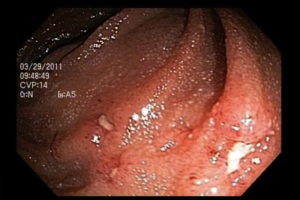
Colon irritation
Irritated colon
A group of intestinal disorders, expressed by pathologies of motor function in the absence of organic changes. In patients, the stomach begins to ache, there is a violation of the stool, bloating. The nature of the pain is uncertain - sharp, stabbing, cutting.
Treatment depends on the doctor's ability to identify the underlying etiology. Doctors recommend following a loyal diet. In the chronic course of the disease, dysbacteriosis or a violation of a group of microorganisms found in the natural conditions of the intestine may occur.
Diverticulosis
As a result of the disease, local saccular protrusions appear in the intestinal wall. They often form in older people. The reason is the insufficient amount of food of plant origin. In addition to constipation, diverticulum formation is facilitated by:
- Excessive body weight.
- Excessive use of laxatives.
- Increased gas formation.
The main method in the treatment of the disease is stool regulation.
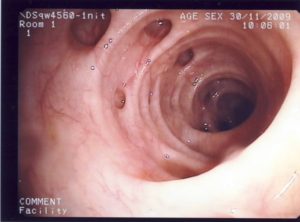
Diverticulosis disease
Dolichosigma
Elongated sigmoid colon. It can be either congenital or acquired. The course of the disease proceeds without obvious symptoms. Usually, treatment is conservative and is aimed at normalizing the stool. Surgical intervention is required to resect the accessory sigmoid loop.
Megacolon
Enlargement of part or all of the colon. The need for surgery depends on the form of the disease. If surgery is required, the enlarged portion is removed.
Treatment of diseases
Timely assistance from an experienced expert is considered an important step. Under no pretext, it is impossible to engage in treatment on your own, it is harmful to health. Only a doctor has the right to prescribe a working therapy regimen. There are known types of disease control.
Drug treatment
Depends on the type of disease. The pathological process is caused by a number of factors:
- Infection.
- Poisoning.
- Improper nutrition.
- Dysbacteriosis.
Therefore, the method of therapy is prescribed after establishing the etiology of the disease and the main symptoms. In the treatment of inflammation, drugs are prescribed that normalize the composition of the microflora. Surgery is required when diagnosing autoimmune inflammation.
Traditional methods of treatment
Traditional methods of treatment give a favorable result. For several types of colon diseases, original methods are allowed. The method is selected according to the type of disease. In folk medicine, there is an abundance of homeopathic treatment methods based on the natural qualities of medicines. The use along with drugs shows the best result.
Diet
Medical treatment should be accompanied by diet. The food is prepared from organic products. Steam is recommended. Harmful fried and smoked foods should be completely eliminated from the diet. You need to eat often, in small portions.
Surgery
Surgery is indicated only for several types of diseases: an acute form of Crohn's disease, which affects the entire digestive tract, ulcerative colitis, and also when deterioration occurs. The damaged area of the intestine is removed, restoring continuity and patency. I am glad that surgical intervention is required only as a last resort.
Disease prevention
To prevent the disease, doctors recommend monitoring the diet. Do not eat foods with a high degree of allergenicity, fatty and fried foods.
Prevention includes:
- Leading a healthy lifestyle.
- Avoiding stressful conditions.
- Elimination of constipation.
- Diseases eliminated in time.
- Systematic visits to the doctor for the purpose of a preventive examination.
- Sleep for at least 8 hours.
- Performing physical activity regularly as much as possible.
- Monitoring the state of the intestinal microflora.
- Compliance with hygiene standards.
The pathology of the large intestine is reflected in the patient's condition. The described diseases often show a long-term course and are subject to seasonal deterioration. An integrated approach to getting rid of the disease is required.
It should be taken into account that diseases are easy to prevent in order to avoid further aggravation of the condition. Remember, even with the slightest changes in normal work: painful sensations, unusual manifestations - a visit to the doctor is equivalent to a mandatory action.