Pain in the stomach in the solar plexus area: reasons for what to do
The solar plexus is an area of the body where many nerve endings are collected. The nerve impulse from the diseased organ instantly enters the celiac ganglion. People often face this ailment when they go to the hospital with a complaint of pain in the solar plexus.

The nature of the pain is different: discomfort is sharp, aching, increases in attacks, or bothers you all day. There are two main causes of pain in the solar plexus area:
- External trauma and various lesions of the celiac node.
- Symptom of other diseases.
Let's consider each reason in more detail. Injuries are different, the foci of the disease are located in different organs. The nature of pain and additional symptoms distinguish the types of pain in the node of nerve endings.
Content
-
1 External trauma and various lesions
- 1.1 Excessive physical labor
- 1.2 Solar plexus injury
- 1.3 Neuritis and neuralgia
- 1.4 Solarite
-
2 Pain as a symptom of another disease
- 2.1 Gastrointestinal tract
- 2.2 Duodenum
- 2.3 Pancreas
- 2.4 Small intestine
External trauma and various lesions
The causes of such ailments are physical activity, trauma to the zone of the nerve node and neuralgia.
Excessive physical labor
In this case, the nature of the pain takes on a sharp and stabbing form. Pain sensations appear abruptly and suddenly disappear after rest. Occur during sports or due to hard physical work. Special treatment in such a situation is not required; reducing the load, more rest or a change of place of work will help.
Solar plexus injury
A strong blow to this area can rupture the diaphragmatic muscle. A hernia appears, which only a surgeon can remove. At best, the blow will simply disrupt breathing and lead to loss of consciousness. The resulting injury leads to instant and sharp pain in the abdomen, difficulty breathing. The person even gets sick at first.
The victim is required to lay on a flat surface, do everything possible to restore normal breathing, do a light massage of the affected area. If a person cannot speak and is unconscious, ammonia will help bring him to his senses. In case of vomiting and the appearance of seizures, an ambulance must be called urgently. If severe pain in the abdomen does not cease to bother even after days, this means the development of the inflammatory process.

Neuritis and neuralgia
The cause of neuritis is viral or bacterial infections, intoxication of the body, compression of nerves or hypothermia. In this case, the nerve endings become inflamed, creating unpleasant painful sensations in the stomach area. Stress and heavy physical exertion will only exacerbate pain attacks. For neuritis are characterized by: a sharp attack of acute pain, often radiating to the back, bursting sensations in the abdomen.
Neuralgia can be caused by an infectious bowel disease, worms and trauma. The symptoms of the two diseases are very similar, only an experienced neurologist will be able to determine the cause of the ailment and make a diagnosis.
The treatment of neuralgia will be the use of drugs that increase the conductivity of nerve fibers, stimulants of biological origin and B vitamins.
Solarite
The most severe lesion of the celiac ganglion, which is accompanied by the emergence of additional inflammatory processes. Solaritis is recognized as a consequence of prolonged neuritis or neuralgia, which were not treated in time. It proceeds in an acute form with a considerable number of symptoms: pain in the chest and heart area, pressing, feeling of heat from the inside without an increase in body temperature, disruption of the intestines, stomach tone, bloating in stomach.
Healing massages, special gymnastics and physiotherapy are what doctors usually prescribe when a solarite is diagnosed.
Pain as a symptom of another disease
Pain in the area of the node arises not only due to injuries, but also becomes a symptom of serious diseases of human organs. By the nature and localization, it is determined which organ in the body has suffered.
Gastrointestinal tract
Such diseases more often than others cause anxiety and pain in the celiac plexus, because the human stomach is in close proximity to the celiac node.
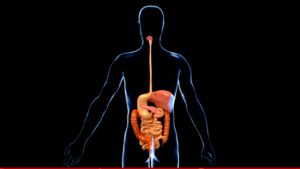
Human gastrointestinal tract
- Gastritis is a pathology of the gastrointestinal tract. Inflammation of the mucous membrane of the fundus of the stomach causes acute pain syndrome a couple of minutes after eating. In case of anxiety in the lower part of the stomach, discomfort may occur much later or on an empty stomach. Patients complain of aching stomach pain, heaviness in the abdomen and difficulty sleeping. Disturbed by belching air and heartburn. Eating a strict diet is important to heal gastritis. A gastroenterologist will prescribe fractional meals, medications.
- Stomach ulcer. The disease occurs as a consequence of incurable gastritis. It can be caused by improper diet and frequent stressful situations. People with ulcers often complain of pain in the stomach, heaviness of the abdomen after eating, nausea, severe vomiting, increased plaque on the tongue. A gastroenterologist is involved in the treatment of stomach ulcers. If you do not start timely treatment, complications will arise, the need for surgical intervention.
- Tumor and cancer. Leading an unhealthy lifestyle, consuming alcohol, drugs, smoking in large doses causes serious harm to the human body. Ignoring doctors, suffering from gastritis or ulcers, contributes to the emergence of tumors and cancer cells. At the initial stage, there may not be obvious manifestations, but gradually it manifests itself with an increase in body temperature, a decrease in appetite, constant vomiting, and weight loss. In the early stages of tumor development, surgery can help. Cancer causes the death of the patient.
Duodenum
- Duodenitis can develop even in childhood. In addition to pain in the area of accumulation of nerve endings, weakening of the body and previous nausea and vomiting are considered obvious symptoms. Sometimes the stomach may not hurt until you touch it. During the first days of duodenitis, fasting and bed rest are observed.
- When a tumor of the duodenum occurs, the pain in the celiac node is not so sharp, it is difficult to recognize the disease in the early stages.
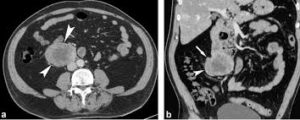
12 duodenum
Pancreas
- Pancreatitis is accompanied by severe, sharp pain. Additional symptoms: fever, persistent nausea and vomiting with a large amount of bile. Pancreatitis is acute or chronic. The disease is characterized by the fact that vomiting does not stop for a long time, relief does not come. Treatment is carried out in a hospital.
- A tumor of the pancreas is accompanied by similar symptoms as pancreatitis, possibly bloating and indigestion.
- Peptic ulcer disease in the pancreas is marked by sharp spasms in the area of the nerve node. They occur more often at night on an empty stomach. Nausea and vomiting are also inherent in ulcerative disease.
Small intestine
There are dozens of diseases in the small intestine, the symptom of which is pain in the area of the nerve node. It is not easy to identify them without the help of a specialist, even knowing the additional symptoms.
- Bowel infections are characterized by severe diarrhea with mucus, and the stool changes to a green or very pale color. Vomiting and nausea are noted.
- Peritonitis can lead to the formation of neuralgia.
- Adhesions in the abdominal cavity and intestines are accompanied by similar ailments as neuralgia and neuritis.
- Worm infestations overwhelm the intestine, press on the organs, causing discomfort in the nerve congestion.
- Tumors of the stomach, intestines and other organs of the abdominal cavity lead to painful sensations of varying degrees in the solar plexus.
- An intestinal ulcer leads to disturbances in the digestive process and moderate ailments.
- Food poisoning, like a gut infection, has similar symptoms.
If the sensation of pain does not bother in the center of the solar plexus, but above or below in the stomach:
- Pain under the solar plexus often worries women, as a result of diseases of the genitals.
- The malaise just above the celiac plexus is often due to heart problems. The pain is dull and aching, capable of stabbing strongly in the heart.
- Ulcerative colitis is accompanied by similar symptoms as most diseases of the digestive system and gastrointestinal tract.
If a person has a stomach ache in the solar plexus region, he cannot hesitate. This malaise is considered a symptom of many serious diseases. Not always the cause of the disease becomes immediately clear, you will need to be examined by specialists, to be tested in order to determine the true cause of the ailment. Any diagnosis must be accepted. Self-medication in this situation will not lead to good.