Symptoms of liver and pancreas disease: a detailed description
The liver and pancreas play an important role in digestion and absorption of nutrients. Diseases of these organs often do not have symptoms in the early stages, which leads to complications. It is important to listen to your body and at the first sign of illness, immediately consult a specialist.

Localization of the liver and pancreas in the body
Content
-
1 Major liver diseases: classification and symptoms
- 1.1 Types of hepatitis
- 1.2 Cirrhosis of the liver
- 1.3 Hepatosis: what is this disease
- 1.4 Liver neoplasms
- 1.5 Liver damage by parasites
- 1.6 Video - Symptoms of liver disease
-
2 Diseases of the pancreas and their symptoms
- 2.1 Video - Diseases of the pancreas
- 2.2 Pancreatitis and its varieties
- 2.3 Type 1 diabetes
- 2.4 Pancreas neoplasms
- 2.5 Cystic fibrosis
- 2.6 Video - Symptoms of liver and pancreas disease
Major liver diseases: classification and symptoms
The liver destroys and filters toxic substances that enter the body, without this organ life is impossible. There are no nerve endings in it, which means that a person does not experience pain during the development of liver diseases. This leads to the fact that the disease is diagnosed at a later date.

The liver and its role in the human body
A characteristic symptom of liver damage is the development of yellowness of the skin, sclera of the eyes and mucous membranes. At the same time, the level of bilirubin in the blood rises. The general condition of the patient worsens, and the organ itself increases significantly in size (this can be detected even on palpation).
The most common liver diseases include hepatitis (viral, chronic, etc.) and hepatosis, cirrhosis, neoplasms, benign or malignant, parasite infestation, stenosis.

Liver disease
Important! In almost all diseases, the patient experiences discomfort or pain on the right under the ribs (sometimes it can be very strong and cramping). The body temperature rises to 38-39 degrees, there is profuse vomiting, indigestion (uncontrolled diarrhea), and severe sweating.
Types of hepatitis
Hepatitis is divided into acute (usually develops with poisoning, but can be a complication of viral diseases), chronic (typical for people who abuse alcohol and drugs). Also distinguish between viral, secondary, bacterial, toxic varieties of the disease.

Disease progression that begins with hepatitis B
Table. Symptoms of several types of hepatitis.
| Name of the disease | Symptoms |
|---|---|
| Hepatitis C | This type is characterized by a long asymptomatic period, while liver cells are actively reborn, which leads to the development of organ pathologies. |
| Hepatitis A and E | The patient has weakness, the body temperature rises, the head hurts badly, the liver increases in size. As the disease progresses, yellowness develops, the urine darkens, and the feces become lighter. |
| Hepatitis B (chronic) | The patient feels depressed, experiences aching pain under the ribs on the right. The sclera and skin turn slightly yellow, and the nose may bleed. The liver and spleen increase in size. |

Prevention of hepatitis
Cirrhosis of the liver
With a disease such as cirrhosis, the destruction of liver cells occurs. Over time, they are replaced by fibrous tissue, but this leads to a gradual decrease in the functions of the affected organ. Metabolism is disrupted, toxins accumulate in the body, and as a result, a person dies.

The course of alcoholic liver disease
This life-threatening disease occurs without any signs in almost half of cases (up to 40%).
Early symptoms include the appearance of aching pain in the right side, which intensifies after eating fatty foods and alcohol-containing drinks. The mucous membrane in the mouth dries up in the morning, there is a feeling of bitterness. The patient complains of bloating and upset stools, loses body weight, gets tired quickly, and is more nervous.

Complications of liver cirrhosis
There are four stages of cirrhosis:
- At the first stage, the patient does not feel unwell, but may notice periodic aching pains in the right side. A blood test shows a slight increase in bilirubin.

Structural formula of bilirubin
- In the second stage, the number of dead liver cells increases. During this period, the patient begins to feel the first signs of malaise: he is sick, appetite decreases, which is why weight loss occurs. In the second stage, a blood test shows a decrease in albumin levels. If treatment is started on time, there is a chance of partial recovery.

Spatial image of serum albumin
- In the third stage, symptoms begin to manifest themselves. The skin and mucous membranes turn yellow, pain in the right side increases. During this period, ascites (accumulation of fluid in the peritoneum) often develops. This stage is dangerous with complications: internal bleeding, pneumonia, hepatic coma, etc. Treatment is carried out only in a hospital.

Medical hospital
- In the fourth stage, the liver is almost completely destroyed. The patient is prescribed pain medication, as the pain in the right side becomes unbearable. The treatment is no longer effective, the process of organ destruction is irreversible.

Pain in the right side
On a note! With cirrhosis, patients have other symptoms, for example: itching, blemishes on the eyelids, thickening fingers, swelling of the joints, the appearance of spider veins on the chest and back, swelling of the tongue, bleeding from nose.
Hepatosis: what is this disease
Disease hepatosis develops against the background of severe poisoning. It can be chronic or acute. In the first case, aching pains in the right side are observed, the liver increases in size, the patient feels depressed.

Hepatosis
In the acute form, jaundice develops rapidly, the body suffers from intoxication. The diseased organ may increase slightly, but later the size returns to normal. With cholestatic hepatosis, itchy skin appears, urine darkens, feces acquire a gray tint, and body temperature may rise.
Liver neoplasms
Tumors or neoplasms are classified as benign or malignant. The first include adenoma of the liver, which is formed from hepatocytes. It can manifest itself as pain in the right side and anemia.

Neoplasm in the liver
Also, a hemangioma, which is formed from the vascular elements of the liver, is referred to as benign neoplasms. This swelling is rarely accompanied by symptoms.
Malignant neoplasms include angiosarcoma, hepatocellular carcinoma, hepatoblastoma (develops in children), and cholangiocarcinoma. The appearance of such tumors is accompanied by pain in the right side, nausea and vomiting, an enlarged liver, and a deterioration in the general condition of the patient.

Hepatoblastoma
Liver damage by parasites
Parasites can live and multiply in the liver.
Table. Hepatic parasites.
| Parasite name | Effects on the liver |
|---|---|
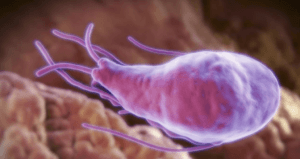 Giardia |
These parasites cause inflammation and degeneration of the liver cells. |
 Schistosomes |
They live in the vessels of the liver, and eggs can penetrate into the tissues of the organ. These parasites contribute to the development of cirrhosis and hepatitis. |
 Amoeba |
These protozoa lead to the formation of liver necrosis and the formation of blood clots, as a result of which an amoebic abscess develops. |
 Roundworm |
These helminths cause the formation of necrosis in the organ and are one of the reasons for the development of hepatitis and cholangitis. |
 Echinococcus unicameral |
This parasite leads to atrophy of liver tissue as a result of compression of the bile ducts and blood vessels. |
 Echinococcus alveolar |
Affects liver tissue and cells. |
Common symptoms of liver parasite infection include the appearance of acne on the skin, exfoliation of the nail plates, the formation of papillomas and age spots, hair loss, coarsening and cracking of the skin on heels. The patient loses body weight, does not sleep well, becomes nervous.
Video - Symptoms of liver disease
Diseases of the pancreas and their symptoms
Common diseases of the pancreas include pancreatitis, diabetes, cystic fibrosis, and neoplasms. The first symptom is aching or severe pain in under the ribs on the left side, which can radiate to the heart or to the left shoulder blade. Often, with the development of such ailments, the liver enlarges.
Video - Diseases of the pancreas
The patient's gastrointestinal tract is disrupted: constipation occurs, but more often the stool liquefies. Feces become dark, contain mucus. A coating of white appears on the tongue. Nausea and flatulence are present, appetite decreases.

White coating on the tongue
Pancreatitis and its varieties
The most commonly diagnosed disease of the pancreas is acute pancreatitis. In this case, severe inflammation of the organ develops, and sometimes it comes to tissue destruction. The main reason for the development of this condition is the consumption of a large amount of alcohol.

Pancreatitis
Acute pancreatitis is also caused by the use of spicy and fatty foods, traumas and operations, taking certain medications, and gallstone disease. With this disease, a person experiences severe pain in the lumbar region, profuse vomiting appears, body temperature rises, severe diarrhea develops, and the stomach seems to be bursting from the inside.
Type 1 diabetes
With diabetes mellitus, the patient drinks a lot due to strong thirst and dry mouth, urination becomes more frequent. The skin becomes dry, small pustules appear on it, and severe itching is felt. People with diabetes do not sleep well and feel constant weakness. Appetite increases, but body weight decreases.

Increased blood sugar (glucose) in diabetes
Pancreas neoplasms
In the pancreas, benign tumors can form, which include adenoma, leiomyoma, lipoma, cysts, fibroma, hemangioma. Such neoplasms can cause abdominal pain, discomfort after eating, and impaired appetite. As you grow, symptoms such as jaundice, vomiting, increased sweating, and dark urine develop.
Malignant tumors include sarcoma and adenocarcinoma. Their formation is accompanied by pain in the abdominal cavity, itchy skin, yellowness, disruption of the gastrointestinal tract. Patients have increased blood sugar levels, decreased appetite, which leads to weight loss.

Pancreatic cancer signs
Cystic fibrosis
Fibrosis is a hereditary disorder that affects children. With this ailment, the patient's skin becomes salty, defecation may be absent, or, conversely, diarrhea and severe bloating develop. Children with fibrosis do not grow well.

Stool problems
Important! Quitting bad habits is the first thing a person should do when they want to avoid liver and pancreas diseases. It is important to follow the diet, exclude from the diet foods that are difficult to digest and digest. Every day you should take walks in the fresh air.
At the first sign of malaise, it is better to consult a doctor, since any disease is easier to cure in the early stages.