
Diarrhea during menstruation: why it occurs and how to stop the ailment
Menstruation for two or three days causes significant discomfort to many women, and in addition to rashes on the face, abdominal pain and mood swings, diarrhea can occur on critical days. About a third of women of childbearing age overtake diarrhea in the first days of menstruation. However, this phenomenon is not considered a signal of problems in the body and, in principle, is not a reason to worry. Today we will figure out why diarrhea occurs during menstruation and how to stop the disease.

Diarrhea during menstruation: why it occurs
Content
-
1 Why does diarrhea occur during menstruation?
- 1.1 Diarrhea with PMS: causes
- 1.2 Diarrhea instead of menstruation
- 1.3 Diarrhea during menstruation: pathology
-
2 How to relieve diarrhea during menstruation?
- 2.1 Diarrhea during menstruation: should I go to the doctor?
- 2.2 Video - Three questions about menstruation that women are embarrassed to ask
- 3 Summarizing
Why does diarrhea occur during menstruation?
Diarrhea during menstruation is a completely safe process, albeit unpleasant. In most cases, diarrhea disappears on the very first day of menstruation, but sometimes it can linger for another couple of days. There is a logical calming explanation for this - at the beginning of critical days, the female body produces a lot of progesterone. An increase in this hormone provokes a powerful cleansing of the body and, in addition to diarrhea, brings troubles typical for menstruation:
- Fatigue, lethargy, tearfulness.
- Slight increase in weight.
- Acne on the face and décolleté.
- Headache.
- Change in appetite, permanent hunger.
- Soreness when touching the mammary glands, and the like.

Diarrhea during menstruation occurs in every third woman
In addition, during menstruation, the uterus is enlarged and contracts regularly, expelling blood, thereby stimulating the rectal wall. Such pressure causes the urge to defecate, on the first day of menstrual bleeding, when the volume of blood coming out is maximum, a woman may constantly want to go to the toilet "in a big way." Intestinal peristalsis works in the same rhythm with uterine contractions, therefore, as soon as the latter become more frequent, the intestines seem to be synchronized and also accelerate their work.
In addition, during menstruation, women experience sharp changes in food preferences - someone is drawn to sweets, someone, on the contrary, prefers salty or spicy food. The intestine immediately reacts to unfamiliar food, which irritates its walls and provokes diarrhea. The consumption of sweet foods during menstruation increases the sugar content in the body, causes fermentation in the stomach, bloating, flatulence, and causes diarrhea. Salty, on the contrary, provokes a strong thirst, the woman often drinks, because of which the feces liquefy.

Some women experience changes in their taste preferences during PMS.
There are two more explanations for why critical days in women are accompanied by diarrhea. Firstly, blood circulation in the small pelvis increases, which significantly affects the work of the digestive tract. Blood rushes to the intestines, stimulates it, pushes it to increased activity.
Secondly, due to the presence of progesterone in an increased amount, women feel more acutely all external problems, become more susceptible, vulnerable, irritable. Light stress can also cause increased intestinal motility and diarrhea.
Diarrhea with PMS: causes
In women who have a hard time tolerating menstruation, they suffer significant abdominal pain, dizziness, sharp symptoms of a psychoemotional nature, can meet with manifestations of diarrhea and a week before menses. In this case, diarrhea is considered as part of PMS - premenstrual syndrome.

For many women, critical days are accompanied by abdominal pain and dizziness.
A few days before the onset of menstruation, diarrhea occurs for the same reasons that we listed above. The body strives to cleanse itself as soon as possible - this is what nature has laid down. In addition, there are benefits to premenstrual diarrhea. With the accelerated evacuation of the eaten, women often lose weight, and by the third or fourth day of the cycle they can observe a "plumb line" of the order of two to three kilograms on the scales. In addition to weight loss, diarrhea, lasting one to two days, makes you feel light in the body and easier to endure the beginning of the period.
Diarrhea instead of menstruation
Sometimes it happens that a woman is expecting the arrival of her period, and instead she gets an attack of diarrhea. In this case, the first step is to visit the pharmacy and purchase a test showing the onset of pregnancy.

Diarrhea before menstruation may be due to pregnancy
The fact is that diarrhea is a very "talking" symptom, which, against the background of a delay in menstruation, indicates a new life that has arisen inside the female body. If, in parallel, a woman experiences nausea in the morning, pain in the mammary glands, intolerance to certain odors and a sharp change in taste preferences.
Diarrhea in this case acts as a method of self-cleaning of the body and is considered the very initial stage of preparation for pregnancy. In this situation, the weakening of the stool can take place within a week, while the woman does not feel pain or discomfort.
Also, diarrhea in the early stages of pregnancy occurs in women planning a child. Often, young ladies who want to become mothers take drugs such as folic acid, magnesium, vitamin B6, or complexes for expectant mothers.

Drink more water
At this time, it is important for a woman to monitor the water balance and drink clean water regularly. A visit to the doctor must be planned at least in the light of the two strips that appeared on the test, and during the conversation consult a gynecologist about diarrhea and find out the doctor's opinion about the need to pass tests and start therapy.
Diarrhea during menstruation: pathology
Diarrhea during menstruation is not always natural. Although not often, this process can be caused by pathological changes and a number of diseases. This can be a signal of problems of a gynecological nature or in the urinary system, as well as a marker of unhealthy digestive tract.
Table 1. Pathological causes of diarrhea during menstruation
| Pathology | What's happening? |
|---|---|
| Intestinal infection | The disease can occur at any time, but against the background of suppressed immunity in the first days of menstruation most likely the onset of the disease and its more vivid manifestations: diarrhea, fever, lethargy, nausea. |
| Cystitis | An infectious disease of the bladder greatly complicates the course of menstruation, since the inflamed organ presses on the uterus, increasing its contractions, and on the walls of the rectum, causing not only difficulty with urination and a burning sensation, but also diarrhea. |
| Gastritis, colitis and other gastrointestinal diseases | If diseases of the digestive tract already take place, then they are easily exacerbated during menstruation due to the "hormonal storm", inaccuracies in the diet, and decreased immunity. |
| Endometriosis | In the intestines, there are cells similar to the tissues of the uterine mucosa, therefore, with the onset of menstruation, diarrhea with bloody discharge is common. Also, with endometriosis, the entire menstrual cycle can be very painful in the stomach, bowel movements not only become more frequent, but also become sore. |
| Fibroids, folds of the uterus | With menstruation, the uterus already swells and spreads in size, and if there is a non-standard location or a tumor on the outer wall, the pressure on the rectum will be increased. |
According to medical statistics, diarrhea during menstruation most often occurs precisely in those women who suffer or have a history of the above diagnoses. Accordingly, for the onset of critical days, you need to prepare in advance in order to minimize or completely prevent diarrhea.
How to relieve diarrhea during menstruation?
If the causes of diarrhea are associated with natural causes inherent in the female body, do not rush and immediately take pills for diarrhea, like Loperamide or Imodium. Do not forget that menstruation and its characteristic manifestations are not a disease or its symptoms. Antidiarrheal drugs in this case can work in the opposite direction and cause constipation. The maximum that can be taken is Polysorb powder.

Loperamide

"Imodium"
In addition to the fact that this drug is an enterosorbent, that is, it literally magnetizes toxins, harmful substances and microorganisms to itself, contributing to gentle cleansing and relief of an attack of diarrhea. Taking "Polysorb" during menstruation is not bad, and because it acts in a cleansing way, helping fight the inflammation that appears on the face, reducing the oily skin and minimizing allergic rashes.

Polysorb MP
However, you can do without powder. Every woman can completely eliminate diarrhea or completely postpone unpleasant symptoms by paying attention to her diet and rhythm of life. A diet for menstruation is a very effective remedy that counteracts not only the appearance of diarrhea, but also allows other troubles characteristic of critical days to pass by.
Three to four days before the onset of menstruation, it is better to give up heavy, salty or sugary foods, reduce food intake, stimulating peristalsis and causing fermentation: beets, apples, fermented milk products of the first freshness, give up dried fruits type of prunes. There is no need to surprise the body these days by trying new foods. Even if you are on vacation in an exotic country, postpone the tasting for at least a couple of days. Unaccustomed food already irritates the intestines, and during menstruation it will almost completely be a powerful factor provoking diarrhea.
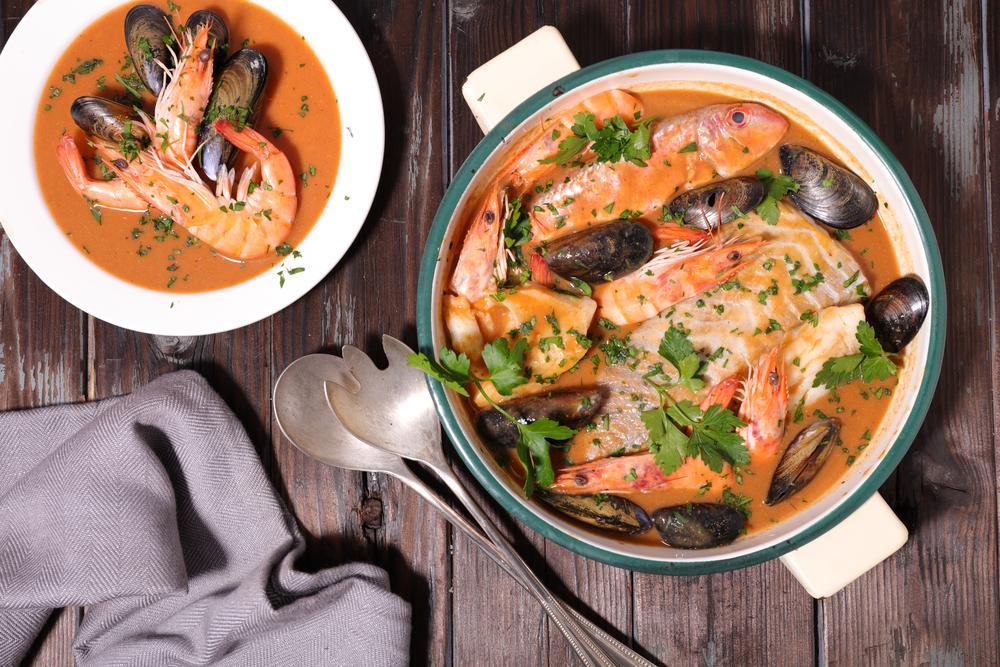
Eating foreign dishes, you risk seriously surprise the gastrointestinal tract and provoke fermentation processes
You need to give preference to porridge boiled in water, soups, lean meats, drink a couple of cups of tea a day, which has anchoring properties. It is important not to drink hot drinks, as high temperature water provokes diarrhea. Herbal tinctures show a good effect, which will prevent diarrhea from developing. You can use the following herbs, which have a bactericidal, sedative, astringent effect:
- chamomile;
- yarrow;
- Oak bark.
Any of the selected herbs must be brewed in boiling water - two tablespoons require two hundred milliliters of water. The infusion is closed with a lid and cooled to a comfortable temperature, after which it is drunk in three or four doses in equal shares.
There are other ways to minimize troubles with menstruation. Valerian extract works well, which can be drunk in the evening, and then before going to bed on the first or second day of menstruation. Valerian normalizes the psycho-emotional state, allows you to sleep better and prevents diarrhea from developing against the background of violent emotions.

Valerian tincture
Also, in the first days of menstruation, activity that causes increased intestinal motility is not encouraged. For a day or two, it is better to give up sports or physical activity, the maximum is a leisurely walk.

With painful menstruation, a woman needs to postpone all affairs to the maximum and provide herself with comfort and peace.
Diarrhea during menstruation: should I go to the doctor?
We have already found out that short-term diarrhea against the background of menstruation is a natural process that should not cause fear in a woman. But it also happens that dyspeptic disorders take on an alarming character, and it will not be superfluous to discuss the problem with a doctor. So, it is worth making a visit to the hospital if:
- Diarrhea does not go away within three days (for natural reasons, diarrhea cannot last longer).
- Loose stools include bloody discharge, greens, come out with foam, have a too dark or discolored shade, a sharp unpleasant odor.
- Diarrhea is associated with vomiting, fever, dizziness, severe abdominal pain.
We have already figured out that in some cases, the causes of diarrhea are not female nature at all, but pathological changes in the body. Since menstruation comes to women on a regular and monthly basis, there is nothing surprising in the fact that the initial or acute form of any disease can occur at this time.
Video - Three questions about menstruation that women are embarrassed to ask
Summarizing
Diarrhea during menstruation is an unpleasant phenomenon, but quite understandable and in most cases harmless. If a woman knows that the onset of critical days will be overshadowed by frequent trips to the toilet, it is necessary in advance take action, not force yourself to solve important issues, but just relax and lead a relaxed image for a couple of days life.
It is important to reconsider the diet for this period, limit activity, devote time to quiet hobbies, or simply spend more time in a comfortable position. At the same time, you should listen to your body with special sensitivity, and seek help from doctors if the situation has ceased to resemble natural for a woman.


