
Green stool in an adult: causes, diagnosis, treatment
The color and consistency of stool can tell a lot about a person's health. This is one of the body's kind of litmus tests, letting you know about problems. If you pay close attention to your condition and observe changes in excrement, you can recognize the hidden processes in time.

Green stool in an adult: causes
The causes of green stool are divided into physiological and pathological.
Content
- 1 Physiological causes
- 2 Pathological causes
-
3 Diseases that give green stools
- 3.1 Video: Green feces in an adult - causes
- 4 Treatment
-
5 Prophylaxis
- 5.1 Video - What the color of the chair says
Physiological causes
Normally, human feces are moderately soft, uniform in consistency and have a color ranging from light yellow to dark brown. However, there are natural factors that affect its staining in a greenish tint, these include:
-
some types of food. The abundance in the diet of such foods as: green vegetables, sorrel, spinach, red meat, sea fish, beans make the stool greenish. In this case, there may even be undigested food fragments in the feces, but this does not pose any threat;

Green vegetables
-
dyes. Frequent consumption of food with artificial colors (gum, candy, cocktails, alcohol) invariably leads to staining not only the stool, but also the urine. Feces acquire its normal shade after 1-2 days;

Food with dyes
-
medications. Many medications can affect the color of the excrement. So, for example, iron-containing, iodine-containing agents, vitamins, some laxatives cause similar changes. Usually, this information is indicated in the instructions for the drugs as a warning that this is the norm.

Medicines can affect the color of excrement
Physiological reasons do not have any additional symptoms, the person feels good. However, if nausea, weakness or diarrhea appears, this is already a sign of the disease.
Pathological causes
Serious illnesses or disorders in the body always manifest themselves with a number of pronounced symptoms. In addition to staining the stool green, the following symptoms may be observed:
temperature increase;
-
diarrhea;
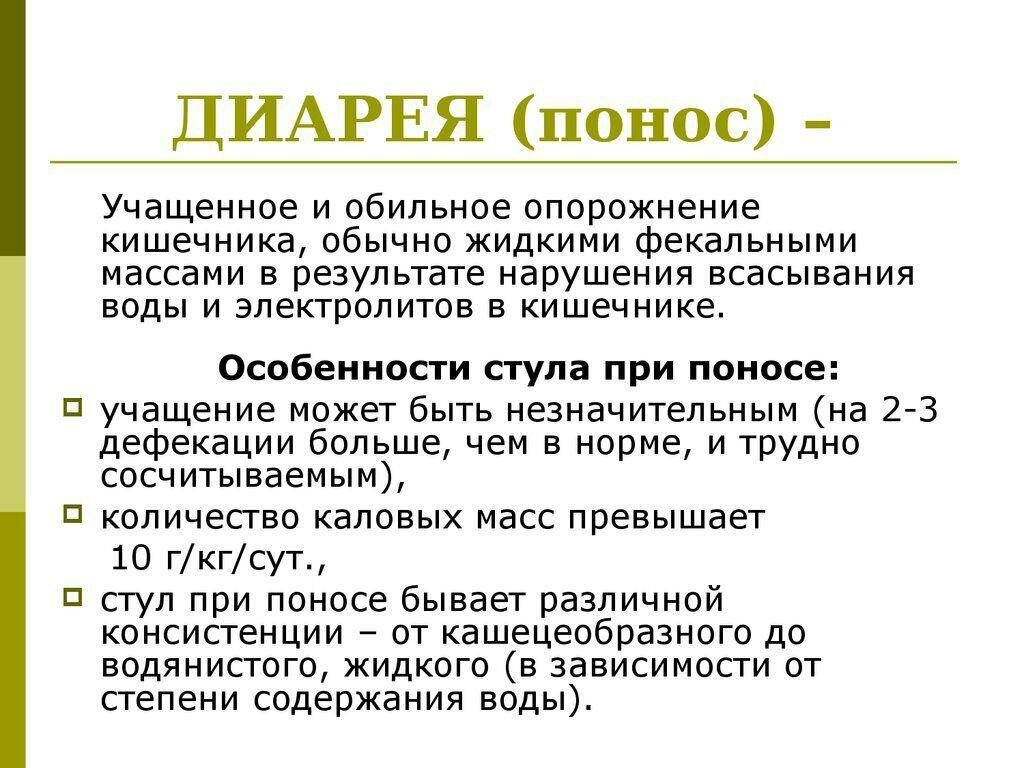
Clinical features of diarrhea
the presence of mucus or blood in the stool;
nausea and vomiting;
-
bitterness in the mouth;

Bitterness in the mouth as a symptom
loss of consciousness.
Important! If several symptoms appear at the same time, you should consult a doctor. Self-treatment with simple activated charcoal may not help if the disease is serious.
Diseases that give green stools
-
Dysbacteriosis. Improper bowel function due to a lack of essential microorganisms leads to fermentation and decay of food debris. As a result, bowel movements often occur with loose, greenish stools.

Dysbacteriosis
-
Dysentery. The causative agent is a bacterium of the Shigella family, which multiplies in suitable nutrient media. Once in the body, it releases toxins that damage the intestines, liver, kidneys and the human nervous system. The disease is transmitted through household contact, through water or food.

Bacterial dysentery
It is characterized by symptoms such as:
chills, fever;
dizziness;
dry mouth;
vomit;
-
repeated diarrhea with greenish frothy stools.

Dysentery accompanied by fever, dizziness
Salmonellosis. A type of bacterial infection caused by salmonella. Infection occurs through unboiled water and non-thermally processed foods: animal meat, fish, milk, eggs. There are known cases of infection directly from animals. The disease is characterized by symptoms such as:
heat;
vomiting (often repeated and indomitable);
copious loose greenish stools with mucus impurities;
-
bloating, soreness.

Symptoms and treatment of salmonellosis
Crohn's disease. Chronic inflammatory disease of the gastrointestinal tract, in which the mucous membrane is affected and granulomas (nodules) develop on it. Factors provoking the development of pathology: weakened immunity, previous infection, stress, allergies. Symptoms do not appear immediately, but gradually accumulate, these include:
general weakness;
significant weight loss;
elevated temperature;
joint and muscle pain;
conjunctivitis.
In the acute course of the disease, the following symptoms are connected:
heat;
frequent diarrhea, while the feces are greenish-black with an admixture of blood;
-
rapid pulse.

Crohn's disease
Rotavirus. An infection transmitted from person to person by airborne droplets or by household contact. Another name for the disease is intestinal flu, since the virus mainly affects the gastrointestinal tract. Typical symptoms:
bloating, flatulence;
nausea, vomiting;
chills;
runny nose;
frequent frothy yellow-green stools and a specific sour odor;
-
lethargy, fever.

Rotavirus
-
Ulcerative colitis. The disease, as a result of which the mucous membrane of the large intestine suffers, it becomes inflamed, edema, and ulcerative elements are also formed.

Ulcerative colitis is a chronic inflammatory disease of the lining of the colon
Colitis can be caused by: infection, the body's immune response, hereditary factors, even stress and bad habits. Symptoms of the disease:
weakness;
cramping pain in the abdomen;
temperature increase;
frequent greenish stools with blood impurities;
tachycardia;
pallor;
dizziness.
-
Lactose intolerance. Lactase deficiency is a lack of an enzyme to break down lactose, which is present in all dairy products.

Lactose intolerance
The causes of the disease can be both a genetic malfunction, in which the production of lactase by the body is disrupted, and acquired pathologies, for example, Crohn's disease, pancreatitis. People with this anomaly are aware that they must follow a specific diet.

If you are lactose intolerant, you should stick to your diet.
If they violate it, symptoms such as:
increased gas formation;
colic;
nausea;
diarrhea with frothy stools from light yellow to yellow-green in color with a characteristic sour odor.
If a greenish loose stool was observed once, it is possible that we are talking about ordinary food poisoning. In this case, after a complete cleansing of the intestines from feces and toxins, relief comes, which is not characteristic of other diseases.

Food poisoning
Video: Green feces in an adult - causes
Treatment
With frequent diarrhea, accompanied by green feces, as well as with infections, of course, the help of specialists is needed.
To begin with, on the basis of external symptoms, the doctor makes a preliminary diagnosis, and depending on it, the patient placed either in the infectious diseases department, or, if his condition is critical, in the intensive care unit. In some cases, treatment is possible at home, for example, if the cause is dysbiosis or lactose intolerance.
To make a clear diagnosis, the following measures are prescribed:
-
analyzes of blood, urine, feces;

It is necessary to pass tests
-
Ultrasound of the abdominal organs;

Abdominal ultrasound
-
EGD, a procedure that involves swallowing a special tube that has a chamber with a light bulb at the end. This is the most reliable way to study the gastrointestinal tract, used all over the world.

FGDS
After research, it becomes clear what kind of disease contributes to the secretion of green stools.
Depending on the type of pathology, certain measures may be prescribed.
Normalization of the diet. Elimination of harmful or allergenic foods. It is necessary to generally reduce the burden on the digestive tract.
-
Taking medications containing bifidobacteria and lactobacilli to normalize the microflora of the stomach and intestines.

"Bifidumbacterin"
-
Detoxification of the body. Removal of harmful substances from the blood and gastrointestinal tract. Sorbents perfectly eliminate toxins - preparations capable of absorbing all toxins like a sponge.

"Polysorb" for cleansing the body
Reception antipyretic and anti-inflammatory funds.
Application antispasmodics to eliminate pain.
-
Restoration of water-salt balance with the help of special solutions like "Regidron" or intravenous droppers.

"Regidron"
Application antibiotics, enzyme complexes and immunomodulators according to indications.
In case of intestinal bleeding, an emergency operation is prescribed.
Important to remember! Folk remedies are not suitable for use in the event of a green stool. Due to the fact that the cause of the painful condition is initially unknown, one can only harm one or another decoction or tincture.
Prophylaxis
To prevent the appearance of liquid green feces, you must adhere to simple rules:
-
undergo an examination of the body at least once a year in order to detect the presence of hidden pathologies in time;

It is worth undergoing a diagnostic examination of the body
-
eat right: exclude fast food, alcohol and an abundance of fatty, fried foods;

Proper nutrition is the key to health
-
take medications only as directed by a doctor;

It is necessary to take medications only as prescribed by a doctor, self-medication is unacceptable
-
show moderate physical activity;

Physical activity is beneficial at any age
-
observe hygiene: wash your hands thoroughly before eating and after visiting public places.

Hygiene is essential every day.
The health of every person is in his hands. The percentage of hereditary severe pathologies is extremely small, and if you maintain the condition of your intestines in normal, then it will work like a clock, and the problem of diarrhea and green feces is unlikely to arise.


