
Signs of helminthiasis in adults: how to recognize acute and chronic infection with worms?
Helminthiasis is the most common parasitic infection that affects people of all ages. Doctors cannot name accurate statistics on the number of cases, since many do not go to a specialist when they find alarming symptoms, but prefer to treat on their own. This approach can lead to serious complications because even drugs with a broad spectrum of action may be ineffective for certain types of helminthic infestation, for example, filariasis - infection with filamentous nematodes.

Signs of helminthiasis in adults
In total, more than 400 varieties of helminths are known that can parasitize in the human body, and it is possible to determine exactly which of them caused the diseases only after laboratory research feces. It is necessary to consult a doctor (therapist, proctologist or infectious disease specialist) if any signs of helminthic invasion are found. The difficulty of timely diagnosis in almost half of the cases is the absence of typical helminthiasis symptoms, so it is important to know what signs can be indirect manifestations helminthiasis. Preventive analysis of feces, as well as scraping for enterobiasis, adults are recommended to take at least 1 time per year.

Helminthic invasions
Content
- 1 How can you get infected?
- 2 Acute Infection in Adults: Symptoms and Signs
-
3 Chronic invasion: what symptoms to look for?
- 3.1 If the hepatobiliary system is affected
-
4 Clinical indicators - signs of helminthic invasion
- 4.1 Video: How to find out if a person has worms
-
5 How to protect yourself from infection with worms?
- 5.1 Video: Prevention of worms in adults
-
6 What to take for helminthiasis?
- 6.1 Video - Helminthiasis
How can you get infected?
Most of the patients believe that helminthic invasion is a “dirty hands disease”. This statement is only half true. Some varieties of worms, for example, cestodes and other flatworms, can actually live in soil, sand, so in the absence of sufficient hand hygiene, a person can become infected with helminthiasis, but this route of transmission is typical mainly for children of the younger age group (from 1 to 6 years). In an adult, the main source of infection is poor-quality food (expired dairy products, poorly processed meat, stale eggs) and tap water.

How is infection with worms
You can get infected with worms in open rivers and reservoirs. In rare cases, while bathing, a person can become infected with leeches - representatives of the class of annelids that cause hirudinosis. The pathology is quite severe, since the main food for leeches is blood and its components, which leads to damage to blood vessels, rapidly progressing anemia and blood poisoning against the background of systemic intoxication organism. To avoid this, you should not swim in places that are not equipped with signs "Swimming is allowed". Soil / water samples are periodically taken at specially designated sites in the summer, and the risk of infection in such places is several times lower.

You need to swim in the places designated for this.
Other sources of infection for humans can be:
- outdoor and pets (it is necessary to clean the pet tray only with gloves, and the animal itself should be bathed regularly and treated with anthelmintic drugs 2 times a year);
- contaminated air;
- blood-sucking insects (mosquitoes, ticks);
- dust (including house dust on soft toys and upholstered furniture).
Note! Some types of worms are capable of entering the human body through the skin, therefore, physical contact with a person who has been diagnosed with helminthiasis should be limited as much as possible.

Helminths quickly spread throughout the body
Acute Infection in Adults: Symptoms and Signs
It is possible to diagnose or suspect helminthic invasion on your own at home only during the period of acute and subacute course of the disease. Depending on the type of worms, their number and the state of the immune system, it can be from 1 week to 4 months. Symptoms of pathology during this period are most pronounced, therefore the chances of timely treatment and a reduction in the risk of complications in the acute form are maximum.

Symptoms and signs of worms
The main symptoms of acute helminthiasis are intestinal disturbances. The patient develops functional intestinal disorders in the form of diarrhea or prolonged absence of stool (constipation is 4 times less common than diarrheal syndrome). The consistency of the stool when infected with worms is liquid, watery, sometimes with the addition of foam. The smell is offensive, pungent. The color may vary, but in most patients, feces become lighter in color and pale yellow in color. With abundant worm infestation, the excrement may be brown or green in color. Sometimes streaks of mucus and blood are found in them, which is secreted as a result of damage to blood vessels and capillaries in the intestinal mucous membranes by worms.

Worms in feces - photo
Among other signs from the gastrointestinal tract, the patient may have abdominal pain, causeless, sudden vomiting, loss of appetite against the background of constant nausea. Many patients lose weight during this period: weight loss can be up to 10% in 2-4 months from the onset of the disease. The skin turns pale, a polymorphic rash appears on them in the form of vesicles or nodules filled with exudate. The same rash can occur on the mucous membranes of the genitals, mouth and internal organs. About 10-20% during this period develop acne, boils, comedones. A small, punctate, red rash may develop on the skin of the abdomen and elbows.

External symptoms of helminthiasis
Other signs of acute infection in an adult include:
- inflammation of the conjunctiva of the eye (parasitic conjunctivitis);
- swelling of the face, limbs, neck (may be accompanied by dropsy of internal organs);
- feverish condition;
- fever and chills against the background of a periodic increase in temperature to 38 ° C and above.
Important! Anal itching, which is considered the main symptom of helminthiasis, is characteristic mainly of enterobiasis - infection with pinworms. It occurs as a result of irritation of the skin in the anorectal region with a secretion secreted by female pinworms at night. For other acute forms of helminthic invasion, such a clinical picture is not considered typical.

Anal itching in adults
Chronic invasion: what symptoms to look for?
The chronic form of helminthiasis is a very common pathology that develops in the absence of timely treatment in the acute period. Most of the clinical symptoms during this period subside and lose their intensity, but do not go away completely. A person may periodically experience mild pain in the abdominal area, nausea, and vomit may be released immediately after a meal or 1-2 hours after a meal. Skin rashes usually persist. With a pronounced reaction, the patient may experience angioedema - a deadly condition accompanied by spasm of the larynx and bronchospasm.

What is angioedema
One of the main signs of chronic helminthic invasion (as well as its complication) is anemia. It is manifested by unnatural pallor, asthenia (chronic fatigue syndrome), weakness. A person's performance decreases, he becomes lethargic, emotional lability can be observed.
If the hepatobiliary system is affected
The hepatobiliary system, which includes the liver, gallbladder and bile ducts, is the main target for parasite attacks. Worms can feed on cells of the hepatic parenchyma, blood, bile and bile acid components. This form of pathology is manifested by a pronounced pain syndrome localized under the right rib in the upper abdomen. The pain can be stabbing, cutting, or dagger-like in nature, which is why many people mistake it for an attack. biliary colic (this situation is especially typical for patients with chronic diseases of the gallbladder and ducts).

Parasites in the human liver
Obstructive jaundice is another symptom that requires immediate diagnosis. Yellowing of the skin and eye sclera can be a manifestation of dangerous liver diseases (hepatitis, cirrhosis) or symptoms of damage to organ tissues by parasites.
Important! Hepatobiliary helminthiasis is one of the most severe types of pathology. In the absence of adequate and timely therapy, the patient may die from acute intoxication and necrosis of the liver tissue.

Tape worms
Clinical indicators - signs of helminthic invasion
A doctor can suspect a parasitic infection if, according to the results of three blood tests, anemia is confirmed in the patient - a low level of hemoglobin. For an adult, the hemoglobin norm is from 120 to 140 g / l. In some cases, for example, during pregnancy, this figure may be slightly lower - up to 110 g / l. But the amount of hemoglobin should not go below these values. Anemia in patients with helminthiasis develops rapidly, since almost 90% of parasites feed on human blood and damage small blood vessels.

Blood test
Another persistent clinical sign of long-term helminthiasis is eosinophilia - an absolute or relative increase in the level of eosinophils in the blood. This is a type of granulocyte leukocyte mass, which is the main indicator of the body's allergic readiness. When infected with parasites, it is always combined with itchy skin and polymorphic rash.
Video: How to find out if a person has worms
How to protect yourself from infection with worms?
The main rule that helps to protect the body from the penetration of worms is strict hygiene - first of all, hand hygiene. For washing, it is better to use soap with antibacterial ingredients or natural laundry soap with a fatty acid concentration of at least 72%. Laundry soap has a pronounced disinfectant and antimicrobial effect and provides excellent prevention of infectious diseases. If you are intolerant of the smell of laundry soap, you can use a product with the addition of aromatic additives.

Laundry soap
It is necessary to prepare food in accordance with the norms of hygienic and thermal processing. Vegetables and fruits are recommended to be doused with boiling water or washed with soap, fried or boiled meat at high temperature for at least 30-40 minutes. The minimum time for boiling eggs is 20 minutes. It is important to monitor the quality and freshness of the products and carefully check the expiration dates. If the product does not have the necessary information and labeling, it is better to refuse the purchase.

Prevention of helminthiasis
If there are pets in the house, it is necessary to conduct a deworming course 2 times a year, even if the pet does not visit the street, since the eggs of worms can be brought into the apartment on street shoes and clothes. The safest remedy for deworming cats and dogs is Milbemax chicken-flavored tablets.

Milbemax
Video: Prevention of worms in adults
What to take for helminthiasis?
Treatment for helminthiasis should be prescribed only by a doctor, since all anthelmintic drugs are highly toxic and negatively affect the state of the liver. The table lists commonly prescribed drugs with a wide spectrum of action, as well as their dosage, but they can be used only after laboratory diagnostics and consultation with a specialist.
Table. Popular drugs for helminthiasis.
| A drug | How to use |
|---|---|
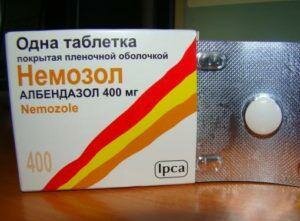 "Nemozol" |
1 tablet daily. The duration of treatment depends on the type of pathogen and can range from 1 to 10 days. |
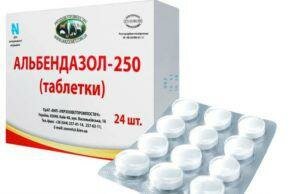 Albendazole |
15 mg per kilogram of body weight (divided into 2 doses). The duration of therapy is 1-5 days. |
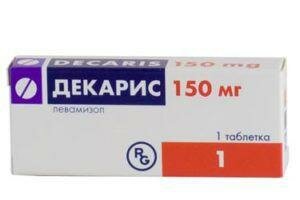 "Dekaris" |
150 mg once. Re-admission is possible in 1-2 weeks. |
Helminthiasis is a dangerous infectious pathology that can cause severe complications from the heart, eyes, pulmonary system and other vital organs. Knowing the signs of helminthiasis in adults, you can avoid such consequences by contacting a doctor in time and passing the necessary tests.


