
Folk remedies for diarrhea in adults: recipes, herbal preparations
Diarrhea is considered a symptom, not a disease. Its causes are varied, but the ways to eliminate the abundant excretion of liquid feces are universal. Diarrhea is one of the symptoms that cannot be tolerated. This article describes folk remedies for diarrhea in adults. Their advantage is a high level of efficiency and safety, as well as the possibility of combination with pharmaceuticals.

Folk remedies for diarrhea in adults
Content
- 1 The most common causes of diarrhea
- 2 Diarrhea: types and signs
-
3 Treatment of diarrhea with folk remedies
- 3.1 Improvised means
- 3.2 Plants that stop diarrhea
- 3.3 Herbal mixtures for diarrhea
- 3.4 Video - How to treat diarrhea with folk remedies
The most common causes of diarrhea
All the causes leading to the occurrence of diarrhea can be divided into the following groups.
- Infections. Pathogens disrupt normal peristalsis by acting on the intestinal wall. As a result, the body gets rid of the accumulation of pathological microorganisms. However, along with untreated feces, water and substances necessary for the body are removed.

Diarrhea can be a symptom of a viral infection
- Chronic diseases of the digestive system. Since the normal process of digestion is disrupted, diarrhea occurs due to pancreatitis, gastritis, liver pathologies, colitis etc.

The structure of the digestive tract
- Violation of the nervous regulation of defecation. Too much relaxation of the muscles of the intestinal walls, as well as their spasms, can lead to constipation or diarrhea.

Causes of diarrhea
If all the causes of diarrhea are divided into fractional categories, then the following picture will turn out.
Table 1. Diarrhea causes
| Disease | Features of the course of diarrhea | Additional symptoms |
|---|---|---|
| Bacterial infections (dysentery, salmonellosis, campylobacteriosis, escherichiosis) | Loose and frequent stools, usually free of blood | Fever, headache, nausea, vomiting |
| Food allergies | Diarrhea is episodic | Possible nausea, vomiting, rashes on the body |
| Functional diarrhea (bowel pathology) | Unpredictable bowel movements | Stomach ache |
| Reaction to medication | Sudden diarrhea that resolves with drug elimination | Specific side effects |
| Spasms of neural genesis | May appear in isolated cases or be chronic | Change in blood pressure, headache, arrhythmia, insomnia |
| Crohn's disease, ulcerative colitis | Loose stools with seizures, blood may appear in the stool | Abdominal pain, nausea |
| Neoplasms in the rectum | Combination of diarrhea with constipation, presence of blood in the stool | Abdominal pain |
| Diverticulitis | Loose stools can be chronic | Nausea, weakness |
| Gastroduodenitis | Diarrhea with attacks | Abdominal pain |
| Violation of peristalsis in hypodynamia | Chronic moderate diarrhea | Gas, abdominal pain |
| Hemorrhoids and anal fissures | The presence of scarlet blood clots | Painful sensations |
| Pancreatitis, liver cirrhosis, stomach ulcer | Diarrhea is recurrent for no apparent reason | Pain in the upper abdomen |
| Irritable bowel syndrome | Unpredictable bouts of diarrhea combined with constipation | Possible cramping and pain |
These reasons are among the most common options. All of them require an individual approach and specific treatment. However, it is possible and necessary to stop diarrhea with the help of symptomatic action.
Diarrhea: types and signs
Diarrhea is an alarming symptom that should make a person see a doctor. A person who simultaneously experiences diarrhea, vomiting, pain in the abdomen and head, general weakness and high fever should begin treatment with drugs that have a complex effect. In addition, in this case, it is necessary to use means that eliminate intoxication.

Feces color palette
Diagnosing diarrhea is not difficult. It is characterized by sudden, strong, often irresistible urge to defecate, liquid feces, and the presence of undigested food particles in the feces. The hallmark of diarrhea is also the frequency of urges, which exceeds the usual frequency of bowel movements by several times.
Despite the universality of the signs of diarrhea, it is customary to divide it into the following types.
- Exudative diarrhea. It is characteristic of inflammatory processes in the intestines. It may have an infectious origin and be accompanied by the formation of an ulcer. Feces are not only liquid, they have impurities of pus and blood. Concomitant symptoms - vomiting, abdominal pain, fever.

Blood in the stool is a sign of some latent pathology or open internal bleeding
- Osmolar diarrhea. Most often occurs with chronic pancreatitis, after bowel surgery, as well as with some infections. In this case, there is a partial destruction of the intestinal mucosa, resulting in a deficiency of enzymes. The stool is very thin, without blood and pus, but with a lot of undigested food.

Feces under a microscope
- Secretory diarrhea. It usually occurs when infected with certain types of bacteria, as well as with the abuse of laxatives. In this case, the walls of the small intestine are affected. This type of diarrhea got its name due to the fact that too many secretions are secreted, as a result of which a lot of water and electrolytes enter the intestines. At the same time, the feces become very liquid, but without blood, mucus and pus. Sometimes vomiting appears, body temperature rises slightly. The main problem with such diarrhea is severe dehydration.

Dehydration stages
- Hypokinetic diarrhea. Represents the consequences of stress, especially long-term. It is characterized by frequent bowel movements, not very loose stools (mushy).

Stress is an unexpected but common cause of diarrhea
Attention! In case of profuse diarrhea with blood, intoxication, abdominal pain and fever, it is imperative to consult a doctor. He will make a preliminary diagnosis, prescribe an examination, and to improve well-being, he can prescribe herbal preparations with an astringent effect. Most often, a decoction of oak bark is prescribed, which is sold in all pharmacies.
Treatment of diarrhea with folk remedies
In order to eliminate any type of diarrhea, drugs are used that affect the peristalsis of the lower intestines. All folk remedies aimed at stopping pathologically active defecation are, as a rule, in the nature of influencing the symptoms.

Traditional methods require a careful and thorough approach.
Usually folk remedies are divided into two parts:
- One of them has only astringent properties that inhibit the process of peristalsis.
- Another part of folk remedies combines antibacterial and astringent properties.
Note! In order to correctly apply this or that remedy, you need to have at least an approximate idea of the causes of diarrhea. Of course, in any case, drugs with astringent properties should be used. However, it is not always necessary to resort to the use of infusions or decoctions that kill microorganisms.
Improvised means
Not all people have stocks of folk remedies from which diarrhea remedies can be prepared. Diarrhea usually comes on suddenly. The exception is situations when diarrhea becomes a habitual symptom of a chronic disease.
There is always a product in the kitchen that has a strengthening effect. The following foods can be used against diarrhea.
- Tea. All leaves of the tea bush have astringent properties. However, the strengthening properties are manifested to the greatest extent in black tea. After the first signs of excessive bowel movements with loose stools appear, you need to brew strong tea. You can drink it with sugar. In this case, the main thing is the astringent properties of the tea leaf itself.

Strong tea
A more radical way is to chew 1 tsp. l. dry tea leaves, and then drink a glass of water. If there is vodka and tea in the house, then you need to pour 2 tbsp into a glass of drink. l. dry tea leaves, and then heat the vodka in a water bath until foam appears. After this, the drink needs to be cooled. Take a tea tincture of the drink you need every 2 hours for a tablespoon.
- Pomegranate peels. If you have pomegranate fruits in your house, then when unpleasant symptoms appear, you need to chew not the seeds themselves, but the partitions between them. You can also use the outer skin of the fruit. The astringent properties of these parts of pomegranate do not appear immediately, so it is better to resort to such a medicine for mild diarrhea.

Pomegranate peel
- Bird cherry and blueberry fruits. These berries can be simply chewed with water. Their effect will show in a few hours. This, of course, is long, but reliable. Bird cherry has a particularly strong astringent effect. Its fruits are capable of converting diarrhea into constipation at high doses. You can make a decoction. Put 1 tbsp. l. berries (it is better to heat them beforehand) in 250 ml of water, bring the water to a boil, boil for five minutes, cool, take 75 ml at least three times a day.

Bird cherry is another folk remedy for diarrhea.
- Rye crackers or dried rye bread. 250 g of crackers should be put in 0.5 liters of warm water. After 15 minutes, the water with the bread floating in it can be drunk in small portions (about 50 ml at a time) at intervals of every 2-3 hours.

The use of crackers is directly related to the quality of the products that make up them.
- Rice. Rinse a glass of rice (preferably round), fill it with water so that the amount of water is four times the amount of rice. Boil the cereal for about an hour. After that, remove the grains, and drink 100 ml of rice water every 3 hours.

Eating rice is good for diarrhea.
- Potato starch. Take a teaspoon of starch, pour half a glass of water, stir until completely dissolved, then drink it all at once.

Starch is completely processed by the human body
- Potassium permanganate. Dissolve a few crystals of potassium permanganate in half a glass of water. Take this medication twice a day. Usually this portion is enough for the intestines to return to normal. If the situation does not change the next day, you can no longer drink potassium permanganate, you need to switch to other means.

The consequences of improper use of potassium permanganate
- Dill and onion salad. Chop the herbs very finely. Onions should be 2 times more than dill. Sprinkle the salad with salt, mix everything well. Eat at least two tablespoons of the mixture at a time.

Greens
Note! All of these available funds must be taken on an individual basis. If the diarrhea is caused by diseases of the digestive system, then some of these recipes may be contraindicated. However, tea, potato starch, rice water and rusks dissolved in water usually have no contraindications.
Plants that stop diarrhea
People with experience in the fight against diarrhea always have a kit in their home medicine cabinet. herbal remedies that well stop the pathological activity of the intestine to eliminate feces. The most effective are drugs from the following plants.
- Oak bark. All parts of this plant have tannins, which have a good fixing effect. However, the bark of this tree is usually used. The dried bark must be crushed and then put into water (1 tbsp. l. for 250 ml of water). The water is brought to a boil over low heat, and then boiled for about 30 minutes. The broth is cooled, filtered, taken three times a day for 1 tbsp. spoon.

Oak bark
- Alder cones. In this case, an infusion is prepared. One tablespoon of chopped bumps is poured with a glass of boiling water. The vessel with the broth is wrapped in a blanket, insisting so for at least two hours. Take the infusion before meals for 1 tbsp. l. three times per day.

Alder cones
- St. John's wort. The infusion is prepared at the rate of 1 tbsp. spoons of raw materials in a glass of boiling water. You need to drink it often - a quarter of a glass 4-5 times a day.

St. John's wort
- Pharmaceutical camomile. This wonderful plant fights inflammation, relieves spasms and normalizes peristalsis. Chamomile is prepared and taken in the same way as St. John's wort.

Chamomile officinalis
- Barberry root. Only the bark of large roots is used. This remedy takes a long time to prepare. You need to pour 100 g of crushed bark with a liter of natural grape wine. The tincture should mature in a cool, dark place for 30 days. After that, it must be heated over low heat until boiling, continuing to cook for 30 minutes. After that, the tincture is cooled and filtered. You need to take it before meals three times a day for 1/4 cup.

Barberry root and bark
The above products can be mixed to successfully control diarrhea. A particularly effective blend is obtained from St. John's wort, chamomile and alder cones. The proportions of ingredients can be very different, depending on the condition of the person and the cause of the diarrhea. If the diarrhea is infectious, then the mixture should consist mainly of chamomile and St. John's wort. If the origin of the intestinal disorder is not clear, it is better to make up the mixture in equal proportions.
Herbal mixtures for diarrhea
Various herbal preparations are usually drunk for chronic forms of diseases accompanied by diarrhea. Herbal remedies from different ingredients complement each other's action by acting on peristalsis and helping to eliminate the causes of diarrhea. The most popular are the following mixtures.
- Shepherd's purse, sage, immortelle (flowers), cumin (seeds), blueberries (fruits), cinquefoil (root). One tablespoon of the mixture is poured in equal proportions with a glass of boiling water. The infusion is formed in the heat until the herbs settle at the bottom of the vessel. They drink it in 1 tbsp. spoon 5 times a day on an empty stomach.

Herbal preparations should be stored for no more than 24 months.
- Bitter wormwood, yarrow, horsetail and cinquefoil. You need to take 30 g of horsetail and yarrow, as well as 20 g of wormwood and cinquefoil root. Everything is evenly mixed, after which 2 tbsp. l. mixtures are poured with 0.5 liters of boiling water. The infusion is wrapped in a blanket. After two hours of infusion, it can be filtered, then adding 1 tbsp. l. honey. You need to take 100 ml before meals.
- St. John's wort, wild rose, oak bark, yarrow. The mixture is prepared from ingredients in equal proportions. In half a liter of water, you need to put 2 tbsp. l. mixtures. The broth is heated over low heat until boiling, boiled for 20 minutes. You need to take it in a warm state, a glass at a time. This is done no more than 2 times a day - in the morning and in the evening.
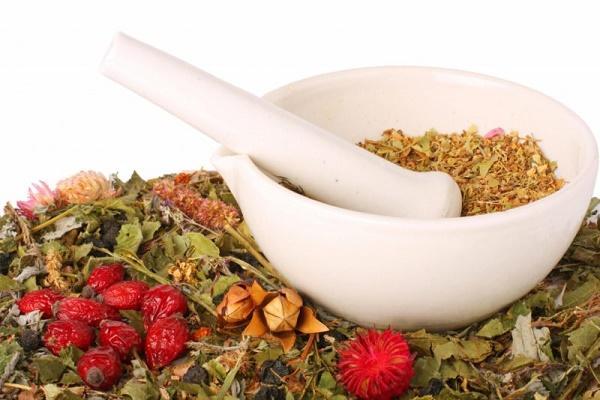
Herbal teas and decoctions of them also help well.
- Cinquefoil, plantain, knotweed. Mix 1 teaspoon each of chopped cinquefoil, plantain and knotweed. Pour 700 ml of boiling water over this mixture. Wrap a vessel with hot water in a blanket, insist until it cools completely. You need to take half a glass 3 times a day before meals.
- Oak and Potentilla erect. Both ingredients must be taken in equal proportions. Mix (1 tbsp. l.) is poured with a glass of boiling water, infused until it cools. You need to take 50 ml 3 times a day before meals.

For recurring diarrhea, it is best to consult a doctor
Diarrhea treatment should be carried out comprehensively. The fact is that with prolonged excretion of feces that have not yet undergone complete processing in the intestine, from the body is removed vitamins, high molecular weight compounds, minerals, as well as microorganisms that make up useful microflora. For this reason, diarrhea does not only need to be stopped. It should be compensated by the intake of vitamins and minerals, as well as the introduction of probiotics and prebiotics. In addition, diarrhea contributes to dehydration of the body, therefore, treatment must be accompanied by the intake of an increased amount of liquid, including mineral water.


