
Helminths in children: symptoms and treatment, detailed information
The presence of parasites in the body is often the cause of allergic reactions, serious disorders in the digestive system, intoxication and certain immune diseases. Despite this, many underestimate the danger of helminthiasis and do not pay enough attention to its treatment and prevention. The situation is complicated by the fact that for a long time helminthic invasions do not have pronounced signs. How to determine if children have helminths, what symptoms need to be paid attention to, and what treatment is most effective?

Helminths in children: symptoms and treatment
Content
- 1 How does the infection take place
-
2 Symptoms of helminthiasis in children
- 2.1 Common Symptoms
- 2.2 Signs of enterobiasis (pinworms)
- 2.3 Signs of ascariasis
- 2.4 Symptoms of helminthiasis in infants
- 3 Diagnostics of the helminthic invasion
- 4 How to treat worms in children
- 5 Folk remedies
-
6 Prevention of helminthiasis
- 6.1 Video - Helminths in children: symptoms and treatment
How does the infection take place
Most often, infection with worms occurs due to a violation of household and personal hygiene:
- irregular hand washing, the habit of biting nails;
- contact with contaminated soil, sand or water;
- eating dirty fruits and vegetables;
- close contact with animals;
- the abundance of flies, cockroaches or other insects in the house that are carriers of helminth larvae.

Irregular hand washing can lead to helminthic infestation

A common cause of infection with worms is the use of unwashed fruits and vegetables
Often, the cause of helminthiasis is poor-quality meat, fish and semi-finished products, as well as street food prepared with violations of sanitary standards. Neither freezing of food, nor quick heat treatment are capable of destroying the larvae of parasites, as a result of which helminths easily penetrate the human body.
Another way of infection is intrauterine, that is, the transmission of helminths from mother to child during pregnancy. This is the most dangerous reason, since the vital activity of helminths can seriously harm the development of the child and cause irreversible consequences for his health.

Mother-to-child transmission of helminths is possible during pregnancy
Symptoms of helminthiasis in children
There are many types of helminths, and each of them has its own clinical picture. Certain types of worms can be in the body for years, almost without giving away their presence. And characteristic signs usually appear with a decrease in immunity due to other diseases or stressful situations. But there are those that immediately after penetration into the body begin to develop intensively and affect certain systems and organs.
Common Symptoms
And yet, there are symptoms that are typical for all types of helminths that are hard to miss:
- the child's behavior changes - he becomes restless, concentrates poorly, gets irritated for no reason, does not sleep well;
- there is an increased appetite with a decrease in body weight, salivation increases;
- the child complains of headache and dizziness, nausea, abdominal pain, stool disorders are observed (frequent diarrhea or constipation);
- more frequent problems with the throat and nasopharynx - inflammation, sinusitis, sinusitis, polyps, adenoids;
- the condition of hair and nails is noticeably deteriorating - they become dull, brittle;
- signs of anemia appear;
- after vaccinations against parasitic infections, the child develops toxic-allergic reactions.

If the child was infected with a large number of eggs of parasitic worms, then after a few days a sharp deterioration may occur.

In the intestine, parasitic worms use nutrients, as a result of which the baby gradually becomes deficient in proteins, carbohydrates, fats and vitamins.
Individually, each of these symptoms may indicate other diseases that are in no way associated with worms, but if at least 2-3 of these signs are present at the same time, the child must be urgently examined for helminthiasis.

Signs of helminthic invasion
Signs of enterobiasis (pinworms)
When infected with pinworms, more characteristic signs are added to the symptoms described above:
- itching in the anus, worsening at night;
- girls may experience nocturnal enuresis, vulvovaginitis, and genital inflammation;
- enterocolitis and intestinal dysbiosis;
- disturbing dreams, gnashing of teeth at night, screams in sleep.
In the active stage of the development of worms, pinworms can be seen with the naked eye in the feces, especially during the child's morning bowel movements.

Pinworm life cycle

What pinworms look like
Signs of ascariasis
Ascariasis is characterized by worms lesions of internal organs - liver, lungs, pancreas or gallbladder. Defeats of certain areas of the heart are also possible. The manifestations of the disease are quite specific:
- lymph nodes increase, body temperature rises;
- general weakness and depression is observed;
- a small rash appears - first on the feet and palms, then all over the body;
- sharp pains in the abdomen of a cramping nature, vomiting, stool disturbance, redness around the anus;
- blood pressure decreases, pupils dilate, photophobia occurs;
- a cough with blood or thick yellow sputum, bronchitis, pneumonia, or pleurisy may appear.

Ascariasis

Ascariasis symptom - rash
The disease can take on a chronic form, in which these symptoms are less pronounced. In the advanced stage, ascariasis is accompanied by complications in the form of acute pancreatitis, intestinal obstruction, liver abscesses.
Manifestations of other types of helminths
| Type of parasite | Symptoms |
|---|---|
 Vlasoglav (trichocephalosis) |
Disorders of the gastrointestinal tract and nervous system, prolonged diarrhea, bouts of nausea, cramping pains in the right side, similar to attacks of appendicitis |
 Dwarf tapeworm (hymenolepiasis) |
In most cases, there are typical signs of helminthiasis, without pronounced manifestations. With intensive invasion, convulsive seizures, painful attacks in the abdomen, vomiting occur. Dysfunction of the liver, intestines or stomach, severe anemia may be present |
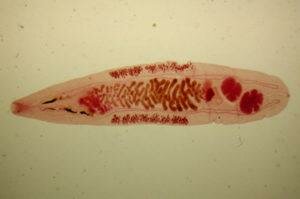 Opisthorchiasis |
High temperature (up to 40 degrees), respiratory tract damage, skin rashes, cough. Acute periods give way to an asymptomatic course of the disease and resume again after 1-2 weeks |
 Toxocariasis |
Allergic cough, often with suffocation, puffiness of the face, skin rashes, fever up to 39 degrees, paroxysmal pain in the intestines |
Symptoms of helminthiasis in infants
In an infant, the presence of worms can be determined by the following signs:
- the baby is gaining very little weight or does not gain at all for a long time;
- the child has no appetite, he is reluctant to breastfeed, is capricious;
- sleeps less than expected, sleep is intermittent and restless, during sleep there is increased salivation;
- the child cries a lot, often turns to a heart-rending cry;
- frequent constipation is noted;
- a rash appears on the body, the skin turns pale, blue circles are noticeable around the eyes.

The baby often cries, does not sleep well and eats

The child often suffers from constipation
Depending on the type of helminths, these signs can be supplemented with more specific symptoms. If you have at least one of these manifestations, you should immediately consult a doctor, because for a nursing baby, exposure to parasites is much more dangerous than for older children.
Diagnostics of the helminthic invasion
It is possible to accurately determine the presence and type of helminths only in the laboratory. To do this, you need to contact a therapist, and after the initial examination, the doctor will prescribe which tests will have to be passed. Usually, several laboratory tests are used to diagnose helminthiasis at once:
-
stool analysis - to check for dysbacteriosis it is taken once, for the presence of worm eggs - at least three times, since not all types of parasites lay eggs regularly;

Analysis of feces for worm eggs
-
smear for enterobiasis - taken once from the anus;

Enterobiasis smear
-
general blood analysis - in the presence of helminths, the color indicator is changed, the hemoglobin level is lower, and the number of eosinophils is higher than normal;

The norms of the results of a general blood test in children and adults in the table
-
enzyme immunoassay - taken from a vein in the morning on an empty stomach. Gives the most accurate result and allows you to recognize the type of parasites;

Linked immunosorbent assay
-
computed tomography or ultrasound - allow you to identify the habitats of worms in the body.

Is it possible to see helminths on ultrasound
How to treat worms in children
For the treatment of helminthiasis, there are many medicines and folk remedies. To get rid of parasites to be effective and without side effects, all medications must be prescribed by a doctor. The same applies to folk methods: without consulting a specialist, their use may not give the desired result, and in some cases it will be unsafe for the child's health.
Usually, the course of treatment consists of two stages - first, the patient is given anthelmintic drugs, and then the body is cleansed with enterosorbents, choleretic agents and enemas. To improve digestive functions, enzyme agents based on pancreatin, papain, or combined are prescribed.
Anthelmintic drugs
| Name | Description |
|---|---|
 Piperazine |
One of the most readily available drugs comes in the form of tablets and solutions. For small children, it is more convenient to use a solution. The drug is prescribed for ascariasis and enterobiasis. The duration of admission for ascariasis is 2 days, for enterobiasis - three times for 5 days at intervals of 1 week. The drug is low-toxic, the efficiency is 95-100% |
 Pirantel |
A popular remedy, available in the form of a suspension. It is prescribed for enterobiasis, ascariasis, ankylostomiasis. It is used once, in cases of severe invasions, the medicine is given within two days. Children under 2 years of age should use the drug with caution due to side effects |
 Vermox |
It is produced in the form of tablets, it is prescribed for ascariasis, ankylostomiasis, enterobiasis, trichocephalosis. Apply once, repeat after 2 weeks to avoid re-infection. The medicine has a negative effect on the liver, therefore, after treatment, choleretic agents must be taken. |
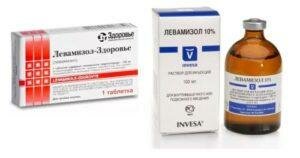 Levamisole |
It is produced in the form of tablets, it is prescribed for ascariasis, toxoplasmosis, ankylostomiasis. It is taken once before bedtime, after 2 weeks the treatment is repeated. The drug has many side effects, so it is prescribed with caution to children under 14 years of age. |
The dosage of antihelminthic agents depends on the body weight, the degree of infection and the type of helminths, therefore, it is prescribed by a specialist. Determining the dose "by eye", you can provoke complications, because these drugs have a strong effect on the liver and digestive tract.

Wormin
Important! To exclude re-infection, all family members need to be treated. In addition, it is imperative to conduct anthelmintic treatment of animals living in the house, to disinfect bed and underwear, towels. During the treatment period, wet cleaning should be performed daily, it is recommended to temporarily remove soft toys and carpets.
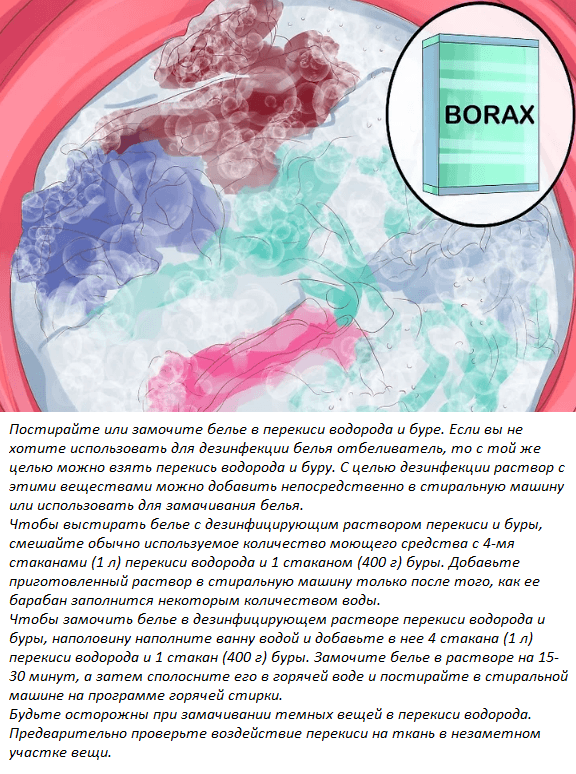
Disinfection of things
Not least is the child's diet during this period - proper healthy nutrition will help the body recover faster and increase its immunity to the effects of parasites.
Recommended products:
- raw carrots and fresh carrot juice;
- dairy products;
- butter;
- bran bread;
- apples and citrus fruits;
- pumpkin dishes;
- dried pumpkin seed;
- beef and beef liver.

The optimal daily dose of carrot juice, which will bring noticeable benefits to the body, is 1-2 glasses

Apples and oranges
Folk remedies
Popular popular antihelminthic agents may not always be effective and safe. They must be used very carefully and best of all for preventive rather than therapeutic purposes. Please note that the simultaneous use of such drugs and anthelmintic drugs can affect the child's body in the most negative way, so it is better not to take risks and use them only according to doctor's recommendations.
The most effective means against worms are:
- pumpkin seeds (unroasted);
- linseed and hemp oil;
- infusions of wormwood and tansy;
- carrot juice;
- fresh milk with the addition of garlic.

Garlic with milk - a gentle and effective remedy for parasites

Pumpkin seeds

Useful properties of pumpkin
Daily use in small quantities has a mild anthelmintic effect, and if it does not completely get rid of parasites, then it significantly reduces their number.
Prevention of helminthiasis
The main condition for the prevention of helminthic invasions is the observance of hygiene standards. The personal hygiene of the child is of paramount importance, and parents should be especially careful about this. From a very early age, the baby should be taught to wash his hands, not to bite his nails or pull objects into his mouth, be sure to wash vegetables and fruits before eating them.

Teach your child about personal hygiene
Be sure to do prophylaxis on pets twice a year, especially if children are in close contact with them.

Do not let children and pets "kiss"

Give your pet anthelmintic veterinary drugs twice a year.
Avoid the accumulation of flies in the house, the appearance of cockroaches and other insects, use repellents. Cook fish and meat dishes well, do not buy street food. In the summertime, children should not be allowed to swim in wild waters, where, in addition to the larvae of worms, pathogens of intestinal infections and other pathogenic microorganisms can be found in the water.

For swimming, choose proven ponds or pools with chlorinated water
As for taking medications for prophylactic purposes, this issue is quite controversial. Anthelmintic drugs contain toxic substances and are unsafe to use for no good reason. Moreover, each medicine is intended for a specific type of parasite. Using them at random, hoping for a positive result, is rather risky and unjustified. It is better to pay attention to the child's diet, strengthening his immunity and physical development: as practice shows, in healthy children the risk of getting helminthiasis is minimal.


