
Pinworms: symptoms in children, diagnosis, treatment
Pinworms (Enterobius) are parasitic roundworms of the nematode class that can parasitize in the human intestine and cause systemic intoxication of the body. Like other nematodes (for example, whipworms, roundworms, hookworms, etc.), pinworms are geohelminths, that is, they can develop in the environment without intermediate hosts. Pinworms enter the soil and wastewater together with the feces of an infected animal or person, after which they develop to the invasive (mature) stage. The parasitic infection that develops with the invasion of these nematodes is called enterobiasis. Most often, the disease occurs in young children (from 1 to 7 years old), therefore, the annual diagnosis of enterobiasis is mandatory for all children of this age group.

Pinworms: symptoms in children
Content
- 1 The structure and life cycle of pinworms
- 2 How does the infection take place?
- 3 What happens in the intestine when pinworms are infested?
-
4 Symptoms of infection in children
- 4.1 Intoxication syndrome
- 4.2 Enuresis
- 4.3 Perianal eczema
- 5 Examination and analyzes
-
6 How to treat enterobiasis in children?
- 6.1 Nutrition for the period of treatment
- 6.2 Hygiene regimen
-
7 Traditional methods
- 7.1 Pumpkin seed decoction
- 7.2 Infusion of oregano
- 7.3 Video - Pinworms: symptoms in children
The structure and life cycle of pinworms
Pinworms are rather small in size, while the length of males is usually 2-2.5 times less than that of females (the length of a mature female can reach 9-12 mm). Parasites are attached to the intestinal walls using a suction disc formed by vesicles (superficial formations of an oval shape) and a bulbus - a spherical hole located at the end of the esophagus and separating the esophageal tube from the intestines.

Pinworm structure
The tail of females and males has certain differences:
- in males, the tail has a spiral shape, and is usually bent towards the peritoneum;
- the female has a straight tail, has a pointed shape.
Pinworm eggs in most cases are slightly asymmetrical, oblong, oval in shape, the color can vary from off-white to light yellow.

Pinworm eggs under a microscope
Pinworms enter the human body in the form of mature eggs, which contain the larvae of the parasite. The invasive stage usually lasts 10-15 days, and the life cycle of females in the intestines can reach up to 30 days (males die after mating).
The life cycle of pinworms in the human intestine
| Stage | What's happening |
|---|---|
| Larval | Mature eggs enter the human digestive tract through the mouth (or are swallowed with the air). In the duodenum, the protective membrane is destroyed, and the larvae move into the lower parts of the small intestine: into the ileum and jejunum. |
| Invasive | In the small intestine, helminths shed several times. The nutrition of parasites occurs due to adhesion to the microvilli of the intestinal epithelium. In the small intestine, pinworms mature and turn into a sexually mature individual (the duration of this stage is usually 2 weeks). |
| Sexually mature | Sexually mature individuals capable of reproduction parasitize in the lower part of the small intestine and the upper part of the colon. After fertilization, males die, are digested by digestive enzymes and excreted from the intestines along with feces. In the uterus of a fertilized female, there can be up to 15-17 thousand eggs, for the laying of which certain conditions are necessary (high humidity and a temperature of about 37 ° C). |
| Laying eggs | The female's eggs are laid in the perianal folds (the skin around the anus). Pinworms enter the rectum due to a violation of the suction ability: the uterus filled with eggs presses on the distal esophagus, and the bulb ceases to perform its functions. After laying eggs, helminths die. |

The life cycle of pinworms in the human body
Important! The laid eggs reach the invasive (mature) stage within 4-6 hours, therefore, poor hygiene practices can lead to re-infestation with pinworms. Especially often self-infection is observed in children aged 1 to 4 years, therefore the leading role in prevention of enterobiasis and other parasitic infections has previously taught children the skills of personal and intimate hygiene.
How does the infection take place?
Dirty hands are the main source of infection. A child can become infected through bodily contact with sick people, as well as through the use of common toys and household items (for example, in kindergarten). If an infected child scratches the skin on which female pinworms have laid their eggs and does not wash their hands afterwards, the larvae parasites can get on all the surrounding objects with which he will come into contact: toys, dishes, bedding, furniture, etc.

In a child, parasite infestation most often occurs through dirty hands.
Considering that pinworms are able to develop in the environment without an intermediate host, that is, they do not die outside the intestine a person, if cases of enterobiasis are detected in children's collectives, the groups are quarantined (sanitization and disinfection), and all children who at the time of detection of infection were visiting the institution, preventive treatment with drugs for deworming.

If enterobiasis is detected in children's institutions, all children are prescribed preventive treatment
What happens in the intestine when pinworms are infested?
The main pathogenetic mechanisms that determine the clinical picture of enterobiasis are mechanical irritation of the nervous receptors and villi of the intestinal epithelial membrane, as well as the release of toxic secretions that provoke intoxication and allergic reactions. In most cases, the parasites damage the ileocecal valve, which is necessary for the movement of digested food. from the ileum into the cecum, as well as preventing the transfer of bacterial contents into the small intestines. This provokes a violation of the motor function of the intestine, which is manifested by abdominal pain, upset stool and other symptoms of functional dyspepsia.

Enterobiasis is manifested by abdominal pain, stool disorders and other signs of dyspepsia
The clinical picture of pinworm infestation in children is also determined by the following processes occurring in the intestine:
- increased migration of eosinophils (granulocytes formed in the bone marrow and unable to divide) through the intestinal wall;
- the ingestion of toxic products of decay and death of parasites into the systemic circulation;
- the emergence of pathological depressions in the epithelial membrane, accompanied by detachment and desquamation of epithelial cells;
- the formation of granulomatous islets in the deeper tissues of the intestine;
- damage to the mucous membranes by vesicles (manifested by small-point hemorrhages, micro-erosion and small red spots resulting from a breach of integrity capillary vessels).

In the process of vital activity of pinworms, granulomatous islets and small erosive formations are formed in the intestinal tissues
Extraintestinal pathogenesis is represented by skin pathologies, allergic reactions and vulvovaginitis (in girls).
Symptoms of infection in children
The incubation period for enterobiasis can range from 2 weeks to 1 month. The main clinical sign of Enterobius infections is perianal pruritus. Its intensity depends on the number of parasites in the intestines. With minor invasions, itching occurs regularly, mainly at night. This is due to the fact that female pinworms find it easier to get out of the rectum when the muscular sphincter of the anus is as relaxed as possible. With extensive invasions, when the number of parasitic individuals and eggs can reach hundreds and even thousands, itching persists constantly and appears at any time of the day, regardless of the child's physical activity.

Itching in the anus is the most common sign of pinworm infection.
Other typical signs of enterobiasis in children are listed below.
- Abrasions and scratches in the anus. Young children cannot cope with severe itching on their own, and to relieve the painful condition, they use the most available means - hands. If the child periodically touches the buttocks, tries to scratch the area of the anus and intergluteal folds, it is necessary to pass a feces test for helminth eggs and scraping for enterobiasis.
-
Redness of the skin around the anus. Skin irritation (redness, pinpoint rash, severe burning) occurs as a result of the ingress of isovaleric acid on it, which is secreted by female pinworms during the laying of eggs.

Redness and rashes around the anus are due to acid secreted by female pinworms
-
Intestinal dysbiosis. In almost all cases, enterobiasis is accompanied by a violation of the intestinal microflora, which leads to the appearance of characteristic dyspeptic disorders: stool dilution (feces acquire a yellowish tinge and a mushy consistency and may contain a moderate amount of mucus), nausea, flatulence, large intestinal secretions gases.

With enterobiasis in children, frequent diarrhea, flatulence, and bouts of nausea are observed
- Stomach ache. Pain, usually cramping, is localized in the upper abdomen around the navel. Their intensity can increase after a meal, especially if a person has eaten a lot of food containing simple carbohydrates.
-
Lack of appetite. Most children suffering from enterobiasis have poor appetite and lag behind their peers in terms of anthropometric indicators (height, weight).

Lack of appetite is another characteristic sign of the presence of helminths in the body.
In girls, pinworm infestation can be the cause of vulvovaginitis, a combined inflammation of the vaginal tract and vulva. Signs of parasitic vulvovaginitis are severe itching in the genital area, redness of the mucous membranes, burning sensation, and an unpleasant odor. With extensive invasions, crawling pinworms can be found in the folds of the labia minora and the clitoris.
Intoxication syndrome

With enterobiasis, a pronounced intoxication syndrome is observed
Intoxication syndrome with enterobiasis in children is quite pronounced, but febrile fever is usually absent. Systemic intoxication can manifest itself as severe headaches, nausea, sleep disorders, weakness, and increased fatigue. In school-age children, there is a sharp decline in academic performance, impaired concentration, memory impairment. Many children also develop behavioral changes: there is unreasonable aggression, irritability, increased nervousness.

The presence of parasites in the body also provokes behavioral changes - the child becomes irritable, nervous, cannot concentrate
Enuresis
Urinary incontinence with enterobiasis occurs in about 22% of children aged 2 to 6 years. Urination is usually painless, there is no false urge to empty the bladder (tenesmus). In most cases, bedwetting occurs at night.

Enterobiasis is often the cause of enuresis in children aged 2 to 6 years.
Perianal eczema
Eczema in the area of perianal folds, characterized by a persistent progressive course, as well as cracks in the skin around the anus, are typical symptoms of enterobiasis for children of any age. Their intensity increases if the child is constantly combing the affected skin and touching it with dirty hands. This is dangerous not only by an increase in the existing symptoms, but also by the introduction of bacterial and fungal infections and inflammation of the rectum (proctitis) and surrounding tissues (paraproctitis).

Helminthic invasions often provoke the appearance of eczema in the perianal region.
Examination and analyzes
The analysis of feces for worm eggs in enterobiasis is ineffective, since the females of the parasite do not lay eggs in the intestines due to inappropriate humidity and temperature indicators. The most informative and reliable method is scraping (smear) from the perianal space, which is advisable to perform 1.5-2 hours after the child goes to bed. This diagnostic method is available only in large cities in private medical clinics, so the majority of patients (more than 95% of children) are examined in the morning.

The most effective way to diagnose enterobiasis is scraping from the perianal folds
The analysis technique is very simple:
- a match or a special spatula with a piece of cotton wool at the end is moistened in a 2% baking soda solution or 0.9% sodium chloride solution;
- the child needs to bend forward (lie on the couch) and spread the buttocks;
- the doctor gently runs a match along the mucous membranes of the anus and folds around the sphincter ring.
Important! To obtain a reliable result, you must not wash the child before the analysis.
Other possible methods for identifying pinworms and their eggs are shown in the table.
Diagnosis of pinworm infestation
| Method | Description |
|---|---|
 Home scraping |
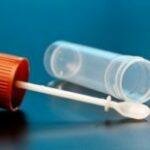
This method is convenient because you can do it yourself at home. Moisten a cotton swab located at the end of a special spatula with boiled water and run it over the skin around the anus, then place it in a test tube (the test tube should be one third filled with water). Take the material to the laboratory, where it is re-diluted with water and, after centrifugation, the sediment formed is examined. |
 Hall method |
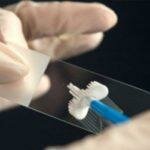
Gently fix a piece of cellophane on a glass rod and carry out a scraping, and then place it in a sterile test tube. In the laboratory, the material is examined on a glass slide, previously covered with a solution of sodium hydroxide. |
 Graham's method |
The adhesive tape must be applied to the perianal area, and then press the same side to the glass. The method is also suitable for examining the child's underwear (it can be convenient when it is not possible to drive the child to the testing room with the child, for example, if the child is lying). |
The study for enterobiasis must be carried out three times with an interval of 1 to 3 days. Some clinics may offer a subungual scraping as an auxiliary diagnostic measure, which will help find pinworm eggs along the edge of the periungual roller and under the nail plate (eggs get there when the child combs the damaged skin).

The study of analyzes must be carried out at least three times with an interval of 1-3 days in order to obtain reliable data
Important! Anal itching can be a sign of not only enterobiasis, but also other serious diseases, for example, hemorrhoids, diabetes mellitus, thyroid pathologies, therefore, diagnosis should also be aimed at excluding these pathologies.
How to treat enterobiasis in children?
Treatment of enterobiasis in children includes a low-carbohydrate diet, medication and a special hygiene regimen, which must be observed within 20-30 days from the date of diagnosis.

During the period of treatment of enterobiasis, a special hygienic regime should be observed in order to prevent re-infection
Preparations for the eradication (destruction) of pinworms
| A drug | Admission scheme for children |
|---|---|
 Pirantel |
125 to 500 mg single dose (10 mg / kg body weight). |
 "Helmintox" |
12.5 mg / kg body weight as a single dose. |
 "Nemocide" |
1-2 tablets (250-500 mg) as a single dose. |
 "Piperazine" |
From 200 to 750 mg (depending on the age of the child) as a single dose or divide the daily dose into two applications. |
 Mebendazole |
100 mg orally as a single dose (for adolescents over 12 years of age). |
Monitoring the effectiveness of treatment is carried out 2 weeks and 21 days after the start of therapy. If the ongoing treatment does not give the desired result, the course should be repeated (in some cases, replacement of the drug may be indicated).
As auxiliary components of complex therapy, digestive enzymes ("Creon", "Mezim"), means for normalization of intestinal microflora ("Bifiform", "Linex"), drugs to stimulate regenerative processes (tablets "Methyluracil").

Instructions for the use of methyluracil
Nutrition for the period of treatment
To create an unfavorable environment for parasites to live, it is important to follow a low-carb diet. Any foods containing a large amount of simple carbohydrates should be completely excluded from the child's diet. These are not only sweets, pastries and pastries, but also high-grade pasta made from flour, light rice, white bread, as well as some types of cereals, for example, semolina.

Eliminating foods high in carbohydrates from the diet will create an unfavorable environment for helminths.
The basis of the menu for the entire period of treatment should be the following groups of dishes and products:
- freshly squeezed juices from vegetables and fruits;
- fruit and vegetable purees;

It is recommended to include fruit and vegetable purees in the menu
- weak broths;
- boiled or stewed meat (it is advisable to grind meat products as much as possible before serving in order to speed up the restoration of damaged intestinal mucosa);
- cereals with milk with a fat content of not more than 1.5%;

Buckwheat porridge with milk - both tasty and healthy
- curd casseroles;
- non-hard cheese;
- boiled or baked fish;

Be sure to include steamed or baked fish dishes in the diet.
- fermented milk drinks.
Enterobiasis often occurs against the background of inflammation of the small intestine (enteritis), so nutrition should be as light and healthy as possible. This is necessary in order to eliminate additional stress on the digestive organs and to accelerate the healing of damaged epithelial membranes. All dishes should be cooked with a minimum amount of salt, without adding spices, vinegar and fat. Fruits and vegetables are recommended to be served mashed - so they are easier to digest, and coarse vegetable fiber does not injure damaged intestinal walls.

Mashed vegetable soups are easier to digest and do not irritate the mucous membrane damaged by helminths
Hygiene regimen
Compliance with a special hygienic regime will reduce the intensity of anal itching, reduce skin irritation in the perianal area and prevent re-infection with invasive eggs pinworms.
- The child's underwear needs to be changed 2-3 times a day. A sick child's clothes should be washed separately from the rest of the family.

A sick child's clothes should be washed separately from other things.
- Bed linen should also be changed daily.
- It is necessary to wash underwear and underwear at the maximum temperature regime (if the type of fabric allows, boiling is the optimal processing method). After washing, the laundry must be ironed in the steaming mode on both sides.

After washing, underwear and bedding must be ironed on both sides
- If there are several children in the family, it is impossible for them to use the same pot. Any personal hygiene items should be different for everyone.
- When a child scratches the area of the perianal folds, the eggs of the parasites can become clogged under the nails, increasing the risk of reinfection.

The child's nails need to be trimmed regularly, as pinworm eggs can accumulate under them
- It is necessary to wash your hands not only after using the toilet, but also as a preventive measure every 1-1.5 hours, especially if the child has a habit of sucking his finger or biting his nails.
In the room where the child is, it is necessary to do daily wet cleaning with disinfectants, as well as airing (at least 4-5 times a day for 10-15 minutes). After identifying enterobiasis, you should also wash all toys, furniture and other objects and surfaces that the child could touch with soap and water.

Cleaning of living quarters should be done daily, and it is imperative to use disinfectants
Traditional methods
Treatment of enterobiasis with folk methods can be effective only if the child follows a special diet and hygiene rules. With extensive invasions, prescriptions for non-traditional therapy are practically ineffective, therefore, the decision on the possibility and expediency of treatment with such methods must be made together with the attending physician.

Folk remedies are not always effective, therefore, before using them, it is recommended to consult a doctor.
Pumpkin seed decoction
Pumpkin seeds are one of the most effective folk remedies for various parasites and worms, including pinworms. They are also an additional source of beneficial fatty acids needed for brain function.

Pumpkin seeds are considered the most effective remedy for helminthiasis.
A decoction for the treatment of enterobiasis is prepared as follows:
- crush a tablespoon of seeds in a mortar;
- pour 300 ml of boiling water and put on low heat;
- cook for 25 minutes under the lid.
Take 50 ml 4-5 times a day. If the child does not want to drink pumpkin broth, you can give him seeds in their pure form, but it is important that they are raw (50 g of seeds per day). Duration of admission is 10 days.
Infusion of oregano
Treatment with this method is long-term, and is more suitable for combating chronic enterobiasis. 10 g of dried oregano flowers must be poured with a glass of boiling water and insisted under the lid for about 1 hour. Take 1 glass 2-3 times a day for 4 weeks.

Oregano infusion is used to treat chronic enterobiasis
Pinworm infection is a very common problem in young children. If any symptoms of the disease appear, it is important to seek prompt medical attention. Despite its widespread prevalence, enterobiasis is not as harmless as it might seem. For example, when opening the appendix in patients after appendectomy, in almost 30% of patients, pinworms were found in the lumen of the appendix. All family members should undergo treatment for diagnosed enterobiasis (including deworming of pets).


