First aid for appendicitis: everything about appendicitis
Appendicitis is a complex disease. The disease may not show itself for a very long time.
The symptoms of pathology are quite serious and an urgent appeal to a specialist is simply necessary. Do not hope that "everything will pass by itself."
You cannot joke with this disease. If medical assistance during an attack of appendicitis is not provided on time, then in its acute form, a lethal outcome may occur.
First aid for appendicitis cannot significantly alleviate the patient's condition. The main thing is not to harm. Therefore, an ambulance in this situation is the only right decision.

Content:
- 1 Symptoms and specificity
- 2 First aid
- 3 What not to do if an attack is suspected
- 4 Diagnostics of the acute appendicitis
- 5 Prevention
- 6 Useful video
Symptoms and specificity
The main cause of inflammation of the appendix is the appearance of a bacterial infection. In order to understand whether urgent medical attention is needed, you need to know what symptoms are accompanied by an attack.
The attack usually begins unexpectedly. Correct actions are very important here in order to relieve the patient's pain.
Symptoms of an acute appendicitis attack include:
- vomit;
- nausea;
- weakness;
- sharp persistent pain;
- a sharp increase in body temperature.
If the symptoms appeared all at once, then this is an attack of acute appendicitis and urgent medical attention is required.
The main cause of inflammation is the appearance of a bacterial infection. There are two forms of the disease: simple and destructive.
The destructive form is divided into three stages:
- Phlegmonous. A type of acute inflammation of the appendix. With this form of purulent inflammation, changes in the appendix develop in a very short period of time. The inflammation is very intense, but the integrity of the appendix is not violated. It is ascertained only after a visual examination during surgical treatment.
- Gangrenous. A kind of purulent inflammation. The main difference from other forms is the destruction of the wall. The presence is ascertained only during a visual examination during an operation. Torn apart by any manipulation.
- Perforated. Inflammatory process of the appendix, complicated by rupture of the wall. Differs in necrotic changes in wall tissues. Requires urgent medical attention. This is the extreme stage of acute appendicitis, which could not be diagnosed and treated in time.
The onset of the disease is characterized by the appearance of pain. Most often, patients find it difficult to determine the place of localization of pain.
Later, nausea and vomiting are added to the pain. Stool changes are very rare. Body temperature ranges from 37 to 390C. Chills may appear due to the development of intoxication.
First aid
If appendicitis is suspected, the patient is put to bed on his back. Ice is placed on the stomach. If possible, limit the patient's physical activity.
An ambulance must be called immediately. Do not give the patient any medications.
Pain-relieving pills are categorically contraindicated, no laxatives need to be given. It is contraindicated to warm the abdominal area with a hot heating pad.
There is no need to give the sick person food or drink, except for clean drinking water without gas in a small amount.
There is no need to show any initiative in self-treatment or relief of the patient's condition.
This may subsequently affect the accuracy of the diagnosis of acute appendicitis.
What not to do if an attack is suspected
Among the activities that should not be cited in case of suspicion of an attack of acute appendicitis include the following:
- Do not give the patient pain relievers. The pain with appendicitis is very severe, but it cannot be muted. Symptoms of appendicitis are often confused with symptoms of digestive problems. Therefore, pain cannot be muted for an accurate diagnosis. Doctors need an accurate picture to determine if inflammation is present.
- You can not use a laxative if constipation and bloating are added to the symptoms. Laxatives make the abdominal muscles overstrain. And this is absolutely impossible to do.
- Do not use a hot water bottle. An attack of appendicitis means that the pus in the appendix is bursting out. The heat can provoke their breakout.
- It often happens that the pain caused by an attack has gone away on its own. Inflammation, if present, will certainly manifest itself in the near future or cause the development of a chronic form. A doctor's consultation is required.
- The pain can go away if there is a breakthrough of pus. In this case, the diagnosis of pathology is rather difficult. You can not give in to the persuasion of the patient and refuse urgent medical care. With this pathology, the loss of time can very quickly lead to death.
Diagnostics of the acute appendicitis
The patient's health and life depends on the accuracy of the diagnosis and on the professionalism of the medical staff.
Diagnosis of appendicitis includes a set of the following measures:
- Visual examination of the patient, taking anamnesis. When a patient is admitted, attention is focused on his behavior and posture. The human body is in tension, pain makes you move very gently. Sit down slowly. In the supine position, the legs are often pulled up to the stomach.
- Palpation. On examination, the place of tension of the abdominal wall is determined. The doctor conducts a series of tests, during which he records symptoms that indicate pathology.
- Laboratory diagnostics. If appendicitis is suspected, a blood test is taken from the patient. The presence of inflammation in the body is indicated by leukocytosis and growing ESR indicators. A blood test for appendicitis will be individual for each patient. The norm of leukocytes in the blood ranges from 8 to 10. If the indicators jumped to 20, then this is clear evidence of inflammatory processes. A urinalysis is done to distinguish kidney disease from acute appendicitis.
- Instrumental diagnostics. Ultrasound, CT and MRI do not show one hundred percent correct result. Based only on instrumental diagnostics, the diagnosis is not made.
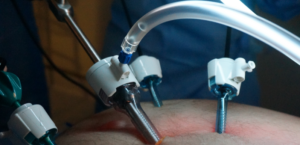
- Diagnostic laparoscopy. An informative diagnostic method. Provides accurate information about the types of inflammation in the abdominal cavity.
At each stage of the study, the surgeon registers deviations from the norm, and based on the general picture of the changes, he makes a diagnosis.
In cases where diagnosis is difficult, a laparoscopic examination is performed. The diagnosis of acute appendicitis in pregnant women is particularly difficult. The symptoms are similar to those common in pregnancy:
- nausea;
- vomit;
- abdominal pain etc.
Prevention
The only possible way to prevent appendicitis and its complications is to see a doctor in a timely manner.
During the first 6-12 hours after the onset of pain typical for this pathology, the patient must receive medical help and undergo diagnostics.
At the first suspicion of an attack of appendicitis, you should immediately consult a doctor in order to avoid complications and prevent the disease from turning into a threat to life.
Timely seeking help from a doctor and timely applied methods of surgical treatment guarantee a favorable result in the treatment of acute appendicitis.
Competently provided first aid for appendicitis can greatly facilitate the diagnosis of the disease, which will save time, make a diagnosis in a timely manner, and start treatment.