
Acute appendicitis: symptoms, diagnosis and first aid
Acute appendicitis is a patient's condition with inflammation of the accessory branch of the rectum. It is most often diagnosed by surgeons upon admission of a patient with a diagnosis of acute abdomen. In the International Classifier of Diseases (ICD-10) it has a code - K-35. Unspecified appendicitis is endowed with a code - K-37. The disease has been studied in detail by practicing surgeons, scientists in the field of medicine. More than one monograph has been published on the state of acute appendicitis. Surgery lectures describing the disease are published regularly. Cases of acute appendicitis in pediatric surgery are considered separately. What are the main symptoms of malaise, diagnostic methods and options for help - discussed in the article.
Content
- 1 Disease concept
- 2 Classification
-
3 Symptoms
- 3.1 Symptoms common to young children and the elderly
- 4 Causes
- 5 Diagnostics
- 6 First aid for an attack
-
7 Treatment
- 7.1 Removal process
- 8 Complications
- 9 Prophylaxis
Disease concept
Acute appendicitis refers to pathological conditions in the peritoneal region of a person, which require prompt surgical intervention. Pathology equally affects men and women, regardless of the age category. The peak of the frequency of visits was recorded in the zone from 10 to a little over 30 years old. Medical statistics note the presence of an inflammatory process in the appendix of the cecum in every 5 out of 1000 people during a calendar year. Gastroenterologists or surgeons deal with the disease.
Concept appendicitis is considered by modern doctors as a disease of a rudimentary element that is not needed by a modern person. The process is a blind formation in the form of a small sac. It is connected to the cecum with a funnel-shaped opening.
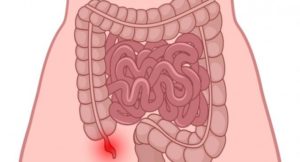
Appendix in the human body
Until today, there is no consensus about the purpose of the appendix and its mandatory presence in the human body. However, the body performs several functions:
- Barrier;
- Endocrine;
- Secretory.
With its help, a certain microflora in the intestine is maintained, local and general immunity is developed.
With inflammation of the appendix, there are basic symptoms characteristic only of this pathology. Everyone should know them, and, if necessary, be able to provide basic assistance.
Classification
There are clinical and morphological types of the inflammatory process of the organ:
- Spicy;
- Chronic.
In acute appendicitis, several more are considered separately:
- Catarrhal type or superficial;
- Gangrenous;
- Apostematous;
- Phlegmonous and ulcerative;
- Phlegmonous.
Catarrhal appendicitis, which affects a mature person, is noted with an incorrect function of blood flow and lymph outflow directly in the appendix itself. The mucous membranes become inflamed, purulent contents appear on the surface of the membranes. The appendix enlarges due to filling with blood and lymph, the surface becomes full-blooded. An attack of appendicitis is diagnosed.

With the catarrhal type, an inflammatory process occurs, a purulent clot appears. During the day, the catarrhal type develops and, in the absence of measures, turns into phlegmonous. The appendix becomes crimson, the wall of the appendix thickens, the purulent contents seep through the walls of the organ. With further development, additional complications arise. Phlegmonous type in the absence of medical intervention leads to peritonitis with emerging consequences for the patient's body.
Chronic or non-acute appendicitis is characterized by gradual changes in the appendix, in its walls. Adhesions often appear, fluid accumulates, cysts appear on the surface.
Symptoms
The very first symptoms can be confused with another ailment:
- Desire for nausea and vomiting;
- Diarrhea;
- Difficulty in defecating and passing gas.
The difference from poisoning or intestinal infection is the appearance of tachycardia with appendicitis, subfebrile condition appears. Destructive form of appendicitis characterized by severe intoxication of the body. A complication in the form of abscesses in the abdominal cavity is possible. Rarely, but there is a positive Croup syndrome. The formation of thrombophlebitis of the pelvic veins or iliac veins is possible. Local status on palpation is marked by sharp pain. Murphy's syndrome is not characteristic of acute appendicitis. Pathology develops rapidly, passing into complex stages, like peritonitis. It's important not to waste time.
Symptoms common to young children and the elderly
Medical workers note the peculiarities of the course of the disease in children and the elderly, as well as in adult patients with a specific organ structure.
In a child with inflammation of the appendix, the following complaints are noted:
- Abdominal pain is the main symptom;
- Diarrhea;
- Temperature increase;
- Urge to vomit;
- A state of lethargy;
- Increased moodiness.
The listed symptoms are typical for childhood intestinal infections.
Symptoms in the elderly include other signs. There is no active manifestation of the attack. The malaise does not manifest itself openly and actively, with destructive forms as well. Rarely, there is an increase in temperature, soreness in the abdomen is weak, the pulse rate is within normal limits, there is a slight increase in leukocytes in the blood. To diagnose pathology in elderly patients, a colonoscopy procedure is required.
Features of symptoms are noted in women during pregnancy. Diagnosis is complicated by the displacement of the intestinal process upward due to the presence of a fetus in the uterus. Symptoms are mild. You need to make sure that the presence of abdominal pain does not pose a threat of premature birth or miscarriage.
Chronic forms of pathology are marked by aching soreness. Feelings may decrease or increase. The manifestations of morbidity are situational, manifested during the period of physical work. Persistent constipation or diarrhea is often present. At the same time, the patient has normal blood and urine tests, the temperature is within normal limits. Feelings of pain in the abdomen occur when examined by a doctor and when palpating the peritoneum.

Causes
Specialists do not distinguish one reason for an attack of acute appendicitis. Etiopathogenesis basically contains a bacterial factor. There are a number of factors that trigger the acute condition. The etiology of the disease considers several theories: infectious, allergic, angio-neurotic, congestive hypertensive.
Simply put, the main reasons are:
- The presence of infectious diseases.
- Inflammation of the blood vessels.
- Anamnesis does not rule out allergies.
- The pathogenesis of acute appendicitis basically contains an occlusion that blocks the lumen in the organ. With the existing plug, additional attack provocateurs appear: the accumulation of pathogenic microorganisms; clogging of the celiac process with rot, feces, pus, foreign objects from the intestines (in a condition such as perforated appendicitis); the development of a cyst or tumor; a local defect in the mucous membrane of the organ is created in the form of an ulcer.
Of no small importance is the patient's nutritional characteristics. It is noted that lovers of meat and its products are more likely to have an attack of appendicitis. This is due to the large amount of protein residues in the intestine, which is favorable for the emergence and reproduction of parasites that feed on protein masses. The presence of parasites also entails the presence of pathogenic microflora, which clogs the lumen of the appendix and causes its overflow.
Diagnostics
The condition of acute appendicitis is not easy to diagnose. The physician examining the patient must determine whether the condition of the "Acute abdomen" is one of the intestinal diseases. A reliable diagnosis is made only by a surgeon after the following steps:
- Examination of the patient, palpation of the abdomen, complete collection of information from the patient himself, the medical history is carefully studied.
- Clinical analyzes. Test for the presence of an increased number of leukocytes in the blood.
- Conducting instrumental examinations using an X-ray machine, ultrasound, MRI, laparoscopy.
- When a female patient is admitted, an examination and general consultation of a gynecologist is required.
Difficulties in diagnosis does not arise if the process is located correctly in a typical place. If the location is atypical, it is important to distinguish the disease from another pathology, avoiding tactical errors in treatment.
First aid for an attack
Inflammation of appendicitis manifests itself in the form of an attack. The attack always appears unexpectedly for the patient and his environment. Not every person knows how to behave when the characteristic manifestations of an attack appear, how to help a patient if you are near him.
A condition with acute appendicitis always begins with pain located near the patient's navel. Over time, the discomfort is transferred to the right side of the peritoneum. The entire abdominal cavity, located under the navel on the right side, fills with pain. The patient begins to feel the urge to nausea. Vomiting is not excluded. The abdominal muscles are in a state of tension.
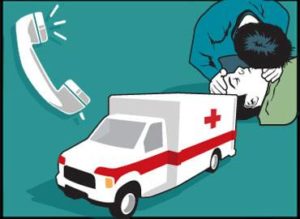
The very first thing to do in this case is to call an ambulance. While waiting for the arrival of the doctor, it is important not to leave the patient and prevent complications. The basics of seizure assistance are as follows:
- Providing complete rest for the patient with appendicitis.
- Do not offer water, food, or pain medications. The use of medications can distort the symptoms, and the doctor will make an erroneous conclusion in the diagnosis.
- It is advisable to place an ice heating pad on the patient's abdomen and renew it periodically for the presence of cold.
Treatment
Hospital surgery is involved in treating seizure patients. In the treatment, a surgical option is used - an operation. Doctors always act according to a well-oiled principle:
- The admitted patient remains in the hospital.
- Doctors provide follow-up for 2 hours after admission.
- The preparatory part for surgical procedures begins.
- Removal surgery is like a cure for an attack.
Removal process
An operation to remove the inflamed process in patients is possible in two ways:

- Laparotomic. With this treatment option, the surgeon makes an incision in the peritoneum, through which it enters the abdominal cavity and reaches the appendix.
- Laparoscopic. This option assumes a small opening in the abdomen. The method is safer, less uncomfortable for the patient, the recovery process after appendicitis is faster, after the manipulation only a small scar remains.
Complications
The condition of acute appendicitis sometimes has some complications. After surgery, the mortality rate is not high, less than 1 percent. Mortality is associated not with the removal itself, but with the development of complications.
- With a phlegmonous form, the development of an empyema of the appendix is possible.
- Is developing appendicular infiltrate.
- With prolonged delay in seeking help or long preparation, complications are possible due to the developed peritonitis.
- Inflammation with purulent contents in the abdominal cavity of the intestine.
Prophylaxis
There are no special recommendations regarding the state of acute appendicitis. The correct tactic for an acute condition is to follow simple rules of a healthy diet, adherence to a rational lifestyle, feasible sports activities, daily walks and the presence healthy sleep. It is important to monitor your overall health, keep fit, move actively and improve immunity. Good health is the foundation of a long, quality life.


