
What can cause appendicitis: factors contributing to the rapid development of the disease
Appendicitis is an inflammation of the appendix cecum. By nature, they are either acute or chronic. The only option for his treatment is the removal of the organ.
In gastroenterology, 70% of surgical interventions are appendectomy. According to medical sources, 10% of the world's population have undergone this operation, and men and women get sick equally often. In connection with the above, doctors believe that any person can get this pathology.
The first messenger of the inflammatory process is an attack of pain, which appears against the background of complete health. For 1 day, it progresses, but it is difficult to differentiate from other anomalies. Separation requires professional medical knowledge, skills and modern hardware diagnostic methods. Since it is extremely difficult to diagnose inflammation at home, any sharp pain in the navel that becomes worse with movement is a reason to go to the hospital. You should not feign and convince others of appendicitis for the sake of fun or getting sick leave, this is a dangerous disease and no jokes with it.

Content
-
1 Causes of occurrence
- 1.1 Mechanical
- 1.2 Vascular
- 1.3 Allergic
- 1.4 Nerve reflex
- 1.5 Endocrine and immune
- 1.6 Food
- 1.7 Infectious diseases
- 1.8 Genetic predisposition
- 2 Prophylaxis
Causes of occurrence
Research in this area has not identified a specific pathogen.
There are two components that determine the development of pathology: the action of pathogens and stress factors.
When these two elements interact, they can provoke inflammation and cause appendicitis.
- Pathogenic flora. The causative agent is the intestinal microflora itself, which is constantly present in the body, which, under the influence of external influences, quickly becomes pathogenic: enterococci; klebsiella, staphylococcus, streptococcus.
- Triggers. Various stressors provoke pathology, each of which can be attributed to several groups, reflecting the theory of its formation: mechanical, infectious, vascular, immunological and endocrine.
Inflammation of the appendix cannot be called a discovery of the modern age. Historical studies indicate that people faced this problem in ancient times and wondered why it arises. In Egypt, mummies have incision marks on their belly. An anatomical description of the said organ was found in the works of Leonardo da Vinci in the fifteenth century. It received a special name only at the end of the eighteenth century.
The appendix appears by the third month of embryo growth. This is an unpaired organ in the form of a tube 12 centimeters in size, which has a tissue structure similar to the cecum.
For a long time, the appendix was considered a rudiment not involved in the digestive system, so some doctors proposed to solve the problem of morbidity by removing a healthy organ, without waiting for the development ailment. In the wake of these ideas, removal operations for children were massively carried out in Germany. As a result, the child developed a serious form of immunodeficiency.
Now the appendix is considered as an element of the immune defense of the human body, which produces amylase and performs the functions of improving the intestinal microflora.
Since no specific pathogen has been identified, several groups of external factors are considered that determine its development.
Mechanical
This is a common cause of illness. It develops due to blockage of the lumen. Violation of the flow of fluids contained in the organ leads to stagnation and an increase in internal pressure and the start of inflammation.
The reasons for the blockage of the lumen can be:
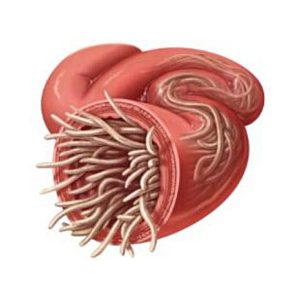
- Parasitic organisms are helminths. Parasitic roundworms penetrate and block the lumen of the organ.
- Fecalites. Fecal stones formed as a result of intestinal dysfunction, they gradually grow and eventually block the lumen of the organ.
- Scars and adhesions. Colitis, enteritis, cholecystitis lead to displacement of internal organs and the formation of scar tissue and adhesions. As a result, the caecum section is folded, followed by obturation.
- Tumors and polyps. Specific manifestations are absent and are found with appendicitis.
- Overgrowth of lymphoid tissue (enlarged lymph nodes).
- Foreign objects. Foods that are poorly digested by the stomach can make the lumen impassable: bones, seed husks. Sometimes there are accidentally swallowed objects: teeth, crowns, coins, paper clips. Small children are susceptible to mechanical damage due to the constant stuffing of toys in their mouths. In rare cases, a gallstone may enter the appendix when exiting and block it.
Vascular
Diseases of the vascular system provoke disorders of the vascular circulation of the mucous membrane of the appendix. As a result, swelling and congestion are formed in the mucous membrane of the process, against the background of which the infection develops.
Allergic
Allergic reactions become the cause of the disease. With a high level of hypersensitivity of the appendix, the barrier properties of the mucosa are reduced. An excessive number of pathogens penetrates into it. An increase in their number against a background of hypersensitivity can inflame the process.

Nerve reflex
The factor provoking the disease is the spasm of the arteries feeding the cecum. A sharp vasoconstriction disrupts blood supply and contributes to the appearance of stagnant areas. The dystrophic changes caused by this lead to a decrease in defense mechanisms and provoke inflammation in the appendix.
Endocrine and immune
An excessive amount of serotonin, together with an increased protective function of the follicles of the cecum, can provoke an inflammatory process. With the abuse of chocolate and foods rich in cocoa butter, an excess amount of serotonin is produced in the body and there is a risk of pathology. Decreased immunity due to smoking, alcohol abuse, or the constant use of antibiotics can exacerbate chronic inflammation in the appendix.
Food
A diet that does not contain sufficient fiber becomes a stressor and can exacerbate the chronic nature of the anomaly. Numerous microorganisms are present in the intestines, their balanced ratio ensures the normal functioning of the body. To survive, beneficial bacteria need nutrition in the form of fiber, which in undigested form becomes food for microorganisms. An impoverished diet becomes the cause of the appearance of dysbiosis and chronic internal disorders. Vegetables, fruits, natural unrefined oils, grains help fill the lack of fiber.

In addition, plant foods increase the tone of the intestinal walls, which prevents constipation and prevents the formation of fecal stones.
Infectious diseases
The causative agents of typhoid, tuberculosis and amoebiasis can cause an inflammatory process in the appendix.
Genetic predisposition
The results of studies of the etiology of the disease highlight the hereditary factor. This is due to the inheritance of structural features of internal organs. If one of the parents suffered from appendicitis, then the likelihood that children can get sick at the same age increases significantly.
Prophylaxis
Regardless of the nature of the stressor, inflammation begins with the appearance of a defect on the mucous membrane of the process, through which the infection enters the walls, after which the process becomes irreversible and destructive. The disease develops against the background of diseases of the cardiovascular system, infections, and it can also be earned by bad habits.
Studies have not established specific measures to prevent the onset of pathology. Launched inflammatory processes, the use of antibiotics without a special doctor's prescription damage the intestinal microflora and create favorable conditions for the development of the disease.
Doctors recommend monitoring your health, paying particular attention to the work of the gastrointestinal tract. To prevent constipation, drink a glass of water before meals. Eat protein foods with plant foods to stimulate digestion and prevent food from rotting in the intestines. Strengthening immunity, an active lifestyle, regular visits to medical institutions will reduce the risk of a pathological condition to a minimum.


