Bleeding with duodenal ulcer: symptoms and treatment
Ulcer formation in duodenum and the complication of bleeding or perforation is not associated with the age or sex of the person, little depends on the individual physiological characteristics. The researchers concluded that the mechanisms of spontaneous stopping of intestinal bleeding do not work in elderly and old people. With the development of bleeding with duodenal ulcer, hospitalization in a surgical hospital is an indispensable condition.
For young people, the risk of bleeding is high, and hospitalization is also required. Even a minor ulcer of the stomach and duodenum causes dynamic changes in the body, gradually worsening the general condition, leading to irreversible consequences.
Content
-
1 Clinical course
- 1.1 Early clinical signs
- 1.2 Expanded clinical symptoms
-
2 Ulcer bleeding with perforation
- 2.1 Clinical picture
- 3 Adaptive reactions of the body in response to blood loss
- 4 Treatment principles
-
5 Conservative treatment
- 5.1 Urgent care
- 5.2 Radical treatment
- 6 Indications for surgical treatment
Clinical course
Bleeding in duodenal ulcer occurs in two clinical stages. Symptoms are divided into early and late, depending on the time elapsed since the onset of bleeding and the amount of fluid loss.
Early clinical signs
The early signs of the onset of bleeding from the duodenum include:
- A sharp onset of weakness, drowsiness in a person. The symptom should alert you immediately.
- Unreasonable feeling of anxiety, fear.
- Severe headache, dizziness.
- Increased sweating, pallor of the skin to yellowness.
- Decrease in blood pressure compared to normal for the patient.
Expanded clinical symptoms
- A characteristic sign of a detailed bleeding pattern is profuse vomiting with blood impurities. An episode of vomiting is almost always a single episode. The vomit contains clots of fresh or coagulated blood.
- A couple of hours after the end of vomiting, black stools appear. In such a case, it is necessary to carry out a differential diagnosis with black stools, which is observed when eating certain foods, medications rich in iron.
- Loss of consciousness by the patient, development of convulsive syndrome.
Bleeding from a duodenal ulcer can be acute and sudden and threaten the patient's life, or chronic and develop extremely slowly, without leading to the development of an acute condition.
General clinical symptoms are directly related to the amount of blood lost. If bleeding stomach ulcer small, the patient is dizzy, the skin and visible mucous membranes turn pale. Gradual weakness, malaise develops, blood pressure decreases to collapse. If bleeding from stomach and duodenal ulcers is profuse, intense, the stool becomes tarry black. In arterial blood, the number of erythrocytes decreases, the hematocrit index changes.
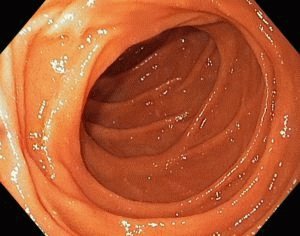
Duodenum
Ulcer bleeding with perforation
A similar condition is characterized by the simultaneous presence of bleeding and a clinical picture. perforation of the duodenal ulcer. Usually, with simple ulcer bleeding, abdominal pain gradually decreases with an increase in the pattern of blood loss. The clinical symptoms of perforation are characterized by the persistence of intense pain.
The perforation of the ulcer can begin immediately after the development of the bleeding clinic, or after a few hours or even days. In these cases, the diagnosis contains a number of difficulties. The patient may be weakened, unconscious.
Clinical picture
With the development of perforation after bleeding, the patient regains a feeling of pain, comparable to the pain of a knife or dagger strike. The patient lies on his side, curled up in a ball, pulls his legs to the front wall of the abdomen, tends to move less, alleviating the unbearable sensation of pain.
When examining and palpating the abdominal wall, a pronounced muscle tension is observed, the creation of muscle protection (defense), with perforation of an ulcer the duodenum begins to drain the contents of the intestine along the right lateral region of the abdomen, causing pain in the right iliac region, simulating symptoms acute appendicitis. It is important to avoid a diagnostic error. In the first hours after the onset of the disease, the patient may vomit. With the spread of intestinal masses and the formation of a clinic of peritonitis, vomiting takes on a repeated indomitable character.
The heart rate rises sharply, the pulse is weak filling and tension. Leukocytosis appears in the blood, the erythrocyte sedimentation rate increases. There are characteristic percussion and auscultatory symptoms of perforation and peritonitis.

Adaptive reactions of the body in response to blood loss
Gradually, the body develops adaptive responses, minimizing the harm from blood loss. In the bloodstream, the volume of circulating blood increases, due to the massive release of blood from the depot organs. The described picture appears after a day after the onset of bleeding.
There is a massive release of fluid into the bloodstream and blood thinning (hemodilution) in order to replenish the volume. In the blood, there is a decrease in the level of hemoglobin and the number of red blood cells. With prolonged chronic bleeding, the shape of erythrocytes changes, the hemoglobin content changes, and the serum iron content decreases.
After three days after the onset of bleeding in the body, the function of producing red blood cells is activated. In the bone marrow, erythrocytes begin to be intensively synthesized. Spastic symptoms cease, abdominal pain decreases.
Treatment principles
With the development of bleeding from the duodenum, regardless of the patient's condition and the amount of blood loss, hospitalization in a surgical hospital is required. The only effective method of radical treatment is surgery. Before acting on the ulcer, conservative hemostatic treatment is carried out. If bleeding is complicated perforated ulcer, this condition becomes an absolute indication for immediate surgery.
If duodenal ulcer has not been treated for a long time, this can inevitably lead to the development of bleeding, since ulcerative processes can destroy the vascular walls. The occurrence of such a complication is only a matter of time.
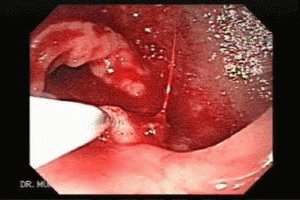
Bleeding surgery
To prevent a bleeding duodenal ulcer from leading to irreversible consequences, it is necessary to carefully approach the treatment of peptic ulcer disease and in the future to radically change the image life. Modern medical technologies introduced into surgical practice are able to stop bleeding without surgical intervention. However, if the disease has gone far, surgical treatment will be the only possible way to save the patient's life.
If you do not continue the treatment of peptic ulcer after stopping bleeding, a relapse of the disease will inevitably occur. Rebleeding can be more severe and cause death of the patient.
Conservative treatment
Urgent care for the patient is to create complete rest and a fixed position on a horizontal surface. The foot end must be slightly raised to allow blood flow to the brain and avoid loss of consciousness.
At the stage of hospital treatment, a nasogastric tube is inserted into the patient and the gastrointestinal contents are extracted. Continuous bleeding into the intestine is monitored using a probe.
Urgent care
As an emergency, hemostatic drugs are administered to the patient - vikasol, calcium gluconate. To stop bleeding, gastric lavage can be performed through a nasogastric tube with ice water, balloon compression of the stomach and duodenum. Epsilon-aminocaproic acid is administered intravenously to the patient. You can enter it locally, as well as thrombin, special drugs - enzyme inhibitors. These drugs are able to suspend blood and promote the formation of blood clots in the lumen of the damaged vessel.
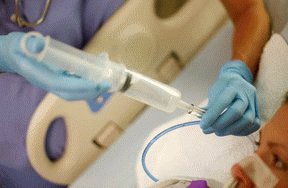
Gastric lavage as first aid
Radical treatment
For a radical solution to the issue, they are currently widely used in surgical practice. endoscopic methods of therapy - electrocoagulation of the damaged vessel or photocoagulation using laser equipment. With the help of endoscopic equipment, special hemostatic polymer substances that form a thin film on the walls and prevent further blood loss.
Indications for surgical treatment
If the bleeding is severe, the area of the ulcer is very large, conservative treatment may be ineffective. There is a list of absolute indications for a detailed surgical intervention for ulcerative bleeding:
- Massive blood loss.
- Significant anemization of the patient.
- The development of the clinical picture of hemorrhagic shock - a rapid decrease in blood pressure, pallor of the skin, rapid pulse and respiration, a decrease in hemoglobin levels below 70 grams per liter.
- Indication for urgent intervention is the ineffectiveness of conservative therapy within 48 hours.
If there is no certainty that the bleeding has been reliably stopped, patients undergo planned surgical treatment, especially if the bleeding is not the first time.
In the postoperative period, the volume of circulating blood is replenished, the level of hemoglobin is normalized, and the hemodynamic parameters of the body are normalized.