
Seborrheic dermatitis on the face: treatment, photo, cream, diet
Content
- The reasons for the development of seborrhea on the face
- Symptoms
- Seborrheic dermatitis on the face in children
- Treatment of seborrhea on the face
- Diet for seborrhea of the face
- Prophylaxis
Seborrheic dermatitis on the face refers to a pathological condition of the skin caused by the activity of the sebaceous glands. The process occurs as a result of violations in the chemical composition of subcutaneous fat.

Most often, the disease is observed among men and patients suffering from disorders in the work of the endocrine and immune systems.
This type of seborrheic dermatitis can develop in two forms: dry seborrhea, characterized by increased dry skin, when crusts appear on it, which are difficult to heal with conventional care products, and oily seborrhea.
With seborrheic dermatitis, there is an increased oily skin, and areas of a grayish tint may appear on it. The skin relief resembles an "orange peel", blackheads appear, and with a secondary infection, boils and pimples appear.
With any development of seborrheic dermatitis, timely treatment is required, otherwise severe peeling of the skin with characteristic hemorrhagic crusts is possible.
The reasons for the development of seborrhea on the face
The causes of seborrheic dermatitis are not fully understood. However, to date, it has been scientifically proven to play an important role in the development of seborrheic dermatitis on the face of Pitirosporum infections caused by the fungus Pitirosporum ovale.
There are many factors that enhance the activity of the fungus, but the main causes of seborrheic disease are expressed by the following indicators:
- the presence of hypovitaminosis;
- irrational diet;
- a weakened immune system;
- diabetes mellitus;
- endocrine diseases;
- the patient has chronic diseases;
- improper care of the face area;
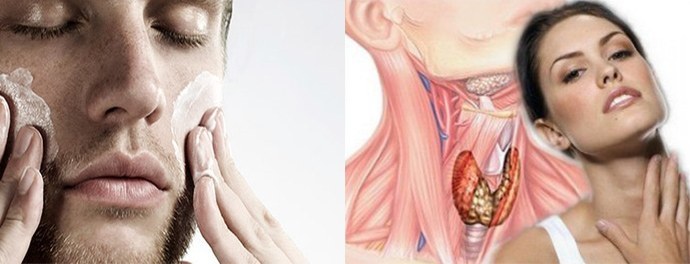
- often the causes of seborrheic dermatitis can be dysfunctional disorders of the central nervous system;
- increased sweating;
- chronic lack of sleep;
- sometimes the causes of dermatitis lie in the activity of pathological processes in the body (intestinal tract, genital area, malignant neoplasms, etc.).
The reasons that seborrheic dermatitis on the face more often occurs in men is the increased amount of male hormones (androgens), which increase the secretion of subcutaneous fat in seborrhea. It is important to note that the functionality of the glands is hereditary.
Symptoms
Symptoms of seborrheic dermatitis begin with the appearance of hyperemic spots in the face area, which later transform into yellow plaques. The rash spreads to the peripheral areas, taking a different shape. In this case, seborrhea of the facial skin is accompanied by increased itching and flaking.
Symptoms of seborrhea are most severe among men who wear a beard and mustache. In these places, large-lamellar plaques are formed, which can turn into papules. If a secondary infection joins, the development of erythroderma is possible. When the papules merge, a solid bright red focus is formed.
Typically, there are the following types of seborrheic disease:
SEBORA FAT. This is the most common type of dermatitis (pictured). Often it can be caused by improperly selected cosmetics. It is characterized by increased production of sebaceous secretions. The patient's face is covered with a greasy film, which leads to the gradual appearance of fungal and other infections, aggravating the general symptoms of the disease.

DRY SEBOREA. This form of dermatitis is much less common. Due to the fact that the production of sebum is sharply reduced, the patient's skin is dry and begins to crack (pictured). As a rule, this disease most often occurs in children.

MIXED SEBOREA. The mixed form of dermatitis combines the symptoms of dry and oily seborrhea (pictured). Dry and oily seborrhea of the face develops gradually and if timely therapeutic measures are not taken, erythroderma may develop.

It should be borne in mind that the mixed seborrheic form of the disease can be confused with other diseases that occur with similar symptoms. For example, with candidiasis, psoriasis, atopic dermatitis and shingles. Therefore, immediately after the onset of the initial symptoms, one should consult with a number of narrow specialists (gynecologist, endocrinologist, dermatologist, gastroenterologist and neuropathologist). Based on the data obtained, specialists will prescribe adequate treatment and give the necessary recommendations.
Seborrhea on the face is determined by the following manifestations
- the appearance of unbearable skin itching;
- hyperemic rash;
- at the site of the lesion, there may be severe burning and peeling of the affected areas of the body;
- there is an increased sensitivity of the skin;
- white and yellow scales appear in the face area.
In addition, the favorite places for the localization of negative symptoms are the frontal surface, cheekbones, nasolabial folds and eyebrows (pictured).

Seborrheic dermatitis on the face in children
This disease in children may first appear at the age of 2-3 weeks. In a child, dermatitis is most often accompanied by a rash on the scalp (scalp). In the area of the face (on the cheeks, behind the ears and forehead), the symptoms of the disease are less pronounced. In addition, the characteristic rash in children can spread to any part of the body, but in infants, the perineum and scalp are most often affected.
As a rule, in infants, the areas affected by seborrheic dermatitis are dry, without signs of wetting (pictured). In the case of a secondary infection, pyoderma may develop, which is accompanied by pain, provoking anxiety in the child.

When correcting the diet and early treatment, the prognosis for recovery is favorable. In this case, the symptoms of seborrhea are neutralized 6-8 weeks after the birth of the child.
Treatment of seborrhea on the face
Seborrhea on the face requires the obligatory consultation of a dermatologist, who, in accordance with the treatment protocol, will prescribe the necessary course of therapy.
Recommended therapeutic measures:
- Currently, there are many external preparations for the manifestations of dermatitis in the face. For example, Nizoral cream, Ketodin, Lamisil ointment, etc. In the case of a fungal etiology of the development of the disease, a facial treatment with 2% Nizoral (cream against fungal infection) is prescribed for 2 weeks;

- for an active effect on opportunistic microflora, it is recommended to use 2-5% Ichthyol paste, which, in addition to antimycotic effect, has a keratolytic effect, which allows the drug to penetrate into the deep layers epidermis;
- to neutralize the inflammatory process, creams and ointments with a low concentration of corticosteroids are used, for example, Prednisolone ointment, Hydrocortisone cream, etc.
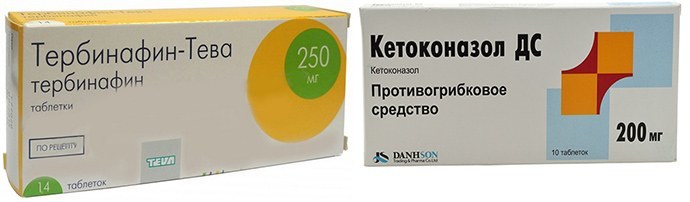
- with severe development of seborrheic disease, in order to neutralize the symptoms, in addition to external treatment, drugs for oral administration are actively used. This can be Ketoconazole (200 mg per day), Terbinafine (250 mg per day) or Fluconazole (100 mg per day). With the development of an acute relapse of seborrhea, oral medications are taken against fungal infections. Most often, Diflucan (100 mg) is prescribed during the day. However, contraindications must be taken into account when treating with antimycotic drugs;
- with obvious allergic manifestations, treatment with antihistamines is prescribed (Erius, Claritin, etc.);
- to normalize the digestive tract, it is recommended to take probiotics (Bifiform and Linex).
To restore the immune forces, vitamin therapy (B, E, C) and the intake of immunomodulators (Elidela or Protopica) are prescribed. In addition, complex treatment includes folk recipes for getting rid of the disease.
The use of external drugs
The nature of the treatment against the fungus directly depends on the functionality of the sebaceous gland and the severity of the pathological process.
With mild seborrhea, the use of systemic drugs is not required. As a rule, special ointments, lotions or creams with added antimycotic components (ketoconazole, tar and zinc) are prescribed.

The prescribed drug should be applied at least 2 times a day for 2-4 weeks, after which it is recommended carrying out supportive treatment, when the external agent is applied once a week for 2 months. This technique allows you to prevent relapses of seborrheic dermatitis of the face.
Before treating seborrhea on the face, it is important to consider that the use of medications against fungal infections depends on the type of seborrhea. The dry form of the disease is curable with local drugs, and the oily form, in addition to external agents, requires the use of a systemic drug.
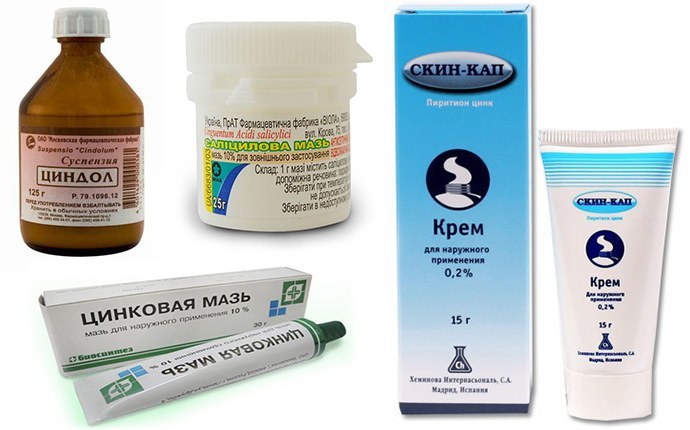
The most commonly used types of external drugs are:
- Tsindol cream;
- zinc ointment;
- Salicylic ointment;
- Skin-Cap drug (cream, aerosol).
In addition, to normalize the work of the central nervous system, mild sedatives are prescribed (Motherwort, Valerian extract, etc.).
Treatment of an acute inflammatory reaction
With the development of acute seborrheic dermatitis as a result of dysfunction of the sebaceous gland, negative symptoms can be removed by performing the following measures:
- correction of the patient's nutrition is recommended;
- antihistamines are prescribed (Loratadin, Diazolin, Tavegil, etc.);
- anti-inflammatory nonsteroidal drugs (Ibuprofen, Diclofenac, etc.);
- steroid drugs (Betamethasone, Lorinden, etc.);
- if necessary, treatment with antibiotics is carried out.
It must be borne in mind that the disease can be completely cured only with an integrated and timely approach, including treatment with folk remedies.
Folk recipes for seborrhea on the face
In addition to drug treatment, with seborrheic dermatitis, therapy with folk recipes is actively practiced, which contribute to the regeneration of the epidermis, and actively relieve the symptoms of the disease.
Among the many popular recipes, the following are the most effective in treating dermatitis:
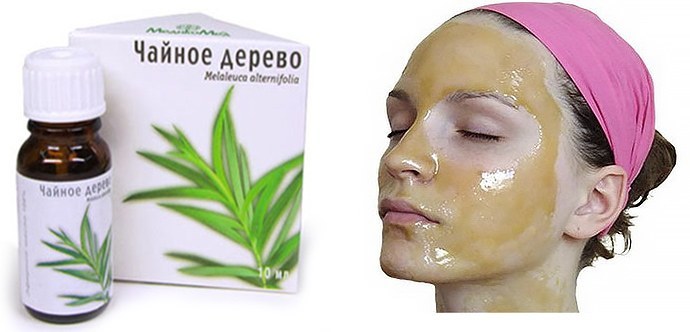
- To cure the negative manifestations of dermatitis, you can use tea tree oil, which has a good antiseptic and anti-inflammatory effect. Oil in its pure form or with a base base is applied to the face. It should be borne in mind that the folk methods of using essential oils in order to neutralize negative symptoms must be used very carefully, as there is a risk of burns to the face. Sea buckthorn oil, laurel oil, etc. can be used as a base base. The recipe for the mixture is quite simple: for 2 drops of tea tree oil - 1 tbsp. l. base oil.
- Effective treatment of seborrhea is provided by medicinal herbal decoctions using pharmacy chamomile, calendula, St. John's wort, string and sage. 1 tbsp. l. a mixture of dry herbs is poured with 1 glass of boiling water and infused for half an hour. After cooling and straining, the solution is used as a tonic for wiping the face or applied in compresses.
- At home, a good treatment for dermatitis is provided by a mask of 1 mashed fresh cucumber with 1 tsp. natural honey. The prepared mass is applied to the face for 15 minutes, and then, at the end of the treatment, the remnants of the mask are washed off with warm water.
- Apple cider vinegar or lemon juice diluted with water in equal concentration has a beneficial effect in the treatment of seborrheic dermatitis on the face. This solution is recommended for relieving itching.

- Apple cider vinegar is actively used when complex treatment of seborrhea is carried out. To prepare a remedy, it is necessary to grind horseradish root (100 gr.), And then pour apple cider vinegar (300 ml.) + 200 ml into this mixture. vermouth. All components are mixed and infused for 5 days. After that, the solution is filtered, and with its help the affected area on the face is lubricated.
- If irritation occurs after treatment, a mixture of camphor and olive oil in equal proportions can be applied to the face. After the oil is completely absorbed, dusting with lycopodium is recommended (a crushed mixture of spores of a club-shaped lycopodium).
Diet for seborrhea of the face
Seborrhea on the face provides for a special diet that takes into account the following points:
- it is necessary to exclude any food irritant from the diet;
- elimination of harmful substances and toxins from the body;
- saturation of the body with vitamins and minerals to strengthen the immune system;
- regulation of digestive function.
In order to improve the condition of the skin of the face with dermatitis, a fermented milk diet with a sufficient amount of lacto - and bifidobacteria is recommended. The maximum presence of animal proteins and grains is required. It is recommended to cook food in a steam bath, excluding excess salt and fat.
Prophylaxis
To prevent seborrheic dermatitis on the face, it is recommended to observe preventive measures. In this case, the following conditions must be met:
- A hypoallergenic diet must be followed.
- Prevention of the development of a stressful situation, since quite often the causes of a dermatological disease are provoked by a disorder of the central nervous system.
- To prevent the development of seborrheic dermatitis, timely disposal of chronic diseases is necessary.
- Compliance with the rest regime is recommended. It is necessary to walk more often. It is best to treat seborrhea on the face with sea air, which has a beneficial effect on the entire body.
- If the patient has dermatitis, facial care should be performed correctly, cosmetics (creams, lotions, etc.) should be chosen especially carefully. It is preferable to choose special products, according to the type of skin.
Numerous patient reviews confirm that timely initiated therapeutic measures for the treatment of seborrheic dermatitis lead to the fastest recovery. In addition, some reviews indicate that dermatitis on the face is cured much more successfully than seborrhea on the head. Therefore, it must be remembered that seborrhea can be cured only when its causes are determined, since symptomatic treatment has a short-term effect with possible relapses, as a result of which an antifungal agent can be prescribed for treatment therapy.