
Perioral dermatitis: treatment, causes, diet, prevention
Content
- Disease development factors
- Symptoms of the disease
- The development of the disease in childhood
- Perioral dermatitis during pregnancy
- Diagnostic methods
- Perioral dermatitis treatment
- Normalization of the general condition of the body
- Traditional methods of treatment
- Diet for perioral dermatitis
- Disease prevention
Perioral dermatitis refers to a long-term skin disease and may have several names (rosacea-like, steroidal or perioral dermatitis). Most often, the disease is observed in women, due to the frequent use of cosmetics, and in some cases, dermatitis can occur in a child.

Any cosmetic cream and medications that contain the presence of corticosteroids that can destroy the structure of collagen and elastin with simultaneous damage vascular system. This action can lead to the occurrence of erythema, micro-rupture of the epidermis and telangiectasias (dilation of small skin vessels).
The disease is characterized by the appearance of small hyperemic papules capable of merging into a large plaque. In the case when the inflammatory process is accompanied by granulomas, as a rule, oral granulomatous dermatitis develops, which is often observed in children.
Disease development factors
The disease most often affects women under 30. Among men and children, this form of dermatitis is rarely diagnosed. Among the most common causes of the development of perioral dermatitis are:
- the use of external steroids (hydrocortisone, prednisolone, etc.). It is important to note that it is this reason that is considered the most accurate option in the general diagnosis of the cause of negative symptoms. Often, dermatitis can be caused by cosmetic preparations, foundation is especially dangerous;
- natural factors (high humidity, sunlight, frost, wind, etc.);

- the causes of the disease may lie in the presence of bacteria and fungi that parasitize the hair follicles. In this case, the symptoms of perioral dermatitis require additional diagnostics;
- hormonal background is of no small importance in perioral dermatitis. Numerous observations confirm the increased appearance of a rash before menstrual syndrome.
It is important to note that a characteristic reaction of perioral dermatitis is the appearance of rashes when the hormonal cream is abruptly canceled. Such symptoms exacerbate the disease, and patients begin to use steroid facial creams again.
Symptoms of the disease
This form of dermatitis is accompanied by the following symptoms:
- the appearance of itching, hyperemia, soreness and burning sensation in the mouth and chin (pictured);
- small pimples may have a head, upon opening of which, at the initial stage, the separation of a transparent exudate is observed. In the future, it can develop into purulent;
- rashes can cluster, forming colonies.
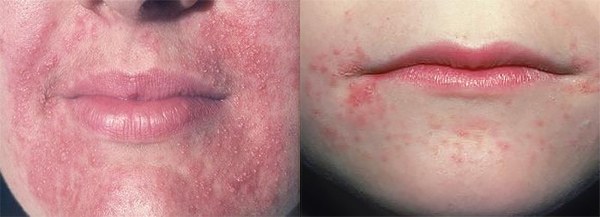
Rosacea-like dermatitis is accompanied by the appearance of scales on the inflamed areas, which can later fall off on their own. This manifestation of the disease occurs quite often with this type of dermatitis.
The development of the disease in childhood
It should be borne in mind that perioral dermatitis in a small child may be slightly different. Papules are pale pink or yellowish brown and to clarify the diagnosis, especially when irritation occurs on the face, a bacteriological culture and scraping of the contents of the papules that caused steroid ointments or cream. After finding out the reason, the therapeutic measures recommended by the doctor are carried out.
In a child, negative manifestations (in the photo) develop most often on the use of a spray or inhaler. Typically, these products contain hormones. Acute symptoms of perioral dermatitis occur only after the abolition of the steroid medication.

Most often, rosace-like dermatitis in children is painless, although sometimes there may be a burning sensation at the site of the rash. In addition, rashes in children in the eye area are sometimes possible, which requires caution in treatment.
Experts classify childhood oral dermatitis as a form of rosacea, as rosace-like dermatitis is most common in young children. Perioral dermatitis in a small child, as a rule, does not pose a threat to health, but in the absence of adequate treatment it can cause inconvenience to the baby.
Perioral dermatitis during pregnancy
During pregnancy of a woman, perioral dermatitis is often associated with physiological immunodeficiency. Most often, this condition occurs early in pregnancy. In this case, the patient needs an individual approach, since in the first 3 months of pregnancy, the use of drug therapy and, in particular, antibiotic therapy is contraindicated. In the 2nd trimester of pregnancy, antibacterial agents are dosed.
It must be remembered that corticosteroids (Dexamezatone, Triderm, etc.) are not recommended for use during pregnancy.
Pregnancy rashes are red or slightly pinkish. After some time, the place of localization of the rash can become pigmented. It must be remembered that during pregnancy, a mandatory consultation with a dermatologist is required, since the disease can be fully treated only when a complete examination has been carried out.
Diagnostic methods
To diagnose perioral dermatitis, a bacterial culture for rosacea-like dermatitis should be performed.
Quite often, diagnostics reveals the presence of Candida fungi on the skin, causing oral candidiasis. However, to date, it has not been possible to determine the specific infectious agents that cause perioral dermatitis.

The histology of the skin is not recommended due to the fact that there are no specific signs for perioral dermatitis. As a rule, a subacute inflammatory process and single areas of altered skin are noted, which can be confused with similarly manifested skin diseases.
Perioral dermatitis treatment
Treatment activities are carried out in two stages:
FIRST STEP. Treatment of perioral dermatitis at this stage involves the abolition of all hormonal drugs (Elokom, Advantan, etc.). Further, therapeutic measures are performed to relieve the negative symptoms of the withdrawal syndrome. In addition to medications, it is recommended to abolish facial cosmetics and personal care products. Otherwise, the clinical picture of the disease may be inaccurate. This stage of treatment in medical practice is called zero. At this stage, the patient's general well-being may deteriorate for a short time, and then improvement occurs.
It is also important to properly care for your skin, avoiding makeup. With a mild development of oral dermatitis, it is possible to use a decoction of chamomile and sage. In case of complicated symptoms, it is recommended to cleanse the face with special emulsions, the main component of which is oil. In addition, during acute manifestations of perioral dermatitis, it is recommended to use 2% naphthalene-tar paste.
External therapy
The following medications are most commonly used externally:
- Cream, gel and ointments containing Metronidazole (Trichopolum). The medicine is recommended to be applied at least 2 times during the day. In the case when the drug in its pure form is ineffective, it is recommended to use gel Metronidazole and 2% Erythromycin, since Erythromycin is a bacteriostatic antibiotic of the macrolide group and is able to enhance the action of other drugs. It has been used in medical practice for a long time and is a time-tested drug. In addition, both Erythromycin gel and ointment are relatively inexpensive and available to every patient.

- Quite often used in the treatment of Protopic 0.01% - 0.03% (body and face milk). Protopic refers to topical drugs and is prescribed to remove the anti-inflammatory effect. The drug is non-toxic, does not affect collagen production and does not cause skin atrophy. Adults and adolescents from 16 years old are recommended to use 0.1% - 0.03% Protopic ointment. Children from 2 to 16 years old are prescribed 0.03% Protopic ointment. It should be borne in mind that the drug is contraindicated during pregnancy and lactation. Reviews of Protopic ointment are quite contradictory. Some confirm the desired effect, other reviews suggest that the drug has multiple side effects.
- Treatment of oral dermatitis actively uses Schen-Cap and any external preparations with the addition of zinc (talker, Qing dol, etc.). Zinc talker is the most accessible, patient reviews about it are the most positive. Zinc, which is part of the drug, has a drying and antipruritic effect.
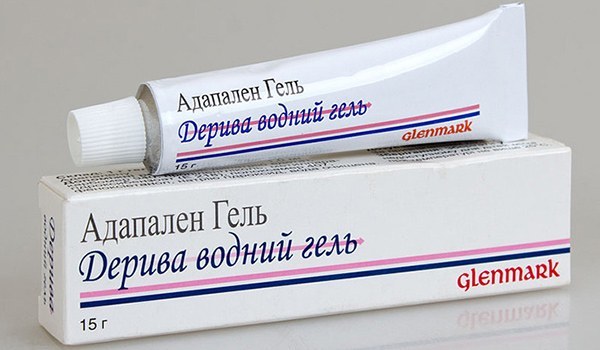
- Adapalen has an effective effect. This drug is indicated for the treatment of various types of dermatitis. It belongs to retinoic acid substitutes, has anti-inflammatory and camellonolytic effects. In addition, Adapalen affects the epidermal intercellular process, stimulating the production of epithelium. Adapalene can be in the form of a cream and gel. Gel Adapolene is prescribed for oily skin, and the cream is intended for patients with dry skin. Reviews confirm the positive effect that Adapalen has, after 14 days of active treatment. It can also be combined with moisturizers.
- Elidel has a positive effect on perioral dermatitis, which can be prescribed for both adult patients and children from 3 months. When treated for 1.5 months, Elidel almost completely removes inflammatory skin diseases. In addition, it can be used in complex treatment, together with other anti-inflammatory drugs. However, you should not use Elidel for a long time. Reviews about the drug are controversial, but in most cases they are positive.
- An effective means of external use for steroidal dermatitis is Rosamet, it acts gently, practically without being absorbed. Rosamet must be used very carefully, avoiding contact with the mucous membrane of the eye. In addition, when using it, you should avoid direct exposure of the skin to sunlight. Rosamet absorbs well and can be used as a makeup base.
In addition, at the first stage of treatment, anti-allergic drugs can be used (Erius, Claritin, Telfast, Suprastin, Parlazin, Zirtek, etc.).

With pronounced edema, diuretics can be prescribed (Furosemide, Spironolactone, Veroshpiron).
With severe development of dermatitis, it is recommended to use sedatives (Novo-Passita, Valerian, etc.). At the end of the first stage, cryomassage is prescribed, as well as acupuncture.
SECOND PHASE. Oral dermatitis on the face at the 2nd stage of therapy provides for the fight against microorganisms that are the cause of the inflammatory process of the skin. During this period, antibacterial agents are prescribed, which include:
- Metronidazole (Trichopolum);
- Monocycline, Isotretionin;
- Doxycycline, Tetracycline;
- Azelaic acid, etc.
It is recommended to use antibacterial drugs for at least 1.5-2 months, based on the severity of symptoms. The most commonly prescribed Metronidazole (Trichopol). It has a broad spectrum of action. It is recommended to take it from 0.5 to 1 gram within 24 hours, for a course of 4 to 8 weeks.
Another common semi-synthetic tetracycline is Doxycycline. It is able to penetrate intracellularly, directly neutralizing the causative agent of the disease. Doxycycline is taken at a dosage of 100 mg twice a day, together with Gentamicin and Clindamycin, if such a combination becomes necessary. Doxycycline takes effect 2 hours after ingestion. It is important to consider that it is able to reduce the bactericidal effect of penicillins. In addition, Doxycycline should not be taken during pregnancy.

Inhibitors (Tacrolimus and Pimecrolimus) may be prescribed to most effectively treat oral dermatitis. As a rule, they are used in combination using Doxycillin and Monocycline. This combination allows the most effective treatment of this type of dermatitis.
Normalization of the general condition of the body
It is important to remember that a positive result is observed only when, along with symptomatic therapy, it is possible to cure chronic foci of infection. In addition, the work of the nervous and endocrine systems and the functionality of the gastrointestinal tract should be normalized.
As needed, drugs are used to normalize the immune system, drugs to strengthen the central nervous system, vitamin therapy (folic acid, vitamins of group B, A and C).

Sunscreen should be used during summer, as direct UV rays can aggravate symptoms. It is necessary to use a cream with a high protective factor. In addition, cryomassage has a positive effect.
A warning! The use of corticosteroids (Elokom, Advantan, etc.) is contraindicated in this type of dermatitis. External treatment with the use of glucocorticosteroids (Elokom, Advantan) can lead to the development of glaucoma.
Traditional methods of treatment
In addition to standard therapeutic measures, perioral dermatitis can be effectively treated with folk remedies. The following folk remedies are most commonly used:
- To relieve acute symptoms, it is recommended to prepare a solution for lotions. For this, a decoction from a string, plantain leaves, calendula and chamomile flowers can be used. Lotions are applied to the affected area of the body, with replacement for fresh ones at least 3-4 times a day.
- A compress with linseed oil has a positive effect. To prepare it, you need to mix 50 gr. honey and butter, and then slightly heat the prepared mixture until it is completely dissolved, after which 25 g is added to the mixture. onion juice. The prepared warm composition is applied to a clean napkin and applied to the places most affected by the rash.
- Treatment with folk remedies involves not only external use, but also oral administration of certain drugs. For example, a decoction using birch buds can be used, both internally and externally, as a wipe on the skin affected by dermatitis. In addition, for this type of dermatitis, frequent irrigation of inflamed skin areas with thermal water is recommended.
As a rule, therapy with folk remedies is used as an auxiliary treatment, therefore, before using it, you should first consult with your doctor.
Diet for perioral dermatitis
Patients with perioral dermatitis are usually prescribed a special hypoallergenic diet. In the case when it does not have a positive effect, or in the case of severe development disease, the diet can be replaced by short-term therapeutic fasting in accordance with the individual scheme.
| ALLOWED PRODUCTS | PROHIBITED PRODUCTS |
|---|---|
| coarse bread | eggs, mushrooms |
| fermented milk products | fish, caviar, fish and sausage products |
| cereals | tea and coffee |
| legumes | alcohol |
| green vegetables and fruits | citruses, carrots |
| lean meat (boiled, on a steam bath) | diet excludes various spices, carbohydrates |
In addition, the diet for perioral dermatitis recommends limiting salt and sugar intake.
It must be remembered that it is recommended to drink at least 2 liters of fluid per day, which allows correct metabolism in the body and normalize the flow of necessary trace elements into the tissues and perform cryomassage.
Disease prevention
It is important to remember that prevention of the development of the disease is possible only with the help of prevention.
First of all, it is necessary to timely treat chronic diseases in the body and not to use glucocorticosteroids (Elokom, Advantan) to neutralize skin manifestations in the face. It should be borne in mind that it is necessary to treat rosace-like manifestations only with those drugs that do not include hormones that can increase oral dermatitis.
With timely initiation of treatment with the direct participation of highly qualified specialists, the prognosis for the patient's recovery is favorable.