
Treatment of nail fungus with ginger: instructions, reviews
Content
- Operating principle
- Instructions for onychomycosis
- Effectiveness with advanced nail fungus
- Side effects, contraindications
- Use for children, pregnant women, lactating
- Reviews
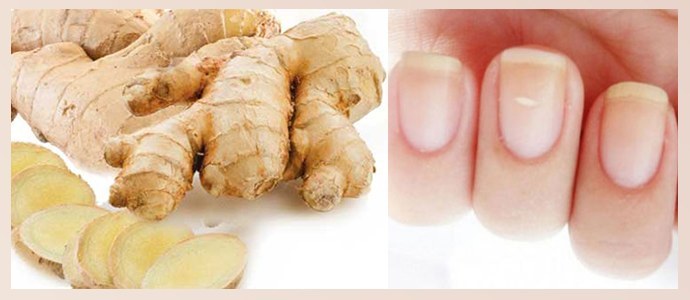
Ginger is popular as a culinary spice. But in recent years, there has been more and more talk about its medicinal properties. It is also used in dermatology. We suggest you find out if ginger is effective against nail fungus and how to use it.
Operating principle
Traditionally, ginger is used to boost immunity and treat colds in the cold season. This is due to the rich composition of the root - it includes:
- vitamin C;
- phosphorus;
- thiamine;
- riboflavin;
- zinc;
- magnesium;
- calcium;
- potassium;
- iron;
- sodium;
- essential oils;
- borneol;
- gingerol;
- camphine;
- shogaol.
Scientists have conducted studies on the effect of ginger on Candida mushrooms, comparing its effect with the drug Nystatin. Experience has shown that the root is more effective in destroying mycelium spores than the drug. The growth and multiplication of mold cells under the influence of ginger is markedly reduced.
This mechanism of action is explained by the inclusion of components in the root - gingerol and shogaol. Additionally, they have an anti-inflammatory and immunomodulatory effect on the body. Thus, ginger has a proven fungicidal effect and can be used to treat Candida toenail fungus.
Instructions for onychomycosis
Consider the options for therapy with this herbal remedy in the following table.
| Application of ginger | Description |
|---|---|
| OUTDOOR | The root is crushed on a grater and applied to the surface of the nails, previously cleaned and steamed in a bath, and fixed with plastic wrap and a bandage. With good tolerance, the compress is left overnight. |
| INTERNAL | Brew the crushed root with boiling water and drink in the form of tea with the addition of honey and lemon, 250 ml every day. The tool improves the resistance of the immune system, helping the body to cope with onychomycosis faster and more efficiently. |
Effectiveness with advanced nail fungus
With an old infection, ginger, however, like other traditional medicine, will not help to cope with the disease. In this case, an integrated approach to solving the problem is required using a combined regimen of oral and external antimycotic drugs, as well as appropriate diagnostics. Ginger can be used as an adjuvant to more quickly eliminate the symptoms of pathology and strengthen the immune system.
Side effects, contraindications
Despite its natural origin, the root of the plant is prohibited for use in the following cases:
- diseases of the digestive tract associated with a violation of the integrity of the mucous membrane of the stomach and intestines;
- tendency to stone formation in the kidneys and gallbladder;
- pathology of the cardiovascular system;
- pregnancy, lactation;
- children under two years old.

Ginger practically does not cause side effects. With rare exceptions, an allergic reaction to it may develop. In this case, further use of the tool should be discarded.
Use for children, pregnant women, lactating
It is undesirable to use ginger for expectant mothers. Treatment with them on an ongoing basis can lead to the development of bleeding, premature onset of labor and miscarriage. The root is sometimes allowed to be added to tea in order to strengthen immunity or relieve symptoms of nausea, but this remedy is not suitable for regular therapy of nail fungus.
While breastfeeding, ginger is not safe for a small child. Internal and external treatment with the product negatively affects the taste of breast milk, as a result of which the infant may flatly refuse to breastfeed. In addition, individual components of ginger can affect the nervous system of the baby, disrupting his sleep and behavioral reactions. It is also common for the root to cause allergies. Therefore, nursing mothers need to look for a more harmless agent with an antifungal effect.
For children, the use of ginger is not indicated until the age of two. This is due to the risk of damage to the mucous membrane of the child's gastrointestinal tract.
Reviews
Anna, 24 years old. “I used ginger for onychomycosis on the advice of a friend. I applied a fresh slice of root to the nail roller overnight, putting a sock on my leg. I felt a slight burning sensation, which, in principle, did not interfere with falling asleep. In the morning, the ginger cleaned, washed the feet and treated them with 3% peroxide or iodine. A month later, the problem went away. "
Irina, 37 years old. “I didn't really believe in the help of traditional medicine, but I decided to take a chance and, as it turned out, not in vain. I took ginger inside in the form of tea and rubbed the nail plates affected by the fungus with its juice. The situation improved after about a week. The disease was cured without medication in two months. "
Ginger has received positive reviews among people who have tried it as a folk remedy. We must not forget that the product can be effective only in the early stages of onychomycosis and as a prophylaxis. Treating nail fungus with ginger should not be a panacea in the fight against this disease.