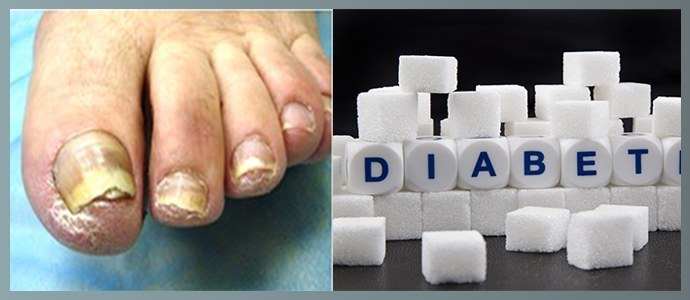
Analysis for nail fungus: where to take it, how to prepare, prices
Content
- Types of tests for fungus
- Special training
- Testing process
- Is it painful?
- Decoding the results
- Who do you need to contact for testing?
- Is it possible to take the analysis for free?
- Analysis of the nail for fungus in the Invitro laboratory
- Where to get tested?
Successful treatment of onychomycosis cannot take place without preliminary diagnostic procedures. An analysis for nail fungus helps to accurately determine the type of infectious lesion and select the necessary treatment regimen.
Types of tests for fungus
During the initial admission of the patient, the dermatologist examines him and asks about complaints about the existing disease. If we are talking about onychomycosis or suspicion of it, then the specialist recommends passing the laboratory tests listed in the table for the next visit.
| SOSKOB | Confirms the absence or presence of a fungal infection, the type of parasite, its quantitative composition and sensitivity to drugs. |
| PCR TEST | With high accuracy, it diagnoses the causative agent of the disease by its DNA and helps to determine which medications need to be prescribed in a particular case. |
| SOWING | Allocates a specific parasite for research into its properties. |
Important! The listed tests will have to be passed repeatedly - at least twice. In the first case, for a competent diagnosis, in the second - in order to track the effectiveness of the ongoing therapeutic procedures.
Special training
There are simple recommendations that must be followed in order to correctly submit biological material for laboratory research. Let's list them:
- During the 72 hours prior to the analysis, it is important that water and other liquids do not get on the areas of the body affected by the fungal infection.
- For 3 days, you can not use antimycotics - both external and internal.
- It is not recommended to trim the edges of the nails with scissors within 10 days.
- During treatment, you should completely abandon the use of decorative cosmetics - varnishes, creams, etc.
If you break any of the above rules, the test results may be distorted and will not correspond to the actual picture of the disease. This fact will negatively affect not only the diagnosis of the patient, but also his subsequent treatment.
Additionally, there is a whole list of requirements listed below:
- the analysis for nail fungus is taken strictly before 12 noon on an empty stomach;
- during the day before the examination, it is important to avoid drinking alcoholic beverages and refrain from serious physical exertion;
- it is necessary to limit the intake of medications to a minimum, if the patient is taking vital medications - he must inform the doctor about it;
- 3 hours before the blood test, smoking, drinking tea and coffee is prohibited;
- during the study, a person must be in a balanced state - stress can negatively affect its outcome.
The doctor informs the patient in more detail about the intricacies of laboratory tests. In addition, modern clinics, for example, Gemotest or Invitro, usually have their own websites, where there are all the necessary prerequisites for diagnostics, which can be found in advance, in the mode online.
Testing process
Research on nail fungus is carried out by several methods - scraping, culture and PCR. The collection of biological material is practiced within the walls of the laboratory. There are no specific differences for an adult, a future mother and a child when it is taken. We invite you to learn more about each of them.
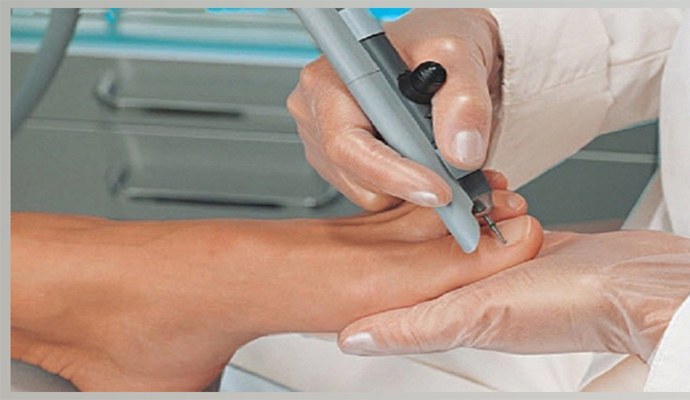
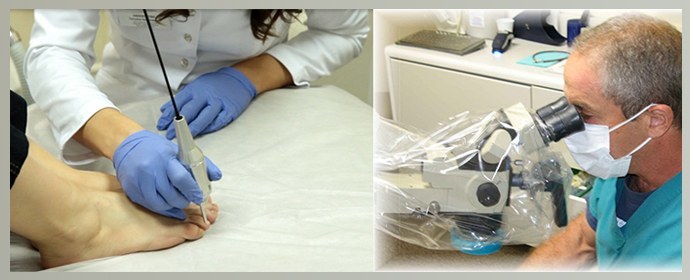
Collection of material. To perform the prescribed microbiological examination, a scraping is done from the area of the nail from the fingers or toes affected by the infection. If symptoms of advanced mycosis are found, a deep inflammatory is noted in the area of the bed, it is customary to take the material for analysis from under the plate itself with a fragment of unchanged tissues. The most active pathogens of the disease live in the area that borders on healthy areas of the nail, which makes it possible to obtain highly accurate research results.
Sometimes the question arises about the need for tissue sampling for histological diagnosis. For example, with a purulent process in the area of the nail bed, a scraping is taken from the surface of the plate and exudate from the affected areas.
Microscopy. The material taken from the patient is examined under a microscope. Potassium is mixed into the obtained samples, which purposefully dissolves keratin fibers. During the study, the laboratory assistant can detect spores and filamentous hyphae and pseudohyphae, which indicates the presence of a fungal infection. At the same time, microsporia is able to differentiate dermatomycosis, candidiasis, bacterial pathologies, psoriasis, eczema and lichen planus.
 The causative agents of superficial fungal infections are usually present in a single amount in the microflora of the skin and nails, while not provoking the development of the disease. That is why the identification of strains of onychomycosis does not in all cases confirm this diagnosis. The prospective patient must necessarily have clinical manifestations of nail fungus. However, this does not apply to the diagnosis of subungual contents, in which opportunistic microbes should not be found.
Cultural research. Scraping for a fungus also studies the type of pathogen of the existing pathological process. For this purpose, sowing is carried out on Sabouraud's medium with the addition of antibacterial drugs. The biological material taken from the patient is placed in specific conditions, where fungi begin to grow. After the causative agent of onychomycosis has been identified, an antimycotic drug is selected, to which pathogenic microbes are sensitive.
Thus, with the help of a culture study, it is possible to find out the type of fungal infection and dwell on medications that are effective in relation to it. But this analysis has two drawbacks - firstly, it is carried out for a long time: at least 7-21 days, and, secondly, not in all cases it is possible to find out the correct diagnosis - if there are no active microorganisms on the biological material taken from the patient, it is not possible to grow a colony out of them and pick up drugs work out.
Direct DNA diagnosis of dermatophytosis. The PCR method makes it possible to detect the fungus and find out its genetic affiliation. The sensitivity of this type of study is as accurate as possible, therefore, in laboratory conditions, it is possible to identify simultaneously several pathogens of the pathological process at once, since often we are talking about a mixed infections. The diagnostic result is usually ready in a day.
 The PCR method can show even single fungi, so it is effective if the inoculation did not show the growth of the colony. DNA analysis reveals the infectious process in individuals with chronic and latent form of onychomycosis. The disadvantage of the PCR method is its price category - for diagnostics, the corresponding expensive equipment is required, so the analysis is not carried out free of charge.
Important! The laboratory technician must take a sufficient section of biological material in order to obtain viable active microorganisms from which an entire colony can be grown in the future. If a specialist takes only the tip of the plate, most likely, weakened pathogenic fungi will be found on it, they may die before the study begins.
Is it painful?
Most patients are afraid of taking the test, and it is completely in vain. The procedure for taking biological material from the skin and nails of a person for laboratory research does not cause pain or severe discomfort at all. In fact, it resembles the sensations of conventional cutting of the edges of the nail plate. During the scraping, the specialist can slightly scratch the skin over the affected nail, which also does not cause pain.
Decoding the results
In healthy people, any test for fungal infection will be negative. Sometimes it becomes false positive when the rules for taking a scraping are violated. If there are no clinical manifestations of pathology, but the study shows a fungus, most likely the person is a carrier of the infection. With a positive result, we are talking about dermatophytosis of the nails.
If dermatophytes are found in the scrapings, dermatophytosis is diagnosed. The pathological process affects the nails on the toes, less often - the hands. In this case, the plate thickens, loses its natural transparency, against the background of deformation, yellow and white blotches of an unhealthy look are formed on it.
The detection of yeast fungi is not a direct confirmation of onychomycosis. For the final diagnosis, the patient must have external signs of the pathological process. With candidiasis, parasitic fungi are introduced into the nails through the skin at the very bed. Most often it is detected in the elderly.
Mycoses are accompanied by an inflammatory process in the area of the nail fold and tissue dystrophy. Mixed fungal infections are often found - in this case, dermatophytes, moldy and yeast pathogens are simultaneously detected in the patient's biological material.
According to the results of cultural diagnostics, a drug is chosen to which microorganisms that have become a provocateur of onychomycosis are sensitive. It is this medication that the doctor will prescribe for subsequent treatment.

Who do you need to contact for testing?
Not every laboratory is engaged in the study of mycoses. Identifying the causative agents of fungal infection requires specialized equipment and the training of qualified personnel. Therefore, it is important to find out in advance with a specialist where tests can be carried out.
With onychomycosis of nails, you should choose the laboratory where the biological material is taken qualitatively - the final result of the study and the treatment of the patient depends on this. The sooner the post-scraping analysis is done, the better.
 Diagnostics by PCR is carried out using plates designed for several biological materials from different people. The laboratory assistant, as a rule, gives them to work after filling the entire plate, which often seriously affects the duration of the study. This problem is relevant for medical institutions with a small flow of potential patients.
Some clinics work directly with laboratories, which is very convenient. In this case, the sampling of material is carried out on their basis - the patient does not need to go anywhere else. At the same time, the results of the study can be obtained not only in the form of a paper form at a doctor's appointment, but also using the Internet in the patient's personal account on a specialized website.
Finding a reliable laboratory is not easy. But the time spent in search will certainly pay off with the results obtained - the correct diagnosis and treatment.
Is it possible to take the analysis for free?
If the patient has applied at the place of residence to a regional or city medical institution of a budgetary type, then diagnostics for fungal infections can be free or the cost of tests will cost a symbolic the amount.
Sometimes experts recommend contacting a private laboratory, usually due to the inability to conduct a study on a budgetary basis. In this case, the analysis can be expensive, but it is important to understand that it will be high-quality equipment is used, which means that the diagnostic results will be at times more precisely.
It is worth noting that the patient himself can decide where to conduct the research - in a budgetary or private organization. Any coercion by the treating specialist is an unacceptable measure.
Analysis of the nail for fungus in the Invitro laboratory
Invitro is an independent private diagnostic laboratory employing highly qualified personnel, there are advanced technologies and the provision of the necessary materials for carrying out the most accurate research. Each patient can be offered a solution to almost any diagnostic problem.
The results of tests for mycoses of the skin and nails usually become available in the coming days after the delivery of the biological material. Invitro is a whole network of laboratories, which is widespread in Russia and Ukraine.
Analysis for nail fungus in the Invitro institution is included in the price range of 360-1600 rubles. An approximate price list of the cost of diagnostics is provided on the official website of the laboratory.
Where to get tested?
In the table below, we will consider where you can go for research on onychomycosis in large cities and what their cost will be.
| Name of the settlement | Clinic name, prices |
|---|---|
| MOSCOW | Medline-Service is a network of medical centers:
Eden Medical Center:
|
| ST. PETERSBURG | Medical center "CM-Clinic":
Harvey Multidisciplinary Center:
Skin Medicine Clinic:
|
| KIEV | Deal Medical Laboratory:
|
| MINSK | Medical Center BIOMEDICA:
|
After the results of the diagnostic study are obtained and they turn out to be positive, the attending physician draws up a therapeutic plan to combat onychomycosis. For this purpose, as a rule, antimycotics of local and internal use are prescribed. On average, the standard course of treatment is 6 to 12 months. Moreover, the symptomatology of the pathological process is eliminated in a short time, and the treatment itself continues until the fungal agents are completely removed from the patient's body.