Chlorhexidine from toenail fungus: reviews, instructions for use
Content
- Composition, release form and price
- Indications
- Instructions for use
- Use for children, pregnant women
- Precautionary measures
- Shoe processing
- Contraindications and side effects
- Analogs
- Reviews
Chlorhexidine for nail fungus is a successful adjuvant in complex therapy along with medications. It is a popular antiseptic that has a therapeutic and prophylactic effect against many infections.
Composition, release form and price
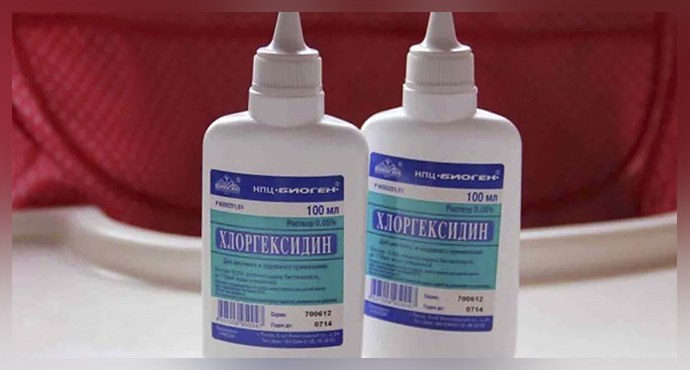
Chlorhexidine is a drug with a powerful disinfecting effect that helps prevent the growth and spread of fungal infections at an early stage. It is produced in the form of a solution in two concentrations - 0.05% and 1%.
The active ingredient is chlorhexidine bigluconate. Auxiliary - distilled water, which is necessary to dilute the main ingredient to a concentration that is safe for mucous membranes and human skin, in terms of burns and irritation.
Treatment of the nail fungus is carried out with 0.05% Chlorhexidine. The therapeutic effect is noticeable at the first manifestations of the disease and as a prophylaxis. An antiseptic is used to treat nails, the skin of the legs and hands.
A 1% solution can cause burns, so it is used exclusively for application to the inner surface of shoes for prophylactic purposes.
The cost of Chlorhexidine is from 14 rubles in Russia and 9 hryvnia in Ukraine.
Indications
Chlorhexidine treatment is recommended in the following cases:
- during the treatment of onychomycosis;
- with direct contact with a person suffering from nail fungus;
- after visiting public places, for example, swimming pool, sauna, etc.
At the same time, most experts insist that the drug does not completely destroy the infection. Since there are no components in its composition that have a direct fungicidal effect. That is, Chlorhexidine is shown to be used as an additional method in the complex treatment of the pathological process.
Instructions for use
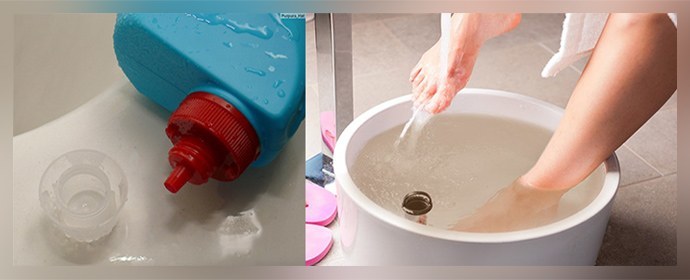
Like most drugs, the antiseptic should be applied to the prepared nail plates. Baths based on softening components will help to cope with this task:
- steam hands or feet in water with the addition of soda, sea salt or laundry soap;
- after the procedure, cleanse the skin with a pumice stone;
- carefully file and trim nails with manicure accessories;
- dry the treated surfaces thoroughly.
Chlorhexidine treatment is carried out using applications and compresses.
In case of mycosis and candidiasis, which has affected not only the nail plates, but also the nearby areas of the skin, a 0.05% antiseptic solution is applied with a cotton swab and kept on the tissues for at least 10 minutes.
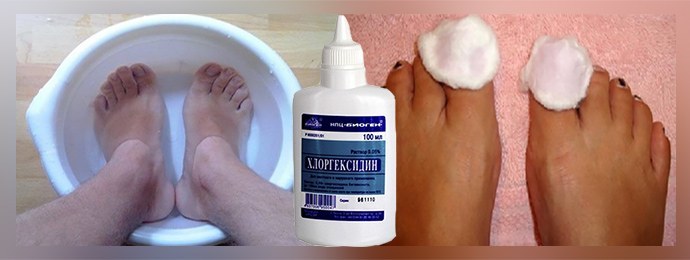
If we are talking exclusively about onychomycosis, that is, the fungus has affected only the nail, it is better to use hermetic compresses. To do this, a tampon soaked in 0.05% Chlorhexidine is applied to the foci of infection and fixed with a bandage for 30 minutes. After that, the bandage is removed.
Treatment procedures are repeated 3 times a day throughout the entire period of antifungal therapy. After antiseptic treatment, it is recommended to apply fungicidal topical preparations.
After recovery or for prophylactic purposes, Chlorhexidine is applied 1-2 times a week or once directly after visiting public institutions - showers, swimming pools and saunas.
Use for children, pregnant women
Local treatment with Chlorhexidine in an antiseptic solution concentration of 0.05% is not contraindicated in children, expectant mothers and nursing mothers. If the drug is well tolerated, you should not worry about its negative systemic effects on the body.
Precautionary measures
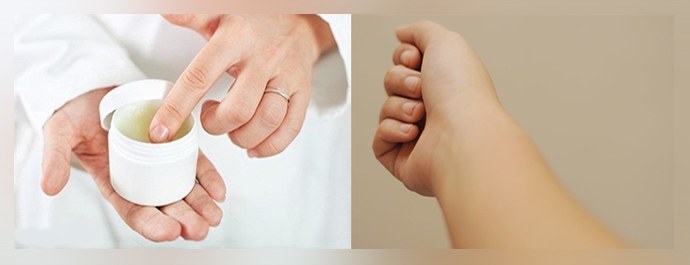
Chlorhexidine sometimes causes irritation and burns, so it should be used carefully when treating nail fungus. Before the first use, it is necessary to check how the skin reacts to its active ingredient. To do this, the drug is applied to a small area of it and an assessment is carried out in the next 30 minutes. If there are no negative reactions in the form of redness, burning and itching, Chlorhexidine can be used for therapeutic and prophylactic purposes.
Additionally, it is important to follow the guidelines listed below:
- strictly observe the dosage of the drug - do not use a solution concentration of more than 0.05% for the treatment of nails and skin;
- do not allow accidental contact with the mucous membrane of the eyes;
- wash your hands every time after the procedure or carry out it with disposable gloves (of course, if we are not talking about onychomycosis of the hands).
Important! Chlorhexidine is not a profile antimycotic, so you should not count on it as an independent antifungal agent.
Shoe processing
Disinfection of wardrobe items is an integral part of the fight against onychomycosis on the legs. A 1% antiseptic successfully copes with this task - if you take a less concentrated solution, the expected result may not be.
How to process shoes:
- moisten a cotton swab in Chlorhexidine;
- wipe the inner surface of shoes or boots with it;
- put them in a sealed plastic bag for 24 hours;
- ventilate disinfected shoes in the fresh air for 2 days.

The disinfection procedure is recommended to be carried out at least once a month.
Contraindications and side effects
Chlorhexidine is safe when used topically, therefore there are no contraindications for it, except for individual hypersensitivity to the drug.
If there are such undesirable reactions as burning, itching, hyperemia and swelling of tissues in the area processing, it is necessary to abandon the further use of the antiseptic solution and consult with a doctor.
Analogs
Chlorhexidine has no structural substitutes, but there are many drugs that have a similar antiseptic effect. Let's consider some in the table.
| Name of funds | Description |
|---|---|
| AHDEZ 3000 | Ingredients: chlorhexidine bigluconate, ethyl alcohol. It successfully fights against pathogenic microflora, has a prolonged effect - it remains active for up to 3 hours in the treatment area. Price - from 445 rubles per 1 liter bottle. |
| CITEAL | Ingredients: chlorhexidine bigluconate, hexamidine diisothionate, chlorocresol. It is used to disinfect hands and medical instruments, it is used to treat skin and genital infections. Price - 1000 rubles per bottle of 1 liter. |

Often, Miramistin is called an analogue of Chlorhexidine. Of course, these drugs have a similar mechanism of action, but the latter has a completely different composition and is recognized in dermatology as an antimycotic.
Reviews
Angelina, 34 years old. “A simple and affordable remedy that helps with many diseases, and the fungus is no exception. I applied Chlorhexidine to the affected nails before processing with the advertised ointments. Only such a treatment regimen helped, since the antimycotics prescribed by the doctor did not want to "work" separately. I recommend using them in conjunction with Chlorhexidine. "
Zhenya, 25 years old. “Suffered from nail fungus for a long time. I tried many drugs until I found out that you can simply lubricate the lesions with a cheap antiseptic. Chlorhexidine really helped speed up recovery. I applied it to my nails for a month in the form of compresses. "
Anna, 30 years old. “I think that this drug is in any home medicine cabinet. I used Chlorhexidine together with Clotrimazole ointment according to the instructions. Both medicines have proved to be not only available, but also very effective. I recommend using them in a complex manner. "
Chlorhexidine is an excellent disinfectant that helps get rid of onychomycosis when used together with antimycotic drugs. It speeds up the healing process and prevents the development and spread of infection in the future.