Treatment of damage to the rectal mucosa
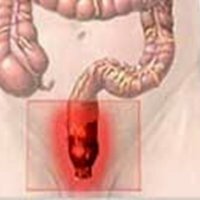
It is not always possible to quickly establish damage to the rectal mucosa. This is difficult even in cases where the defect is localized within the finger reach. Diagnosis is further complicated by damage to nearby organs. An exception can be considered only gaps in the perineum during childbirth. In addition to determining the clinical signs that help to establish damage to the rectum, you need to conduct a thorough examination and only then prescribe a suitable treatment for the situation.
Before starting treatment, a perineal examination, rectoscopy, an overview radiographic examination of the abdominal cavity for the detection of free gas or examination with a contrasting contrast agent should be performed. It is also necessary to study the genitourinary organs, sometimes( with extensive damage) it is required to examine the pelvic bone. Damage to the rectal mucosa is easily recognized only if the clinical picture is bright( a large wound in the perineum or peritonitis) or if the small intestine loops fall out.
Treatment for abdominal injury
Damage to the wall and mucosa of the anal canal is always subject to primary surgical treatment and drainage of the wound. It is important to ensure the regulation of the stool: temporarily hold the stool can be by taking norsulfazole 1 g three times a day and ascorbic acid along with a slag-free diet. If after a lesion has passed more than a day and there are strongly pronounced signs of inflammation of the surrounding tissues, then after the initial therapeutic and surgical treatment the wound is not sutured. In the presence of a more active inflammatory process, as well as signs of intoxication, urgent colostomy is required. After 3-4 months, after the complete elimination of the purulent-inflammatory process, one of the plastic operations is performed, which is used in the treatment of muscle failure in the sphincter of the anus.
When diagnosing extraperitoneal damage to the rectal mucosa, which is limited only to the mucous membrane and the thin muscle layer, without escaping intestinal contents into the paraectal tissue, treatment should begin with conservative measures. Usually, these measures for stool retention for 5-6 days, microclysters with antiseptic solutions. It is necessary to closely monitor the patient. If the spread of the inflammatory process continues, it may be necessary to apply a sigmistome with drainage of the pararectal tissue, as well as its irrigation with antiseptic solutions.
If the entire surface of the rectal mucosa is damaged, surgical treatment of the wound by perineal access is performed. The intestinal wall is closed with double-suture seams, the pararectal tissue is drained, micro-irrigators are introduced to irrigate the affected surface of the pararectal tissue. A mandatory condition in this case - the imposition of colostomy, which is closed 1.5 months after a thorough examination of the patient and with the complete elimination of internal fistulas.
Treatment for abdominal injury
Intraperitoneal damage to the rectal mucosa requires urgent laparotomy. The abdominal cavity is opened by lower-medial access, a thorough audit is performed. The abdominal cavity and the small intestine loops that have fallen into the rectum are sanitized with an isotonic sodium chloride solution with an antiseptic. All defects of the rectum wall are sutured with a double-suture, a sigmistome is applied. A prerequisite is to provide drainage of the entire abdominal cavity and the introduction of special microirrigators. Subsequent postoperative management coincides with the administered management in patients with peritonitis.
With parallel damage to the bladder, a cystostomy is immediately applied after the rupture of the rupture. In cases of bladder injury during the operation on the rectum, this defect is sutured, while the cystostom can not be applied, but the urine can be evacuated by a self-retaining catheter.
In the case where there is damage to the mucosa of the rectum by the foreign body and the patient is delivered with him, after taking all measures to ensure the possibility of surgical intervention, the foreign body is removed. With intra-abdominal damage to the rectal mucosa, the prognosis for recovery worsens as the time from injury to medical care increases. Even at the most optimal timing, lethal outcomes are frequent - in 30-50% of cases.