Diacarb with concussion of the brain in adults and children
Contents:
- General information and mechanism of action Diakarba
- Indications and contraindications for prescribing
- Dosages
- Side effects of
- Additional instructions for use
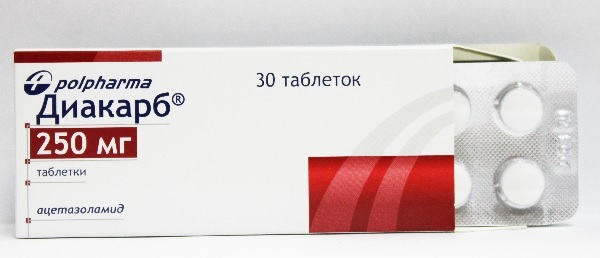 Brain concussion in children and adults is a common craniocerebral trauma. Now they produce a large number of medicines aimed at treating pathology. However, Diacarb is used most often with concussion of the brain.
This medicine belongs to the group of diuretics, it reduces the edema of the brain that occurs when the concussion occurs. The use of the drug improves the prognosis for the recovery of the patient. The doctor-neurologist prescribes the medicine after a thorough examination of the patient and conducting additional methods of examination.
General information and mechanism of action Diakarba
Diacarb with a concussion shows a good result due to diuretic action. The drug blocks the enzyme in the renal tubules, increasing the release of sodium and potassium ions in the urine, which leads to an increase in diuresis, the removal of excess fluid from the human body. It is this mechanism of action that causes a decrease in the intensity of cerebral edema, reduces the risk of complications of craniocereberal trauma.
The average duration of the effect of taking the medication is 12 hours, after which the diuretic activity of Diakarba is significantly reduced.
 All about head injuries in children: what to do to avoid them.
Read about the symptoms of brain concussion: what you need to know?
Indications and contraindications for prescribing
Diacarb in brain concussion in children and adults is the most important of the drugs in the treatment regimen. It is prescribed to patients who have no contraindication to admission. In addition, the drug is used to treat edematous syndrome of any causation.
Contraindications to the use of the medicine:
- individual intolerance of the active ingredient or the components of the preparation, as well as allergic reactions to admission;
- severe renal dysfunction, manifested by acute renal failure;
- liver dysfunction;
- decreased level of potassium in the blood, acidosis;
- period of pregnancy, lactation.
In the presence of a patient with concussion contraindications to the prescription of the medicine refuse and choose the same drugs, the effect of which is manifested by a decrease in the edema of the body tissues.
Dosages of
The use of Diacarbo in craniocerebral trauma is performed according to the following scheme. After the patient is diagnosed with pathology, the drug is prescribed in high therapeutically dosages - 250 mg per day, or 130-250 mg twice a day.
 If the prescribed dosages do not lead to a clinical effect, the attending physician raises the dose to 750 mg per day. However, in this situation, constant monitoring of the patient's condition is necessary, especially control of the urinary system in connection with the risk of kidney damage.
Important! An increase in dosage above 750 mg per day is not advisable, since there is no increase in the diuretic effect, only the risk of side effects increases.
The use of the drug for more than 5 days increases the risk of acidosis with a metabolic component, so the duration of therapy should be strictly limited. The prescriber should be appointed only by the attending physician after a full clinical examination of the patient and using special methods for assessing kidney function to detect latent kidney failure.
Side effects of
Side effects of the drug may manifest from the side of various internal organs:
- of the gastrointestinal tract: dyspeptic phenomena in the form of nausea, vomiting, stools, loss of appetite and, which happens very rarely, liver damage;
- of the brain: the appearance of paresthesias, transient hearing loss or the appearance of noise in the ears, increased fatigue, dizziness, sleep disorders, convulsive syndrome;
- of the kidneys and urinary tract: increased diuresis with increased urination, with prolonged use, the risk of developing nephrolithiasis increases;
- in peripheral blood may reduce the number of leukocytes, platelets and red blood cells;
- appearance of allergic reactions in people with increased sensitivity to the components of the drug in the form of urticaria, Quincke edema, anaphylactic shock.
If side effects are identified, therapy with Diacarb is stopped and consulted by the treating physician to reduce dosage or complete withdrawal of the medication.
 Learn what to drink with the first symptoms of a concussion: which pills to take.
How to help with brain concussion: the basic rules.
What dietary food is recommended for concussion that should be excluded from the diet.
No cases of overdose have been described. However, it can manifest as a violation of water-electrolyte balance, the development of metabolic acidosis, as well as various neurological symptoms. Here the treatment is symptomatic, aimed at correcting the pH of the blood, the content of electrolytes in the plasma.
Additional instructions for use
Use of Diacarb with other medicinal products may alter its activity. The use of the drug together with methylxanthines leads to a significant increase in the diuretic effect. In addition, the appointment of Diakarb with various anticoagulants or drugs that reduce the level of lipids in the blood, leads to an increase in the effect of the action of the latter.
Adequate studies of the effect of Diacarb on the developing fetus during pregnancy or a child with breastfeeding are not available. Therefore, pregnant and breastfeeding women should refuse to use the medication.
Diacarb is an effective treatment for the concussion of the brain in any age group. The weak diuretic effect of the drug, providing anti-edema, prevents cerebral edema and the development of the long-term consequences of craniocerebral trauma. The appointment and use of the medicine should always be under the control of the attending physician.
write the question in the form below: