Methods of treatment of transverse flatfoot
Causes of transverse flatfoot
The cause of the development of transverse flatfoot may be labor activity( long standing on the legs), excess weight, decreased elasticity and muscle strength in the sedentary lifestyle for a long time or with aging.
Plantar aponeurosis, to be more precise, its condition plays a big role in the origin of this type of flatfoot, because the lack of this tendon leads to the development of transverse flatfoot.
Methods of treatment
From the stage of the process, from the severity of degenerative and dystrophic changes in the articular cartilage, osteoarticular apparatus will determine which methods of treatment of transverse flatfoot choose. Also, the treatment will depend on the degree of disturbances in the volume of normal movements in the 1 metatarsophalangeal joint.
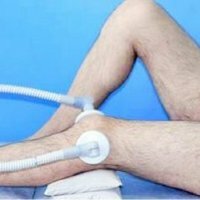
The first degree of transverse flatfoot is treated with conservative methods that strengthen the foot-supporting apparatus and stop pain. Therapeutic activities consist of massage, physiotherapy exercises, physiotherapeutic manipulations. In addition, it is required to constantly wear special orthopedic footwear( which, as a rule, happens with rollers).Such shoes are able to support the arches of the foot.
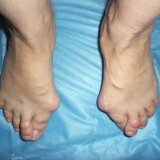
If transverse flatfoot is 2nd or even 3rd degree, then conservative treatment will not have any effect, because persistent changes begin to develop in the foot, for example, flattening of the tarsus of the foot, deviation to the outside of the first finger, formation of deforming osteoarthrosis of the 1stMetatarsophalangeal joint. In this case, surgical intervention is used, which is aimed at eliminating the wrong position of the fingers and eliminating the spreading of the forefoot.
At present, orthopedic practice has about 300 different methods of surgical treatment of transverse flatfoot, which is accompanied with an external deviation of the 1st toe of the foot. And this number does not stand still and grows every year, which indicates that we have not yet found the most ideal and effective method of correction of pathology. While none of the methods does not give a 100% guarantee of a positive result, as well as the absence of further complications.
Also all these methods of flatfoot treatment are palliative, that is, they all facilitate the patient's condition, but do not have any effect on the cause and elimination of the disease itself. And the main reason for the development of transverse flatfoot is a decrease in the strength of the ligamentous-joint apparatus and the muscles of the foot.
Thus, no operational method is able to fully eliminate the deformation of the foot and resume normal mechanical and anatomical relationships therein. Also worth noting is that basically all operations are not self-contained, but are only modifications of the underlying techniques.
Ultimately, the effectiveness of treatment is assessed by one major factor - the degree of resumption of normal operation of the first metatarsophalangeal joint, because when walking about half the load falls on this joint.
Also, when walking, an important role is played by a roll of the foot from the heel to the toe and vice versa, the normal extension of the first finger( not less than 20 degrees).
Before taking a decision to use surgical intervention, the surgeon takes into account a number of factors:
- Which type of foot: "Egyptian" - the first ray of the anterior lobe of the foot is the longest."Greek" - the second ray of the anterior part of the foot is longer than the first."Neanderthal" - all the rays are the same.
- Absence or presence of complications, for example, deforming osteoarthritis of the first metatarsophalangeal foot joint.
- Presence of soft foot pathologies.
- Anatomical location of the first metatarsal bone.
- Concomitant disturbances in the shape of the rays of the anterior lobe of the foot from the 2nd to the 4th, resembling hammer-shaped fingers.
- Data from anamnesis of the disease( age, weight, nature of work, position occupied, presence of diseases of the musculoskeletal system and other systems, symmetry of disorders), constitutional distinctive properties of the musculoskeletal system.
The applied methods of treating transverse flatfoot can be divided into 3 main groups:
- operations performed on the osteoarticular apparatus;
- operations performed on the soft tissues of the foot, while the bone system is not affected;
- combined operations that combine both of the above.
The operation on soft tissues is performed on the tendon formations of the first finger( these are the tendons of such muscles: the long flexor and the extensor of the thumb, the adductor muscle).In most cases, they are combined with complex techniques on the capsule of the first metatarsophalangeal joint, often by dissecting the capsule.
For example, this technique involves: transplanting the tendon lobe of the flexor of the thumb to the tendon of the extensor muscle. This technique was developed more than a hundred years ago, and in our time has become widely used.
This prevalence can be explained by the fact that during the dissection of the tendon of this muscle, the main reason for the directive of the first finger in the wrong, to the outwardly deflected position is eliminated.
There is another reason for the development of transverse flatfoot - this is a deviation inside the first bone of the metatarsal. In this case, using artificial muscle traction.