Cervical osteochondrosis
 Osteochondrosis is a complex of dystrophic disorders in articular cartilages. The disease can develop in any joint, but most often the intervertebral discs are affected. Localization of osteochondrosis is distinguished by thoracic, cervical and lumbar.
Features of cervical osteochondrosis
Cervical osteochondrosis differs from lumbar and thoracic osteochondrosis in its manifestations. Symptoms and treatment of this disease is associated with features( anatomy) cervical spine of your spine - the size of the vertebral bone structures much smaller than other vertebrates departments, in addition, the cervical spine is always experiencing load, so to hold his head and has a high mobility...Cervical osteochondrosis, associated with degenerative disc changes, is most often found in the most vulnerable and mobile localizations.
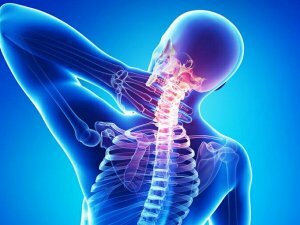 The neck contains a large number of nerves and vessels( for example, the vertebral artery passing through the vertebral canal).Because of this cervical osteochondrosis has a number of its features, and even a small displacement of the vertebrae and muscle tension creates favorable conditions for squeezing the vascular and nervous formations of the neck conditions. After squeezing them on the bodies of vertebrae eventually formed osteophytes formed protrusion, hernia, acting on the nerve root and surrounding tissues and promotes disruption of blood supply and venous drainage, occurrence of edema development of inflammation. The swollen root in the conditions of the narrowness of the canal of the intervertebral cervical region fills the whole space of the canal. Sometimes there is compression, expressed as a pain symptom. If you have cervical osteochondrosis, it is also possible to squeeze the spinal cord, leading to greater pathological changes than with osteochondrosis of the thoracic and lumbar regions. In this case, not only the neck and head are captured, but also the lower and upper limbs.
 Cervical osteochondrosis leads to disability more quickly and more often due to its anatomical features. So, if the vertebral artery is squeezed( ie, if it narrows), the blood circulation in the cerebellum and the brain stem decreases significantly. As a result, you can develop persistent ischemia of the spinal cord and brain. If there is an acute violation of the blood supply, you can even put a spinal stroke.
 Factors that cause squeezing( compression) of the vascular and neural structures of the cervical spine.
- Compression of vascular formations and nerve roots in the cervical spine can be caused by a displacement in the lateral or posterolateral direction of the disc.
- Cervical osteochondrosis, protrusion, hernia, and symptoms of treatment associated with each other, ie. K. Osteochondrosis it may cause herniation and protrusion, which are directed inwardly intervertebral channel.
- Cervical osteochondrosis is a cause of formation of bone growths in the spine joints, which reduces the lumen of the intervertebral channel and extending squeeze neurovascular structures. On the sides, osteophytes are formed, which irritate the muscles, in which the tone rises. As a result, the pressure of the vertebrae on each other increases, the height of the intervertebral disc decreases and the pathological process worsens. If osteophytes grow in the direction of the canal of the vertebral artery, they can cause it to be squeezed, which will cause cerebral circulatory failure with a sharp turn of the head.
symptoms of osteochondrosis, protrusion and hernia
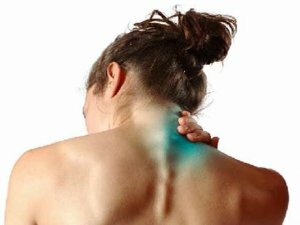 The symptoms of this form of osteochondrosis due to compression of spinal roots( cervical sciatica), spinal cord compression( mielopotiya) lesions due to circulatory disorders of the spinal cord, which is associated with stenosis, t. E. Constriction of veins and arteries.
Radicular syndromes associated with compression of the nerve roots, so that pain may be given to a blade from neck, forearms and spread on the outer surface of the shoulder to the fingers. In addition, the sensitivity of the skin of the hand, forearm and fingers can be impaired.
The symptoms of irritative-reflex syndrome include intense, mozzhaschuyu, boring pain in the nape area and neck( the pain, most often in the morning, by coughing, head movement, and so on. D. Amplified).Pain can be delivered to the lateral surface of the chest and shoulder. There may also be aching pain in the area of the forearms and shoulders.
The symptoms of vertebral artery syndrome include headache( persistent, paroxysmal, aching, impulsive, worse turning the head), dizziness, visual disorders and tinnitus. If the disease progresses, the possible development of ischemia( stable circulatory disorders), spinal cord and brain, accompanied by nausea, violation of articulation, a sudden fall( symptoms appear more frequently when turning the head).
symptoms of degenerative disc disease of the cervical spine in cardiac syndrome are similar to symptoms of angina( but without organic changes in the heart).. In the field of blade pain, heart, neck, worse turning the head, coughing, sneezing, etc. ECG does not confirm circulatory disorders of the coronary, And pain when taking funds koronarorasshiryayuschih not stop.
With a protrusion, there are various symptoms developing in 3 stages:
- The pain that arises in the neck, in which it is difficult to turn the head( cervicaglia syndrome);
- pain gives in hand, it is pulling, the patient is difficult to move the hand, there is tingling, feeling of "pins and needles", disturbed sensitivity and appears sweating more fingers( increased)( cervicobrachialgia syndrome);
- Localization of pain in the hand, its manifestation during movement in the hand, elbow, numbness, loss of volume( small) and a decrease in the number of hair follicles on the side of the affected limb.
Treatment of cervical osteochondrosis
 Treatment of this disease begins with the removal or reduction of pain syndrome with acupuncture, acupuncture, and other techniques( stonotherapy, tsubo therapy, Su Jok therapy, magneto therapy, fugen, tougen, wifaidzhen, etc.)).After this, it is necessary to eliminate the causes of the disease, which lie in the violation of metabolism and deterioration of blood supply. If the hernia is not diagnosed, the chances of recovery are still very high. To eliminate the causes of osteochondrosis, Eastern medicine is also used, which directly affects the conductive systems( CNS, neurohumoral, endocrine and immune), restoring their impaired functions, normalizing the hormonal background and adrenal glands, increasing vascular permeability and tissue metabolism, improving blood fluidity and abilityTo deformation. However, be careful and apply only to well-trained doctors, since cervical osteochondrosis requires extreme caution and a systematic approach.