Magnetic resonance imaging of joints
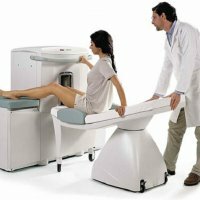
In modern orthopedics, the quality of diagnostics has increased significantly with the advent of magnetic resonance imaging( MRI).This method of investigation reveals various joint diseases at rather early stages, plus the entire MRI does not harm the body - in contrast, for example, from the X-ray method of investigation. The significance of such a procedure as magnetic resonance imaging is very high in the diagnosis of joint pathology.
What makes it possible to determine magnetic resonance imaging?
For the MRI of joints, as a rule, radio waves are used, as well as strong magnetic radiation. All this makes it possible to get a fairly clear image of different internal organs and tissues. Since magnetic resonance imaging allows you to determine a fairly clear picture of soft( predominantly) tissues that are located around the bones, so it is often used in the study of large joints( humerus, knee, etc.).Widely used MRI for the diagnosis of professional and sports injury of joints. In addition, MRI provides an opportunity to get a picture of degenerative diseases of joints, for example, arthrosis, arthritis, etc.
This joint tomography - its general indications for
Magnetic resonance imaging is indicated for sports and other injuries, degenerative joint diseases, chronic arthritis, In the presence of pain in joints or in soft tissues around, with swelling of the joint. Osteoarthritis in medicine is also an indication for an MRI study.
MRI allows you to determine: the causes associated with mobility of decreased joint mobility, primary tumors in the joint area and metastases, the causes of painful joint syndrome, the presence of infection in it, etc.
MRI examination of individual joints
The most commonly studied joint with magnetic-Resonance tomography - the knee joint. It is always possible to exclude or reveal damage to the internal structures of the knee( meniscus, ligaments, articular cartilage).Carrying out a magnetic resonance imaging allows the specialist to more correctly solve the problem of the necessity, for example, of carrying out an arthroscopic operation. Exclusively, using the method of magnetic resonance imaging, diagnosis of tumor and inflammatory lesions of the knee joint should be carried out.
Indications for magnetic resonance imaging for the study of the ankle joint are: suspicions of fractures that could not be diagnosed by radiography, suspected tears and ligament ruptures, suspicion of bone damage. Also for determining the causes of pain syndrome, etc.
The main indications for MRI of the hip are: avascular necrosis of the femur( its head);Osteoarthritis, identifying the causes of its occurrence;Stress fracture;Osteomyelitis of the septic artery.
In addition to the general indications for magnetic resonance therapy of the shoulder joint, there are also the following indications. This is an infringement of the tendons and nerves in the region of the shoulder joint;Habitual dislocations;Ruptures of the joint capsule;Muscle cuff ruptures, shoulder rotators.
Advantages and contraindications for magnetic resonance imaging of joints
Advantages: very high diagnostic efficiency;Harmlessness of examination( no radiation exposure);High resolving power( you can see the most minimal objects) and there is the possibility to get a high-quality image in any projection. Also visualization of any tissues in the presence of pathology and in norm. For the MRI, some special preparation of the patient is generally not required.
The use of magnetic resonance imaging is contraindicated in the presence of claustrophobia( fear of enclosed space);Pacemaker;Motor excitement;If it is impossible to maintain a certain position of the body during the procedure( for example, with severe pain).Also contraindications for MRI: if the patient has implants in the body, then there is a need to present to the doctor-radiologist a certificate for the material from which the implants are made. During pregnancy, this study can be done, but it is desirable, if possible, to postpone the procedure for the postpartum period.