
Rett syndrome
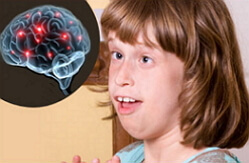 Rett syndrome is a genetic disease, with signs of degeneration that affects the central nervous system, gradually progressing and manifests itself mostly in girls. This disease, received the name of the Austrian scientist Rhett, who first described the pathology in 1966.
Rett syndrome is characterized by a regression of mental development, the loss of targeted movements, autistic behavior, the appearance of peculiar contractions of the hands.
Rett syndrome occurs in a ratio of 1: 10,000 girls, develops in most cases sporadically and only 1% of patients have a family nature of inheritance.
Reatt's syndrome causes
In the 1990s, there was a hypothesis that Rett syndrome is a specific disorder that is associated with gene mutations localized in the X chromosome;Conditioned by a dominant feature and in boys can not be combined with life.
In the future, the transfer of the mutant gene of the X-chromosome of the father was confirmed by the fact that this hereditary pathology can very rarely occur in boys, as they receive from the father of the Y chromosome. That is why with the family type of inheritance of Rett's syndrome, boys in such families are born practically healthy.
Currently, there is evidence of the inherited nature of the disease. The genetic reason for the occurrence of Rett syndrome is associated with the altered X chromosome and mutations that occur in the genes that regulate the replication process. In this case, there is a deficit of some proteins that regulate this growth, as well as their cholinergic function is disrupted.
For Rett syndrome, a hypothesis was proposed about interrupted development, which is characterized by a deficiency of neurotrophic factors. Thus, the basal ganglia, lower motor neurons are affected, the spinal cord and the hypothalamus are involved. Analyzing morphological changes, scientists came to the conclusion that there are slowdowns in the development of the brain since birth, which completely stops in growth by four years. And also these children have a slowdown in the growth of the body and some somatic organs.
Rett syndrome
symptoms The perinatal period of development and the first months of life of children with Rett syndrome do not cause doctors any suspicions, because at this point the symptoms corresponding to the disease do not appear or they simply remain underestimated by specialists. However, it is very often possible to observe in such children congenital hypotension and small lag in the available skills of movement( the ability to sit down, crawl and walk).
The disease occurs in stages that are characterized by their clinical symptoms.
There are four stages of the Rett syndrome. The first stage or stagnation is typical for children from four months to two years. It is during this period that the first abnormalities are noted, manifested by a slowing of the growth of the child's head and its psychomotor development, the disappearance of interest in all games and diffuse muscular hypotonia. So, the first signs of the disease begin to appear.
During this period, the next stage of the Rett syndrome develops, which is quite rapidly progressing and doctors sometimes diagnose it as encephalitis. During this period, the neuropsychological regression, characteristic of children from one year to three years, is manifested. In such patients with Rett syndrome, sleep disturbances are noted, bouts of anxiety and "inconsolable screams" appear.
Then after a while the child completely lost all the skills that he acquired before this period of life, basically, this is a purposeful movement of hands, and he stops talking. Parallel to these symptoms appear peculiar movements of hands in the form of their washing.
Many children develop an abnormal form of breathing, such as apnea, which alternates with hyperventilation, arising periods, and sometimes convulsive seizures occur. The main symptom in this stage of Rett syndrome is the loss of communication between the child and others, and often perceive this disease for autism.
After the end of regression, Rett's syndrome enters the third stage, which covers almost the entire preschool period and early school age with relative stability in the course. The first signs of the disease are characterized by deep mental retardation, seizures, various extrapyramidal disorders, such as hyperkinesia, muscular dystonia and ataxia. But there is also a positive picture, which is characterized by cessation of bouts of anxiety, improved sleep and the emergence of emotional contact with the child.
By the age of ten, the child exhibited the fourth stage of the Rett syndrome, which is characterized by all violations of motor functions in the progression. For such patients, immobility, spasticity, muscle atrophy and secondary orthopedic deformations in the form of scoliosis development, the appearance of vasomotor disorders of the lower limbs are characteristic.
Children with Rett syndrome begin to lag behind in growth, they have cachexia, but puberty corresponds to age and seizures are much less common. This condition in children can last for many years.
Rett syndrome manifests itself in the progressive course of the disease and there are no defined boundaries between the stages. They are taken absolutely conditionally.
Highlights the most important clinical signs of this genetic pathology. These include targeted violations of the movement of hands, when the child can not manipulate toys and keep the bottle. This is mainly manifested in six or eight months, and sometimes persists up to four years. At this point, these children have a peculiar stereotype in the movements of the hands, especially during the waking of the child. This movement is like washing hands, and at the same time they squeeze, squeeze, clap them over the face, chest, and sometimes even behind. In addition, such children can bite their hands or suck their fingers, knock them on the face, chest. This stereotypic hand movement is regarded as a characteristic sign of Rett's syndrome.
Children with this diagnosis are diagnosed with acquired microcephaly, which develops as a result of delayed growth of the head when the disease manifests. Despite the fact that the child is born with a normal circumference of the head, this process leads to slow growth of the brain.
As far as cognitive activity is concerned, sick children with Rett syndrome are extremely limited in many abilities. Among them there are adaptive, intellectual and speech. This is determined by standard psychological tests, which can reveal, how much, there is a gap in mental development.
Very often in children with Rett syndrome at the age of 1,5 years and more, the mental development corresponds to the age of the eight-month-old child. As a rule, children who began to talk a little, adapted in the social environment and learned to communicate, after the disease progresses, lose all these skills. Given the observations of the parents, it can be argued that the impressive, as well as expressive speech and social skills are lost from 4 to 11 months, and self-service - from 12 to 14 months.
Characteristic clinical manifestations of Rett syndrome are apraxia and ataxia, which are manifested by impaired coordination of movements and difficulties in performing actions for limbs and trunk. With such signs the child commits sharp jerky movements, his balance is disturbed, a tremor appears, he walks on the arranged straight legs, which do not bend, and swings on the sides. Many patients with rapid progression of the disease do not have time to learn how to walk. And those who have this skill, gradually lose it.
Various respiratory anomalies are noted on the part of the respiratory system in the form of bouts of hyperventilation, irregular breathing and apnea with a duration of two minutes, which can cause cyanosis or fainting. Such violations from the respiratory system are observed during the waking period of the child, and at the time of sleep they are absent.
Rett syndrome is also characterized by seizures that occur in 80% of girls in the form of epileptic seizures that are of various types and are not completely amenable to treatment. Among them, very often there are partial convulsions, simple or complex, generalized seizures of tonic-clonic character or drop-attacks. Seizures can be different in frequency and manifest less frequently with the development of the disease.
In addition, patients with Rett syndrome have partial non-epileptic manifestations, which are sometimes considered convulsions. These include sudden movements, tremor, apnea, gaze with cessation of movements, increased paroxysmal stereotypes.
Many patients with Rett syndrome are characterized by scoliosis of the spine, which develops as a result of muscular dystonia of the back and is strengthened with the progression of the disease.
Almost all patients, even without convulsive seizures, have an electroencephalogram pathology from two years. When there is a huge clinical symptomatology of the disease, there is an increased amplitude and a reduced frequency of the background rhythm at the time of wakefulness and discharges of epileptiform properties that increase during sleep.
Rett syndrome treatment
At the moment, this genetic pathology is absolutely limited in the methods of therapeutic treatment. For the Rett syndrome used mainly symptomatic therapy. Some pediatricians offer a special diet that contains the necessary amount of fat to successfully increase the body weight of patients. In addition, regular feeding in small batch doses, every three or four hours, somewhat stabilize the condition of patients with Rett syndrome.
In the event of epileptic seizures, there is a need to prescribe anticonvulsants, despite their limited effectiveness. Very often prefer carbamazepine, which is one of the preparations of a large number of anticonvulsants.
As a result of the fact that high content of glutamate was found in the cerebrospinal fluid of patients with Rett syndrome, Lamotrigine, the newest drug for arresting a seizure attack, was recently applied. This drug suppresses the release of glutamate into the central nervous system. But in order to correct sleep disorders, Melatonin is proposed.
Since Rett syndrome reveals characteristic motor disorders, doctors recommend that patients visit physical therapy classes, which consists of exercises designed to support the flexibility of the body and the long function of the limbs, and that patients can walk as long as possible.
There are many psychological programs that are aimed at maximizing the available motor skills and learning to communicate on their basis.
Rept's syndrome therapy is also widely used in the form of music that has a favorable calming effect and the children, in part, are compensated for the impaired contact with the surrounding world.
Today, medical scientists all over the world are intensively conducting research on Rett syndrome. And already in the near future a specific biological marker will be discovered that can treat such a pathology or improve the condition of patients.
Scientific modern data suggest that many signs of the disease are reversible. This is due to ongoing tests in mice and professor of the University of California Paul Belichenko put forward proposals for the treatment of Rett syndrome with the help of stem cells. Thus, there was a hope for positive results in the treatment and prevention of this pathology.