
Gaucher's disease
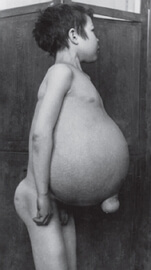 Gaucher's disease is a hereditary accumulative disease, which is one of the most common among lysosomal pathologies. Gaucher's disease develops due to insufficiency of glucocerebrosidase, which is the result of the accumulation of glucocerebroside in tissues and some organs.
This disease is a relatively rare disease and manifests itself, according to statistics, relatively low. But, nevertheless, it can lead to disability and / or death at an early age, if the appropriate treatment is not started in time.
Gaucher's Disease causes
Genetically, mutations occur in the genes that are responsible for producing the glucocerebrosidase enzyme. This gene with anomalies is localized on the 1-st chromosome. These mutations cause a low activity of the enzyme. Thus, there is an accumulation of glucocerebrosides in macrophages.
Mesenchymal cells, known as Gaucher cells, gradually expand and become hypertrophied. As these cells change, and they are in the spleen, kidneys, liver, lungs, head and bone marrow, they, in turn, deform these organs and disrupt their normal functioning.
Gaucher disease refers to autosomal recessive diseases. Therefore, any person can inherit a mutation of this enzyme with all the features in the same ratio, from both the father and the mother. Thus, the degree of the disease and its severity will depend on the damage to the genes.
Theoretically, each person can inherit a glucocerebroside gene with lesions or absolutely healthy. As a result of the inheritance of a gene with anomalies, a mutation of this enzyme occurs, but this does not speak of the disease. But when the child receives both affected genes, then Gaucher disease is diagnosed. If one of the affected genes is inherited, the child is considered to be the carrier of the disease, so there is a probability of transmission of this trait, with hereditary pathology, for future generations. Thus, with the carriage of the disease by both parents, the child can be born with Gaucher disease in 25% of cases, the child carrier in 50% and the healthy child in 25%.
The incidence of this hereditary pathology among ethnic races is 1: 50,000, but it is more often found among Ashkenazi Jews.
Gaucher disease is also called a disease of accumulation because of an inadequate enzyme, which must remove harmful metabolic products from the body, rather than accumulate them. As a result of this, these substances collect in macrophages of some organs and destroy them.
Gaucher's disease
symptoms The clinical picture of the disease is characterized by three types.
In the first type of Gaucher disease, the nervous system does not participate in the accumulation of lipids, so it is referred more to the hematologic course of the disease. In the first place, there is an increase in many parenchymal organs, the first place among which is the spleen, and then visual deformations from the bones are observed. Much more often this type of disease progresses among adults.
Infant or second type of Gaucher disease is characterized by an acute form of neurology and is diagnosed, mainly, up to six months of age. In this case, very characteristic neurological symptoms appear very early, in which the brain stem cells are damaged, which causes death in children.
The third type of Gaucher disease is a juvenile form of the disease with a subacute neurovisceral type. At the beginning of the pathological process, splenomegaly develops and mental retardation, in which pyramidal and extrapyramidal brain systems are affected.
Gaucher disease has major changes in the form of damage to the bone marrow, spleen, lymph nodes and liver, while the cerebral form is also affected by the brain. In the parenchymal organs there is a large content of Gaucher cells, and with the existing areas of necrosis, the cerebral cortex has diffuse changes. When examining patients marked sharply enlarged spleen and liver, and sometimes lymph nodes. On the body appear characteristic for this disease spots of dark yellow color.
Gaucher disease has a distinctive symptom in the clinic of the disease in the form of an increase in the spleen at the very beginning of the developing pathology, and then there is an increase in size and liver. A certain pigmentation is observed on the face, hands, sclera and mucous membranes. And the accumulation of lipids in the bone marrow leads to osteoporosis of the vertebrae, femurs, spontaneous fractures, anemia, thrombocytopenia and leukopenia. Sometimes newborns even have a malignant form of the disease, which occurs in the form of spastic syndrome, strabismus, pertussis-like cough.
In the acute form of Gaucher's disease, hepatosplenomegaly with enlarged visceral lymph nodes is detected. The open parts of the body are pigmented with a yellowish brown color, which later becomes bronze due to the deposition of a certain pigment under the skin. Patients, as a rule, complain of bone pain, characteristic deformities and frequent fractures of bones. In advanced age, there are well-defined symptoms of vascular atheroma at the same time with increased cholesterolemia.
At the last stage of Gaucher's disease, severe forms of neurological disorder develop very often, which lead to death.
Gaucher's Disease Diagnosis
Today different methods are used to diagnose Gaucher's disease.
One of the most accurate is a blood test, in which the presence of an enzyme and the level of glucocerebrosidase in leukocytes is determined.
In the DNA analysis, the second method, mutations at the genetic level and the missing amount of the basic enzyme are considered. This method is based on the latest technologies of molecular biology. The main advantage of this diagnosis of Gaucher disease is that it allows you to conduct examinations early in pregnancy. And this allows 90%, in the future, to determine the carrier of the disease and even its severity.
In the third method of diagnosis, the bone marrow is examined, which makes it possible to determine the dysfunction of its cells. The negative side of such a survey is that it allows diagnosing only patients, but it can not identify carriers of the disease. Therefore for today such method is practically not applied.
Unfortunately, sometimes symptoms of Gaucher disease are not always easy. Therefore, the correct and timely diagnosis can prolong the patient's life for many years. In this case, the patient will be under the supervision of specialists( pediatricians, hematologists) without resorting to the use of medication and without fear of complications. And, on the contrary, if a patient who has not passed a qualified diagnosis in a timely manner and has not received medical care, may have symptoms of the disease throughout his life, suffer from them and not guess that he has Gaucher disease, respectively, and not get the right treatment.
Gaucher's disease treatment
Until recently, the disease was treated according to its symptoms: the spleen was being removed or operations were performed in pathological fractures. But in 1991 the first medical preparation Agluceraz appeared in the USA, which allows to treat Gaucher's disease. This disease was the first among the accumulation diseases, which was susceptible to therapy with enzyme substitutes.
The second product of enzyme replacement therapy for Gaucher's disease, imiglucerase, was officially adopted in 1994.These drugs are analogues of the human glucocerebrosidase enzyme, which are produced using the latest technologies of artificial DNA creation.
At the moment, a large number of patients with Gaucher disease all over the world are constantly receiving enzyme replacement treatment in the form of modified forms of beta-glucocerebrosidase. These include ceradase( alglucerase) or ceresime( imiglucerase in injections).These drugs are designed in such a way that they can specifically target white blood cells( macrophages) that destroy infections, to accelerate the process of splitting glucocerebrosides into glucose and ceramide.
Documented the success of the treatment of Gaucher disease with the use of cerevisia at an initial dose of 60 units per kg, which was applied every two weeks. After completing the course, it is recorded that this particular dosage significantly reduces organomegaly, often reduces internal organs in size and complications of hematological etiology, and also improves the life of patients with the first type of Gauchers disease.
Since 1997, this pathological heredity has been treated with enzyme replacement therapy in Russia. For patients of the first type, Cerezima's appointment begins with 30 units per kg once a day. Six months after the start of the course of therapy for Gaucher's disease, positive dynamics in many parenchymal organs and also in hematologic indices is noted.
Long-term treatment of Gaucher's disease with this drug completely stabilizes the pathological process, reduces pronounced changes in the bones and significantly improves the life of patients. Therefore, the earlier the corresponding therapy is started, the more effective the results will be.
An important point is the prevention of Gauchers disease, which consists in conducting medical genetic counseling for families and prenatal diagnosis. This makes it possible to determine the activity of glucocerebrosidase in the early stages of the fetal membrane and the blood cells of its umbilical cord.