Allergy to dentures: symptoms and treatment, what to do
Prosthetics is a quick and easy way to restore the functionality of the dentition and the aesthetics of a smile.This method has fewer side effects and contraindications than with implantation, but one complication exists in every form - an allergic reaction. Allergy - the body's reaction to the introduction of foreign construction, followed by its rejection and the emergence of bright symptoms, irritation, painful sensations.
Symptoms of allergy to a prosthesis or implant
We will consider why there is an allergy to dentures, its symptoms and treatment methods, allergenic materials, etc.
First of all, there is reddening of soft tissues and mucous membranes, palate, and tongue.Immediately after this, the swelling rapidly increases, painful sensations, itching, severe discomfort when chewing, swallowing, yawning, coughing, etc. occur.
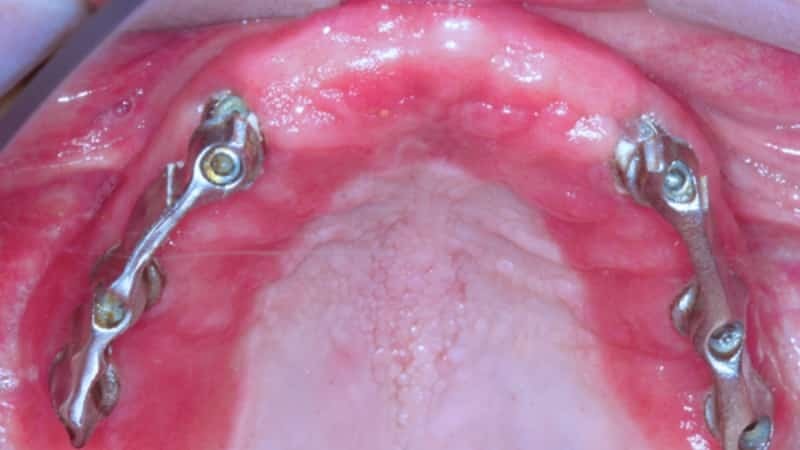
Inflammation of the gum under the prosthesis
Also on the mucosa may appear microcracks, ulcers and eruptions, which are gradually transferred to the tongue, cheeks and lips.A strong metallic or bitter taste can be felt in the mouth.
One of the primary( hidden) symptoms of an allergy may be over-drying of the oral cavity or vice versa, increased salivation.In the throat can pershit, and in the language to appear an unusual plaque.
Patients with bronchial asthma often have an exacerbation of the disease on the background of allergies.
There may be mumps( swollen and inflamed salivary gland in the parotid region).
The spread of allergies is also evidenced by eruptions in other areas - face, hands, skin in general.May the extremities and cheeks swell.
A dangerous symptom is the swelling of the laryngeal region( "Quincke's edema").If you do not remove the reaction and do not provide prompt medical assistance, there may be a sudden disruption in the functions of the respiratory system, asphyxiation.Often, these symptoms are allergic to cermets.
Allergen components in prosthetics
The most common allergens have always been considered metal( chromium, steel, copper, cobalt, zinc, etc.) crowns.The use of base metals greatly reduces the cost of production of structures.They are actively used to make not only crowns( metal and metal-ceramic), but also bridges, and also as a basis for clasp products.
Allergy to metal crowns( the symptoms discussed above) is due to the use of cheap alloys and impurities in the production, which do not belong to biointern components.
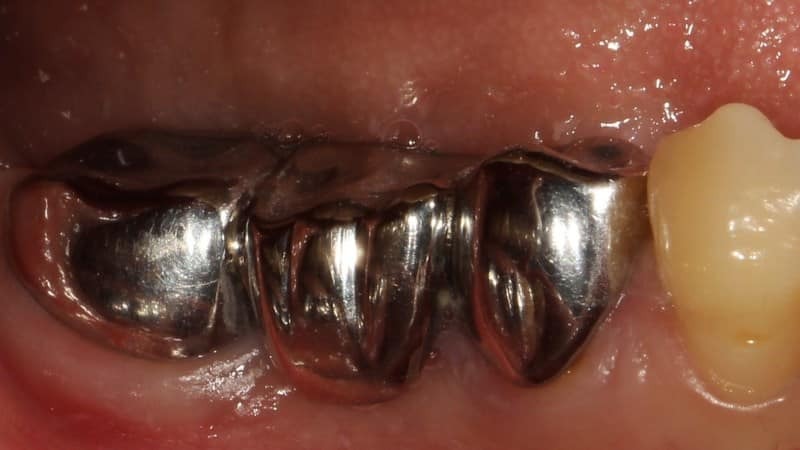
Allergy to metal crowns
A very different picture can be observed if we consider products from precious metals( gold, silver, platinum).They are not so popular, because the price of precious metals in the modern world is very high and is accessible only to the well-to-do strata of the population.And, nevertheless, models and implants of them rarely cause an allergic reaction, are well perceived by the body with a minimal risk of rejection.
The effect of various metals is important when considering complications such as "galvanic syndrome".It arises because of the incompatibility of some metals in the alloy, which causes galvanic current, which is harmful to the patient.The consequences are sleep disorder, increased salivation, intoxication of the body as a whole.
In order for the metal to be used in orthopedics, it must meet the requirements - hardness, aesthetics, lightness and chemical resistance to external factors( saliva, product fibers, pathogenic microflora).These factors can provoke oxidation of metal in the oral cavity, its gradual destruction and corrosion.
Nickel, which is part of the so-called "stainless steel", is actively used in orthopedics, but saliva causes its corrosion and, as a consequence, allergies.The alloy with its composition is forbidden to offer to patients who in the past have dermatitis or individual reaction to nickel bracelets, zippers, fasteners and ornaments made of steel.
Chromium, manganese, cobalt can also cause a variety of reactions, including allergic stomatitis.
Aluminum silicate or kaolin is often used as a filling composite.This should be taken into account when installing the prosthesis next to the sealed tooth, since dissimilar metals can enter into a chemical reaction.
Zirconia crowns are based on oxide and zirconia, which rarely causes adverse reactions, including allergies.
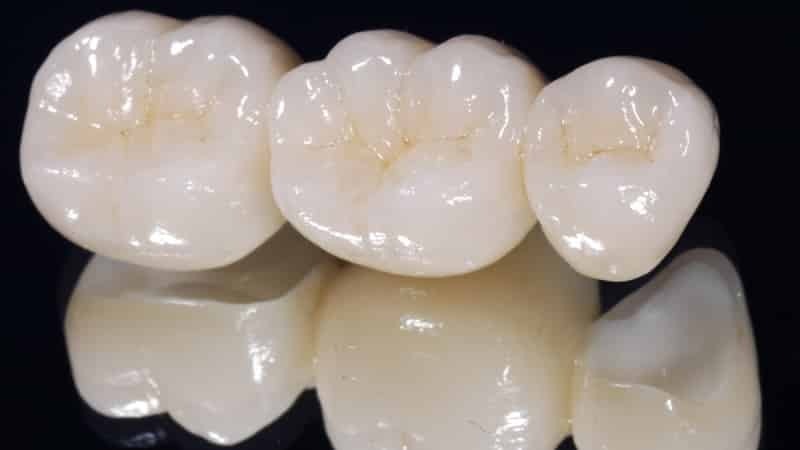
Zirconium crowns
Conventional iron, in contrast to budgetary alloys, has excellent resistance to corrosion, therefore, allergic complications practically do not occur.
But copper in the composition of gold of smaller samples, solders and fasteners can react with saliva.Isolation of the metal to saliva, and then and gastric juice, blood, lymph causes a general poisoning of the body.
Oxidized zinc is also used in solders, amalgams, dental cement.This metal under conditions of high humidity quickly breaks down and dissolves, causing mild toxic reactions.
But the destruction of lead in the process of wearing metal prostheses leads to strong intoxication, an increase in the amount of substance in the body above the permissible limits.
Titanium, molybdenum, indium in the composition of stainless steel practically does not cause allergic reactions.
Silver has a disinfectant and anti-inflammatory effect, therefore prostheses from this component positively influence the mucous membrane, reducing the risk of infectious processes and diseases.
Silver and gold are resistant to corrosion and rarely cause allergies, which can not be said for platinum and palladium( strong allergens).Noble metals are not toxic and do not cause a general poisoning of the body.
Let's move on to plastic.Acrylic dentures are considered organic, bioinert and high polymeric models, which, unfortunately, can cause allergic stomatitis and intoxication.The main factor in the development of complications is the residual monomer, which is part of the acrylic composite.Soft plastics, as well as polyurethane, rarely cause allergies.
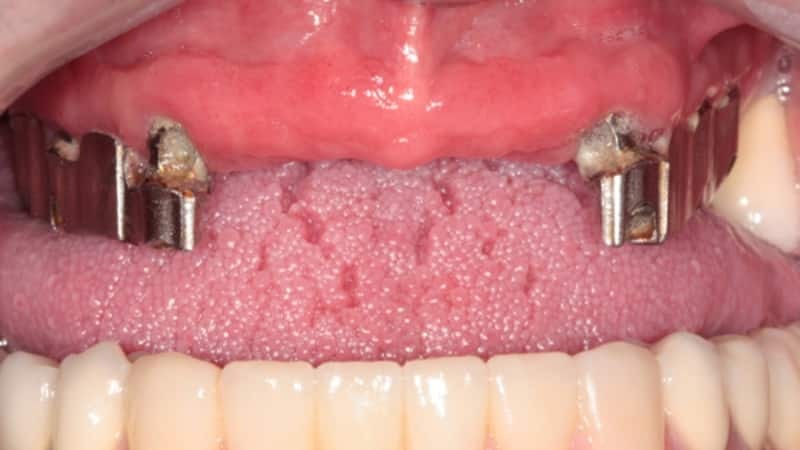
Allergy to plastic prosthesis
Biologically compatible are modern silicone and nylon prostheses, which protect the patient from side effects as much as possible.
Ceramics also does not cause allergies.
Sometimes an individual reaction manifests itself in various pigments used in the manufacture of prostheses.Dyes are used to improve the aesthetic performance of crowns, the acquisition of a patient's chosen shade.
What factors contribute to the emergence of the allergy
There are nonspecific factors that favor the absorption of the allergen from the oral cavity to the blood.The hapten accumulates in the serum to a certain level, after which an allergic reaction of the body occurs. Consider these factors.
- Under the dental crowns and the design, heat transfer processes generally deteriorate.The temperature increase leads to a change in the structure of soft tissues, their loosening and maceration, vasodilation, and this in turn is a favorable environment for the absorption of the monomer( allergen) into the blood.
- Micro-trauma from a removable denture during daily loads( biting, chewing) causes foci of inflammation at the site of attachment of the prosthesis, which facilitates penetration through the cracks and wounds of allergenic components.
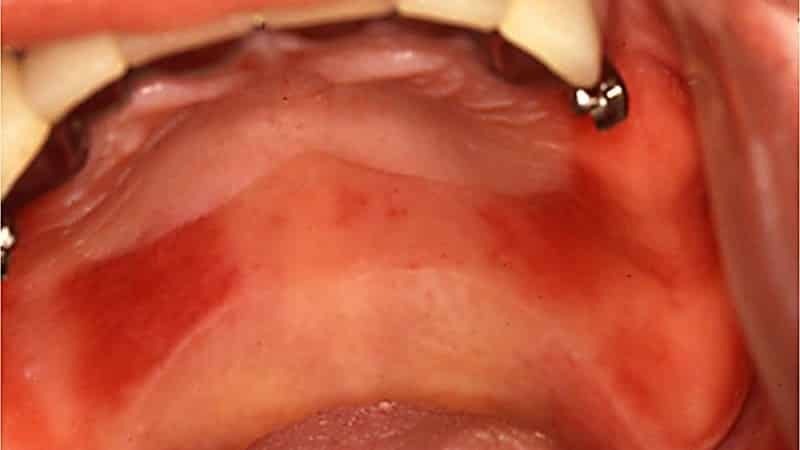
Allergic stomatitis
- Corrosion in the process of oxidation of metals with saliva increases the concentration of allergens several times.
- Increased acidity of saliva causes the destruction of metal and plastic products, releasing a large number of hapten.
- Exceeding the life of the prosthesis leads to its accelerated wear, erasure and destruction, as a result of which the quantity of components used for production in the saliva increases.
Action in determining the allergy
All patients should know what to do in case of allergy to removable dentures, implants, permanent structures, etc.
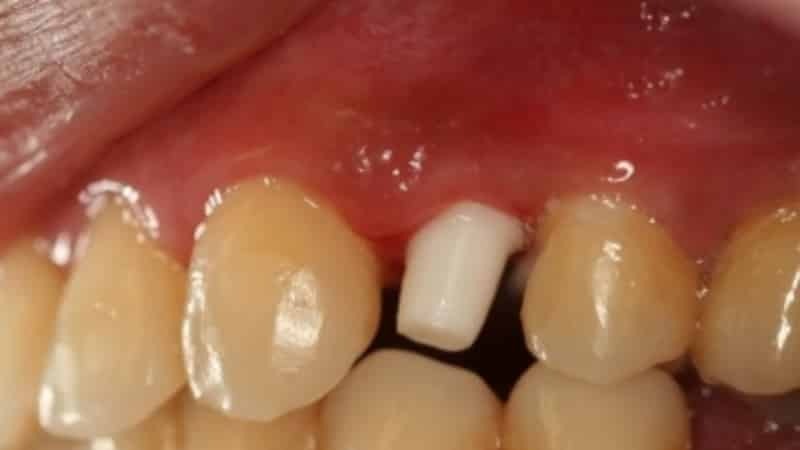
Allergy to acrylic implants
In case of gradual development of symptoms( salivation increased,Cavity, reddened gum) take antiallergic drugs and also go to the doctor.
Remember, in order not to treat the consequences of intoxication and individual reactions, before choosing a design, the orthopedist should conduct an allergic reaction test.This can be a screening technique, a skin patch test to determine the contact allergen, a stimulation test for lymphocytes.