Tachyarrhythmia
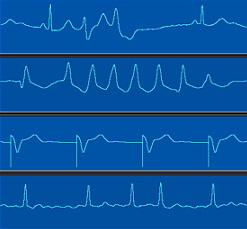
 Tachyarrhythmias is a pathological disturbance of the heart rhythm that is characterized by a significant increase in the heart rate, with a simultaneous violation of their periodicity. With tachyarrhythmias, the heart rate ranges from one hundred to four hundred beats per minute, with a pathologically fast heart rate that can be observed in both the lower chambers of the heart( ventricular fibrillation) and the upper chambers( atrial fibrillation).
Tachyarrhythmia of the cause of
A pathologically fast heart rhythm can develop due to various heart diseases. The most common development of this pathology provokes the following heart diseases: infectious and tumor lesions of the heart muscle, cardiomyopathy, heart failure, atherosclerosis( coronary artery disease), high blood pressure and valvular heart disease.
In addition to the reasons for the development of tachyarrhythmia include some lung diseases, thyroid disease, thyrotoxicosis, electrolyte imbalance, congenital WPW-syndrome, heart surgery, the use of drugs and alcohol.
Tachyarrhythmia is manifested when the pulse that contracts the heart muscle arrives earlier than normal heart rhythm suggests. This pathological violation of the rhythm of the heart can begin in both the lower and upper heart chambers.
Tachyarrhythmias
symptoms This condition is usually divided into chronic and paroxysmal, and chronic tachyarrhythmia can be permanent and continuously recurrent. The clinical picture is quite variable, from a slight palpitation, to severe weakness, suffocation, syncope, arrhythmic shock and pulmonary edema. Often there is shortness of breath and dizziness.
In addition to this, tachyarrhythmias are characterized by the symptoms of a so-called "vegetative storm," often with tremors, chills, imperative urges to urinate, with a large enough amount of urine.
Sinus tachyarrhythmia
One of the most common types of cardiac arrhythmia is sinus tachyarrhythmia. This condition is characterized by a rapid heart rate, above eighty beats per minute.
When a similar increase in the number of heartbeats is observed with physical activity, anxiety, stress or agitation - this is considered normal. But if such a situation manifests itself in a state of rest, one should be alert, sinceoften this is the first manifestation of sinus tachyarrhythmia.
In most cases, this kind of arrhythmia indicates the presence of problems in the thyroid gland, autonomic nervous system, blood circulation. In this case, with the appearance of rapid heart beat, you should seek help from a cardiologist who, after carrying out the necessary studies, will prescribe the appropriate treatment, or refer to another narrow specialist( endocrinologist, phlebologist, etc.).
Sinus tachyarrhythmia is very dangerous in that, with hard work, the heart does not fill up with the right amount of blood, which entails both deterioration of the blood supply to the heart muscle itself and to other organs and tissues. As a consequence, myocardial ischemia may develop first, and subsequently myocardial infarction.
Tachyarrhythmia in children is often a non-paroxysmal and paroxysmal tachycardia. These conditions require compulsory treatment or even sometimes emergency treatment. Paroxysmal tachyarrhythmia begins suddenly due to pre-excitation syndromes or after extrasystoles. Most often, the attack lasts a few seconds, but sometimes it can be delayed for two to three hours, after which it also ends suddenly. During an attack, the heart rate exceeds the age norm usually twice.
Non-paroxysmal tachyarrhythmia in children develops due to the activity of heterogeneous foci of automatism. The attack with this form of the disease is delayed for a sufficiently long time, its onset is slow, the number of heartbeats can reach 160 beats per minute, at the end there is no compensatory pause. In the case of frequent protracted attacks, heart failure may develop.
Tachyarrhythmia treatment of
Diagnosis and subsequent treatment of tachyarrhythmias is performed by a cardiologist. The tactics of treatment directly depend on the diagnosed underlying pathology that caused this disturbance of the heart rhythm.
If tachyarrhythmia does not lead to an acute circulatory disturbance and there is no immediate threat of its occurrence, urgent emergency antiarrhythmic therapy is not performed, tk. In such cases, attempts at an emergency rhythm normalization can be much more dangerous than the arrhythmia itself.