Syndrome of weakness of the sinus node
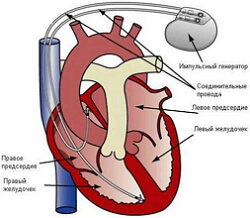 Syndrome of weakness of the sinus node is a general concept characterized by rhythm disturbance and caused by a decrease or absolute cessation of the automatic operation of the atrial and sinus node. In the syndrome of weakness of the sinus node, certain processes occur in which the formation of impulses and their conduction from the SS to the atrium is disrupted as signs of bradycardia, as well as accompanying arrhythmias of ectopic nature. In such patients with a syndrome of weakness of the sinus node, sudden cardiac arrest may occur.
In general, this anomaly is more often diagnosed in people after sixty years, and without the benefits of sexual relations. However, this disease is sometimes detected among patients such as children and adolescents.
dysfunction SU is formed as a result of the organic nature of the lesion, as well as a consequence of drug and autonomic disorders of automatism activities that eliminated the appointment of the necessary preparations for the restoration of cardiac function, or the abolition of the drugs, which are characterized by participation in the formation of a pulse and hold it. Syndrome of weakness of the sinus node develops with the loss of the basic position in the formation of the rhythm of the heart.
Syndrome of sinus node weakness
Among the etiological factors affecting the development of the primary form of anomaly, dysfunctions are noted as a result of organic lesions of the zone of the sinoatrial nature. First of all, it is cardiac pathology - hypertension, heart disease, cardiomyopathy, ischemic heart disease, myocarditis, surgical etiology trauma and heart transplant. Reasons also include degenerative diseases and infiltrative nature, hypothyroidism, changes in the bones and muscles, senile amyloidosis etiology, malignant tumors of the heart, the heart of scleroderma, sarcoidosis.
Syndrome of weakness of the sinus node can be triggered by ischemia, which causes arterial stenosis, and it, in turn, feeds the SS and a zone of a sinoatrial character. And also various inflammatory processes and infiltrations, dystrophies, hemorrhages, sclerosis and necrosis are considered contributing factors of this syndrome.
Secondary causes of sinus syndrome weakness syndrome are associated with exogenous factors that directly affect SS.Among them secrete factors such as hypercalcemia, hyperkalemia, therapy drugs that reduce work SU( Clonidine, verapamil, dopegit, b-blockers, Kordaron, cardiac glycosides).
External factors that influence the formation of sinus node weakness syndrome include SAD( autonomic dysfunction SU).It is often noted with the hyperactivation of the nerve wandering property, which causes bradycardia and processes that prolong the refractoriness of this node. The wandering nerve can acquire an increased tone in the process of sleep, and with urination, dyspeptic disorders, during swallowing and coughing, as well as during the Walsawa trial. The appearance of the pathological activity of this nerve can be provoked by inflammatory processes in the pharynx, digestive tract and urogenital system, which are characterized by the presence of abundant innervation. All this can occur with a rise in temperature and intracranial pressure, sepsis and hyperkalemia.
In addition, the true form of sinus node weakness syndrome in people engaged in professional sports can be combined with other pathologies of arrhythmias as a result of cardiac muscle dystrophy.
sick sinus syndrome symptoms
Symptoms of sick sinus syndrome consists of several course options: latent, compensated, decompensated and bradisistolichesky type with permanent atrial fibrillation.
The latent variant of the syndrome of weakness of the sinus node is characterized by the absence of clinical symptoms and electrocardiographic manifestations. But the dysfunction of this node is determined by electrophysiological examination. Also, there are no restrictions on the ability to work, and with this form of the syndrome there is no need for implantation of a pacemaker.
The compensated variant of the syndrome of weakness of the sinus node is divided into two subspecies: bradisystolic and braditahistystolic. In the first case, the patient has a strong clinical symptomatology in the form of complaints of a feeling of weakness and dizziness. At the same time, there is a partial restriction in the professional capacity for work, but the surgery for implantation of the pacemaker has not yet been carried out. In the second case, with braditahisistolii, tachyarrhythmias of a paroxysmal nature join the clinical manifestations of the second variant. The pacemaker is implanted during decompensation of the disease with the appointment of antiarrhythmic treatment.
The decompensated version of the syndrome of weakness of the sinus node is also subdivided into a course with bradysystole and braditahistystolia. The first form is characterized by persistent severe SB( sinus bradycardia) and manifestations in the form of disorders of cerebral circulation, insufficient work of the heart due to bradyarrhythmia. In this case, the patients are limited in their ability to work, and the pacemaker implantation is indicated for asystole and recovery activity for more than three seconds. The second form( Short's syndrome) is characterized by all the symptoms of the previous form of the sinus node weakness syndrome with the addition of supraventricular tachycardia, flutter and atrial fibrillation. In this case, the patients completely lose their ability to work, and therefore implantation is prescribed at the same indications as in the bradysystolic type of the decompensated variant.
With constant bradysystolia atrial fibrillation, tachyostolic symptoms and bradisystolic symptoms are characteristic. In the first option, disability is limited, and there are no definite indications for prompt intervention. In the second variant - the pacemaker is implanted with symptoms of cerebral character and heart failure.
Syndrome of sinus node weakness is characterized by acute and chronic course of the disease with possible relapses. The acute form develops as a consequence of myocardial infarction. And relapses of weakness syndrome of the sinus node can have a progressive course in a stable or slow form.
The causes of the formation of the primary form of weakness syndrome of the sinus node are lesions of the sinus and atrial zones, and in the secondary - violations of the regulation of the vegetative system.
Symptomatic variants of this syndrome is characterized by a variety of clinical manifestations. In a certain contingent of patients, the symptoms of weakness syndrome of the sinus node for a long time may not manifest itself in any way, and in other patients it is expressed by a violation of the heart rhythm accompanied by pain in the head, attacks of Morgani-Adams-Stokes and dizziness. In addition, asthma develops cardiac type, pulmonary edema and angina, and in rare cases - myocardial infarction.
Basically, the entire clinic of weakness syndrome of the sinus node is based on cerebral and cardiac symptoms. The first variant is expressed in fatigue of the patient, his irritability, forgetfulness and lability of emotions, and in elderly patients intellect and memory decrease. And with the progression of pathology, all cerebral symptoms begin to gradually increase. In this case, there are pre-patchy symptoms, then the skin turns pale, becomes cold and becomes covered with a cold sweat, while the pressure drops sharply.
To promote the appearance of fainting can: a tight collar, sudden head movement and coughing. As a rule, these fainting pass without medical assistance, but in protracted forms - emergency assistance is simply necessary.
With pronounced signs of bradycardia, dizziness increases, memory dips, irritability, paresis, insomnia and swallowing of words appear.
Signs of cardiac manifestation are associated with the appearance of pulse sensations with a delayed or irregular filling, as well as pains in the chest, which is due to the inadequate function of the coronary circulation. Later, arrhythmias are added in the form of dyspnea, malfunctioning of the heart, heartbeat, weakness and development of a chronic form of inadequate heart activity.
At the time of the progressive course of the syndrome of weakness of the sinus node, there is a ventricular tachycardia or fibrillation, which increases the risk of BCC( sudden cardiac death).There are also other organic manifestations of the disease - it is oliguria, intermittent claudication, abnormalities in the gastrointestinal tract, weakness in the muscles as a result of their oxygenation.
In an objective examination, a bradycardia is detected at night, which can take place under physical stress;Sinoatrial blockade or rhythms of an ectopic nature.
Syndrome of weakness of the sinus node in children
This is a complex condition that includes a reduced ability of the CS to perform various variants of impulse conduction. Such pathology in children is an irreversible process of lesion of CS and centers lying below it, which reduce heart rate. Syndrome of weakness of the sinus node is manifested by the organic nature of CS disorders and requires earlier detection in patients with this pathology and timely surgical intervention in order to prevent BC syndrome( sudden death).To do this, it is necessary to screen only the children born to prevent deaths among children of different ages in the future.
Symptoms of sick sinus syndrome in children is characterized by such forms as transient( in the background of inflammatory diseases of the heart muscle), constant( for heart disease) or progressive( with cardiomyopathy, with Romano-Ward syndrome), but mainly affects the vascular system. The difficulty in diagnosing the syndrome of weakness of the sinus node in children is asymptomatic cases of the disease, in which VS caused by VF or asystole can become the only sign of a pathological process. Therefore, the analysis of the symptoms of the debut of the disease in children and the features of its detection remain with all urgency.
In 50% of children, this pathology proceeds without symptoms, and signs of the disease are detected quite by accident. The remaining half of the sick children suffer from syncopal attacks, headaches, weakness, cardiac rhythm disturbances, dizziness. Such children on the ECG show sinus bradycardia or migration of the pacemaker. And in cases of absent treatment, in 40% of cases a sinoatrial blockade develops, and completely rejects SU.But even with asymptomatic course of the disease, the syndrome gradually progresses.
On the electrocardiogram of a sick child, bradycardia, rhythm migration, supraventricular tachycardia, slipping rhythms are noted.
In the first version of the syndrome of sinus node weakness in the heart, states of syncopal or presyncopal character appear. The second variant of the pathology develops depending on the specific electrophysiological situation in a single child. With the latent pathways of the additional property available, a third variant is formed, characterized by a syndrome of tachycardia with bradycardia. But already with the fourth version of the syndrome of weakness of the sinus node, a strong persistent bradycardia and asystole are observed. At the same time, a bradycardic form is also noted in the form of flicker and atrial flutter.
Almost 40% of small patients feel dizzy, severe weakness, darkening of consciousness, and 50% have severe disorders in the circulation of the brain. Such children suddenly become pale, they can suddenly stop breathing and appear seizures. Therefore, very often the fourth variant of the pathological process is referred to as cardioneuropathies.
Syndrome of weakness of the sinus node treatment
Treatment measures of the syndrome of weakness of the sinus node will depend on the degree of conduction disorders of the CS, etiological factors, the severity of the symptomatic picture of the disease.
With minor manifestations of the syndrome of weakness of the sinus node, therapeutic treatment of the primary disease and supervision of the cardiologist are prescribed. But the use of medications is used for the appearance of minor bradyarrhythmias and tachyarrhythmias, although they do not have a significant effect in this case.
The main and effective method of treating sinus node weakness is implantation of the pacemaker. At the expressed clinical displays of a characteristic pathology implantation of the device which develops special impulses at a falling heart rate to the lowest indicators is spent.
pacemaker for implantation into account the presence of a single episode of Morgagni-Edems-Stokes, bradycardia, with heart beats less than forty per minute, vertigo, conditions presinkopalnogo character insufficient coronary blood circulation, high levels of blood pressure and bradycardia in combination with other arrhythmias.
Thus, it must always be remembered that in the absence of appropriate treatment of the syndrome of weakness of the sinus node, patients can on average survive for several weeks, and this will depend on the degree of the disease. In general, this pathology has a significant variability, which is characterized by a lifetime without treatment from a week to ten years, and in some cases even more.