Mitral insufficiency
 Mitral insufficiency is a type of myocardial infarction that is characterized by incomplete prolapse or closure of the valves of the left atrioventicular valve during systole. Reverse blood flow occurs with every ventricular contraction. The most common form of cardiac dysfunction is just mitral insufficiency. The disease is found in 50% of people with heart defects. Basically, mitral insufficiency is detected simultaneously with mitral stenosis( right atrioventricular aperture narrowed).Also there are patients with only one disease - mitral insufficiency.
The clinical picture differs markedly in chronic and acute mitral insufficiency from pathophysiological. At the heart of the hemodynamic disorder is mitral regurgitation. The chronic form of mitral insufficiency manifests itself in the initial stage during afterload.
Causes of mitral insufficiency
Mitral developmental failure is divided into chronic and acute form.
The acute form of mitral insufficiency forms within a few hours or minutes after the onset:
- the rupture of the tendon chords( the strands that connect the cardiac muscle to the papillary chords - the internal muscles of the myocardium, through which the valve flaps move) due to inflammation of the myocardial membrane( internal), Trauma of the chest, etc.;
- acute expansion of the fibrous ring( with myocardial infarction) - a dense ring that is located inside the wall of the myocardium. Valves are attached to it;
- lesions of papillary muscles that cause myocardial infarction( due to the cessation of blood flow to the heart muscle, tissue dies).
- rupture of the valves of the mitral valve causing infectious endocarditis;
- surgical separation of valves with stenosis of the mitral valve.
The chronic form of mitral insufficiency develops over several years or months due to the causes:
- inflammatory diseases. For example, rheumatism or various disorders of the immune system( scleroderma, lupus erythematosus);
- degenerative diseases( congenital disorders of certain organs): myxomatous degeneration of the mitral valve( the mitral valve valves are thickened or their density is reduced), Marfan syndrome( connective tissue disease that is inherited);
- infectious diseases( endocarditis infectious - the inner shell of the heart becomes inflamed), structural changes( broken structures of the implanted artificial valve or ruptures of papillary muscles and tendon chords);
- congenital features of the structure of the mitral valve( the shape changes, crevices appear, etc.).
Immediately from the time of onset, mitral insufficiency is divided into acquired and congenital form.
As a result of the influence of unfavorable factors on the organism of a pregnant woman - infectious diseases, radiological or radiation radiation and others, mitral insufficiency of the congenital form develops. In the case of an adverse effect on an adult - oncological and infectious diseases, trauma, acquired mitral insufficiency occurs.
Disease due to formation is divided:
is an organic form( the reverse flow of blood to the atrium from the ventricle is due to the fact that the bivalve valve is damaged, it does not fully cover the left atrioventricular ventricle during ventricular contraction);
- relative or functional mitral insufficiency. If the bicuspid valve is unchanged and the blood enters the left atrium from the left ventricle in the opposite direction, then this is due to:
- with a fibrous ring extension and an enlarged left ventricle;
- tonus of the papillary muscles is changed( internal cardiac muscle, which ensures movement of the valve flap);
- chords are lengthened or torn.
People with a congenital form of the disease are quite common. In 14% of cases, mitral insufficiency of the isolated form is caused by rheumatic myocardial disease. In 10% of patients with postinfarction cardiosclerosis, ischemic dysfunction of the mitral valve is detected. Also, due to some systemic defect in connective tissue, mitral insufficiency develops( Ehlers-Danlos syndrome or Marfan syndrome).
Relative mitral insufficiency is formed even in the absence of valve damage during dilatation of the ventricle( left) and enlarged fibrous ring. Similar changes can be found in myocarditis, coronary heart disease, aortic heart disease and hypertension.
A more rare cause of mitral insufficiency is hypertrophic cardiomyopathy and calcification of myocardial walls. With parachute deformations of the valve, splittings of the mitral valves and fenestration, mitral insufficiency of the congenital form develops.
Symptoms of mitral insufficiency
The compensation period may last several years and may not be clinically apparent. The period of subcompensation is manifested by subjective symptoms: hemoptysis, cough, anginal pain, tachycardia, fatigue, dyspnea. If venous congestion increases in a small circle of blood circulation, an attack of cardiac asthma may occur( usually at night during sleep).The patient will also complain about the appearance of dyspnea while being at rest.
Initially, the cough is dry, after which sputum appears with a small amount of blood in the case of an increase in the severity of blood stagnation in the vessels of the lung. Also, when blood vessels become stagnant in blood vessels, dyspnea appears.
Right ventricular failure is clinically manifested by acrotsion, peripheral edema, enlarged liver, swollen cervical veins, ascites. Ortner's syndrome( aphonia) or hoarseness of the voice occurs in the case of compression of the pulmonary trunk. Atrial fibrillation is detected in patients in more than 50% of cases with mitral insufficiency.
The following signs of mitral insufficiency are also observed: due to a violation of blood distribution in the body, the working capacity decreases, and general weakness appears.
When anemia develops, the signs of mitral insufficiency are a rapid heartbeat, a feeling of fading of the myocardium or irregular heartbeat, as well as coups in the left side of the chest.
With the progression of the disease, a pallor-type disorder will occur. It is not excluded the appearance of acrocyanosis and cyanosis of the lips. Blood pressure and pulse do not change.
Patients with mitral insufficiency do not turn to specialists, because they do not experience discomfort, as the heart's possibilities are successfully compensated for a long time. The disease is accompanied by a gradual increase in the left ventricle, as he is forced to pump more blood. As a result, after a long time, the patient will start to feel a palpitation, especially lying on his side.
The left atrium will gradually increase in order to allow excess blood from the ventricle, as a result of which the contractions occur too quickly and the workability is disrupted due to atrial fibrillation. Because of abnormal heart rhythm, the pump function of the myocardium muscle is disturbed. Instead of shrinking atriums, they tremble. Disturbed blood flow, as a rule, leads to the formation of blood clots. It is not excluded the appearance of edema on the lower limbs.
However, all of the above symptoms do not play a big role in the diagnosis, since all the signs are also characteristic in the presence of other heart defects.
Degrees of mitral insufficiency
Mitral failure is divided into three degrees.
♦ Mitral insufficiency of the 1st degree is formed if infectious myocarditis, syphilis, tuberculosis, rheumatism, atherosclerosis and other processes that occur for a long time are present, which belong to organic diseases. Infarction, cardiomegaly, arterial hypertension( a combination of heart defects), cause functional insufficiency and lead to the fact that the fibrous ring widens.
X-ray examination allows to determine pulmonary hypertension and excessive blood accumulations in the small circle. And intracardiac research( ventriculography) will determine the level of recurrent blood and the volume of filling of the ventricle.
The release of blood( pathological) into the left atrium from the ventricle leads to an overload of the volume, resulting in increased retrograde pressure in the small circle of the circulation. In the future, the development of pulmonary hypertension is not ruled out. Mitral insufficiency of the 1 st degree is hardly diagnosed.
Symptoms of mitral insufficiency of the first degree are as follows: the presence of systolic noise in the upper part of the heart, the pathological phenomenon in the fourth intercostal space is well audible, the pulse wave rises rapidly on the carotid artery, the heart I tone is weakened, the second tone strengthens on the pulmonary artery and the appearance of III tone is not ruled out. On the cardiac apex, there is systolic tremor in palpation and a sense of displacement of the left apical impulse to the left. Also, the body weight, the liver, the edema appear and in the later stages the neighboring organs are squeezed.
Mitral insufficiency of the first degree is clinically manifested by increased fatigue even in case of minor physical exertion, stagnation in the lungs, dyspnea and hemoptysis, which disappear at rest. Thickening of valve flaps, tendons and sagging of their walls is also characteristic of mitral insufficiency of the first degree.
♦ Mitral insufficiency of the 2nd degree is characterized by the development of venous pulmonary hypertension of passive form. This degree is clinically manifested by a number of symptoms of impaired blood circulation: hemoptysis, an attack of cardiac asthma, cough, palpitation will increase even at rest, shortness of breath.
Diagnostic examination will show the enlarged borders of the heart in the left part at 2 cm, and in the right 0.5 cm, at the top of the systolic murmur. Modified atrial components can be detected during an electrocardiogram.
♦ Mitral insufficiency of the 3rd degree is characterized by the development of right ventricular hypertrophy. This degree is clinically manifested by an increase in the liver, development of edema, venous pressure increases.
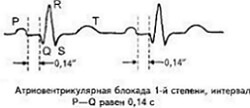
During the examination it can be revealed that systolic murmurs are more intense and the boundaries of the cardiac muscle are significantly enlarged. Electrocardiographic study allows to identify the sign of left ventricular hypertrophy and the presence of mitral teeth.
The prognosis for mitral insufficiency will completely depend on the dynamics of the disease, how much the valvular defect and the degree of regurgitation are. A pronounced mitral insufficiency can quickly lead to severe circulatory disorders.
If chronic heart failure has joined, the prognosis is clearly unfavorable. Severe mitral insufficiency may result in death. Moderate mitral insufficiency allows a person to remain functional for a long time with regular monitoring by a cardiologist.
Treatment of mitral insufficiency
Before selecting a patient for individual treatment, it is necessary to find out the cause of the disease. For complete recovery, it is necessary to eliminate the underlying disease, which contributed to the development of mitral insufficiency. In the case of moderate mitral insufficiency, no special therapy is required.
To reduce the heart rate, with arrhythmia and atrial fibrillation will be prescribed medications. Moderate mitral insufficiency first of all requires to limit emotional and physical loads. In the case of bad habits( alcohol use, tobacco dependence), it is necessary to abandon them and lead a healthy lifestyle.
If a patient has an acute form of mitral insufficiency, diuretics and peripheral vasodilators are prescribed. In order to stabilize hemodynamics, specialists perform intra-aortic balloon counterpulsation.
If the patient has a subcompensated stage of mitral insufficiency, diuretic medicines, cardiac glycosides, vasodilators, beta-blockers, ACE inhibitors are prescribed. In the case of atrial fibrillation, indirect anticoagulants are prescribed. If mitral insufficiency is of an infectious nature, then patients are prescribed antibacterial therapy: medicines containing magnesium, vitamin complexes( B1, B2, PP).As a rule, regurgitation with first degree mitral insufficiency does not progress, and complications arise in case of adherence to another disease.
The main goal of drug therapy is to increase cardiac output and reduce the incidence of pulmonary hypertension. Cardiac glycosides( Strophantine, Celanide, Digoxin) are aimed at strengthening the systole and reducing the heart rate in the case of atrial fibrillation and prolonged course of mitral insufficiency and left ventricular dysfunction. If the force of the heart rate did not change with mitral insufficiency, the digitalis preparations are contraindicated.
Diuretic drugs( spironolactone, furosemide, hydrochlorothiazide) are aimed at reducing volume overload, thereby reducing congestion and pulmonary hypertension.
Vasodilators peripheral( Diltiazem, Nifedipine, sodium nitroprusside) are aimed at reducing the resistance to ejection into the aorta, while the function of the mitral valve improves and cardiac output increases, the left ventricle decreases in size and regurgitation.
Conservative treatment of mitral insufficiency is aimed at preventing thromboembolic complications and controlling heart rate. And with the expressed forms and complaints of the patient, cardiosurgical interventions are performed. If calcification of the valves is absent, and the valve apparatus has retained mobility, then valve-preserving interventions are performed-mitral valve plastic, annuloplasty. Despite the fact that the risk of developing thrombosis and infective endocarditis is low, valve-preserving interventions may be accompanied by relapses of mitral insufficiency.
Surgical intervention aimed at restoring the valve should be performed in a short time, before the development of irreversible changes in the left ventricle. Operative treatment is indicated for patients with minor changes in the heart valve. Cardiosurgeons perform replacement of the valves, narrowing of the ring, plastic of the valves and rings.
Indication for surgical intervention are: severe form of the defect, which flows through a large and small circle with circulatory failure;Acute development of mitral insufficiency due to dysfunction of papillary muscles or chord separation, since in this case the lethal outcome can be for several days or hours.
Contraindication for surgical intervention is: irreversible change in the small circulation of the vascular bed, the absence of a threat of rapid progression of the disease in children under 10 years old, as well as a moderate or weak regurgitation of rheumatic origin well tolerated by patients.
Types of surgical interventions:
♦ Plastic surgery allows to normalize blood flow through the left atrioventricular orifice, while retaining its own mitral valve. Indications for such intervention are mitral insufficiency of 2 and 3 degrees, and also, if there are no pronounced changes in the valves. Plastic surgical interventions are divided into the following types:
- annular annuloplasty( valve plastic).At the base of the mitral valve flap, a support ring is sewn, consisting of a metal base that is covered with a synthetic cloth;
- shorten chords( tendon muscles attached to the heart muscle, provide movement of the valve);
- at the side of the mitral valve, remove the posterior elongated part.
♦ prosthetic mitral valve in the case of a coarse change in sub-valvular structures and valves, as well as ineffectiveness of an already performed plastic valve operation. Prostheses are of two types:
- biological, which is made from a large vessel of animals( aorta).Such prostheses are indicated for women planning pregnancy, and also for children.
is a mechanical valve made of a special metal medical alloy. Are indicated for patients with different types of mitral insufficiency.
In case of minor valve changes, the following surgical procedures are possible:
- replace individual valves;
- perform plastic surgery of the valves;
- narrow the valve rings;
- Carry out the plastic of the valve ring.
Surgical treatment does not exclude the development of the following complications: thromboembolism, infective endocarditis, atrioventricular blockade, prosthetic thrombosis, calcification of bioprostheses, paravalvular fistulas.