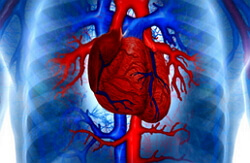
Sinus tachycardia
 Sinus tachycardia is a certain condition characterized by an accelerated rhythm of heartbeats over ninety, rarely up to 130 beats per minute. In essence, this is a cellular response of the physiological CA to endogenous or exogenous influences, which include physical exercise, mental overexertion, anger, pain, anxiety, joy, fever, infection, anemia, and others.
Sinus tachycardia develops as a result of an automatic increase in the sinus node( SU), when there is an increase in the activity of the sympathoadrenal system and the nervous tone of a wandering character decreases when the cells of nicotine, alcohol, and all these factors are combined.
Generally, sinus tachycardia is more common in people with a healthy heart, but with vegeto-vascular dystonia. In addition, it refers to the manifestation of acute as well as chronic form of heart failure, as this is the only important physiological mechanism that participates in the processes of increasing the minute volume of the heart.
Sinus tachycardia( Bainbridge reflex) develops as a result of increased pressure in the atrium of the right side of the heart against the background of heart failure. In the presence of any cardiac pathology, this increase in heart rate, which appears as a mechanism of activation of the nervous system, can only aggravate the existing insufficiency, both cardiac and coronary.
For sinus tachycardia is characterized by the preservation of SU sensitivity to the effects of a neuro-vegetative nature. Sinus reactions may occur with a change in body position, deep inspiration, with the administration of Atropine sulfate, Valsalva maneuver, etc.
Sinus tachycardia causes
This condition, in the form of increased heart rate, occurs in all age groups and mostly in a healthy half of them, as well as among those who have cardiac and other pathologies.
The formation of sinus tachycardia is directly influenced by cardiac( intracardial) and extracardiac( extracardiac) causative factors.
In patients who suffer from CSF disease, the onset of sinus tachycardia is one of the earliest symptoms of heart failure or LV dysfunction. Intracardial reasons include OCH and CHF, myocardial infarction, myocarditis of various etiologies, severe angina pectoris, heart defects, cardiosclerosis, bacterial endocarditis, cardiomyopathy and pericarditis.
But the reasons for the development of sinus tachycardia of extracardiac nature are different kinds of stress, such as emotional and physical, as well as hereditary predisposition. In addition, most arrhythmias of a neurogenic nature are formed as a result of a primarily developing disorder in the brain and the autonomic nervous system( neurocirculatory dystonia, neuroses and affective psychoses).Basically, the neurogenic forms of this pathological condition affect the younger generation, who have a labile nervous system.
Characteristic etiological factors of the heart rate increase are violations of the endocrine system in the form of increased adrenaline production against the background of pheochromocytoma, thyrotoxicosis;Anemia, syncope, a sharp drop in pressure, shock, bouts of pain and hypoxia.
In some cases, this increase in heart rate may be caused by a febrile condition against infections and inflammations such as sepsis, tonsillitis, tuberculosis and pneumonia. Thus, with a temperature increase of one degree, the heart rate may increase to ten or fifteen beats per minute in a child and up to eight or nine in an adult.
There is also a toxic and medicinal sinus tachycardia, in which the causes of its occurrence are considered drugs and chemicals as a result of the impact on the sinus node. Among them are: Adrenaline, Norepinephrine, diuretics, Atropine, hypotensive drugs, Euphyllinum, thyroid-stimulating hormones, corticosteroids;Coffee, tea, alcohol, nitrates, nicotine. However, some kind of substance does not have a direct effect on SU, therefore reflex tachycardia develops as a result of an increase in the tone of the sympathetic nervous system.
Sometimes, the heart rate is adequate and inadequate. The reasons for their occurrence are poorly understood, since they are very rare. It is assumed that they develop as a result of primary lesion of CS.
Sinus Tachycardia Symptoms
The symptomatology of sinus tachycardia differs from other tachycardias by a rather mild course that can be characterized by a picture without complaints from the patient. In rare cases, the patient experiences a certain discomfort with the appearance of a heartbeat and increased fatigue.
To diagnose sinus tachycardia, first, it is necessary to calculate the pulse, which should be more than 100 beats per minute, and secondly, to conduct an ECG study. In a mild or moderate form, characterized by functional pathology, treatment of sinus tachycardia, as a rule, is not prescribed.
However, there are still minor indications of an increase in heart rate, to which attention should be paid and an appropriate examination to exclude or confirm the existing pathology, which triggered accelerated cardiac contraction.
The characteristic clinical symptoms of sinus tachycardia is an increase in the heart rate of more than a hundred beats per minute, even in an absolutely calm state, although the heart rate at night can drop to a standard of eighty strokes.
The second symptom, which causes anxiety and discomfort, is a strong heartbeat in the chest, which the patient himself feels. In some cases, the patient, with this pathological condition, can become dizzy, and then comes syncope( the patient loses consciousness).
In addition, the accelerated heart rate is characterized by the appearance of pains in the chest of a periodic nature, which sometimes are quite sharp and prevent a person from breathing freely, so the patient feels a tightness behind the sternum. In the future there is shortness of breath, which causes a state of anxiety. The patient feels tired, can not tolerate physical activity and is very worried about his life.
As a rule, attacks of strong heart beat can, as suddenly start, and abruptly stop. Also, with sinus tachycardia, a person may experience nausea due to lack of fresh air. If this condition is caused by physiological factors, then it is necessary to eliminate them and the heart rate itself will return to normal. But with heart or other pathologies that provoked the emergence of such a condition, medical assistance is needed to prevent the aggravation of the underlying disease.
Basically, at the beginning of an attack of sinus tachycardia, as a consequence of any etiological factors, you need to calm down, and then take any sedative drug and choose for yourself a comfortable position until the main symptoms stop( tachycardia).
Sinus tachycardia in children
This condition is considered today a fairly common and characteristic manifestation of the accelerated rhythm of the sinus in children and is manifested by an increase in the number of heartbeats, but there are no special deviations from its normal functioning. In children, the signs of increased heart rate can develop if there is an overstrain of any kind, both emotional and physical. That is why an automatic increase in the sinoatrial node( SU) occurs. In newborns, such a diagnosis is made in the case of exceeding the heart rate more than one hundred and sixty beats per minute. Sinus tachycardia occurs in almost 40% of children.
The main reasons for the development of this condition in newly-born children are anemia, acidosis, hypoglycemia, and physiological causes in the form of medical examination, anxiety, diapering, pain attacks, overheating, as well as pathological processes in CSF associated with cardiacInsufficiency. Such an easy form of this condition basically itself passes by the first year of a child's life, without the use of any medical interventions.
Suspicions for changes in sinus rhythm in children can be a heart rate of 100 beats per minute to one hundred and sixty. However, such fluctuations are not taken into account if they occurred at the time of a feverish condition of the child, after intensive physical exercises, long and persistent walks, when in a room where it is difficult to breathe as a result of being stuffy in it, and afterTransferred stress. In addition, if the rhythm of the heartbeats within five minutes has come to normal, and it is not accompanied by a fainting condition, shortness of breath, pain in the heart, the child is considered quite healthy.
Sinus tachycardia in adolescents very often develops as a consequence of endocrine changes, anemia, stress, physical and emotional overwork. As a rule, such causal factors of the onset of the disease in children and adolescents must be urgently eliminated in order to avoid pathological tachycardia. It should also be understood that this condition in children can be very dangerous and further cause a vegetative-vascular dystonia of the hypertonic type, and lead to a cardiac pathology such as heart failure.
Thus, it is very important to observe such children carefully if symptoms of this pathology are observed, so as not to aggravate it. Although it is also necessary to take into account that this condition can be a child's physiological phenomenon caused by an immature cardiovascular system.
But, nevertheless, when children have an attack of sinus tachycardia, it is necessary to create access to fresh air, freeing the neck of the child from the embarrassing clothing, putting something cooling on the forehead and providing the baby with everything necessary to calm it. Then call for medical help and conduct a thorough examination to find out the causes of development of rapid heartbeat.
Sinus tachycardia in pregnant women
It is now quite difficult to meet a pregnant woman who will fully meet all the physician's requirements for her state of health, since the period of pregnancy is often accompanied by various symptoms of an unpleasant nature. Firstly, they do not directly threaten the health of a pregnant woman, and secondly - they are not always perceived well, and at some moments even very poorly tolerated.
It is to this condition that sinus tachycardia occurs during pregnancy, which is characterized by an accelerated rhythm of heartbeats and can occur in such pregnant women who do not even have pathological heart diseases.
The reasons for its occurrence may be various factors that provoke heart rate without changes in spreading excitation in the conducting system of a particular organ. This is how the physiological course of sinus tachycardia is characterized during the woman's pregnancy. To such reasons it is possible to carry: the general reorganization of all system of a female organism for the period of pregnancy under the influence of hormones. And also the increased load on the CN system;Intensive work of somatic organs, which are aimed at ensuring the growing needs of the woman and her future child, in this case, the fetus;Changes associated with the location of certain organs and their squeezing as a result of the increase in the uterus.
A gynecologist can diagnose a sinus tachycardia condition during pregnancy, as a physiological one, only after a complete and comprehensive examination that will not give positive results for pathological diseases, as well as acute or chronic blood loss, indomitable vomiting, disturbances of water and electrolyte metabolism contributing to an increaseLoad on the SS.In addition, even a small subfebrile condition can trigger the occurrence of frequent cardiac contraction in pregnant women, which in this case performs the function of compensatory reaction, and it is inherent in any organism.
Thus, sinus tachycardia can be considered exactly that state in pregnant women, when the heart rate goes over a limit of one hundred beats per minute. That is why when diagnosing the acceleration of the sinus rhythm in a pregnant woman, an important point is to conduct a comprehensive examination, identify the cause of its occurrence and consult a pregnant woman in such specialists as a cardiologist, a vascular surgeon, a pulmonologist, an endocrinologist( if necessary).This is especially important for those pregnant women, in whose anamnesis there are diseases of the cardiovascular system.
It is very important to pay attention not only to the symptomatology of this condition, which accompanies it, but also for the period of the pregnant woman. The smaller the gestation of the fetus, the more attention should be paid to the increasing frequency of the heart rhythm. But the late stages of pregnancy have all the prerequisites for the appearance of physiological sinus tachycardia as a result of the heart contracting the diaphragm with increasing fetal size. At this point, there is a slight irritation of the atria, in which the pacemaker is located. Therefore, an insignificant heart rate during pregnancy is a normal compensatory phenomenon, as a result of which the body of a pregnant woman and her fetus gets an increased need for nutrients and oxygen. Thus, the increase in cardiac contractions in the form of a heart rhythm is more than 110-115 ud. Per minute, found in the 3rd trimester, will refer to the normal state and in this case, there is no need to prescribe a treatment.
Also, sinus tachycardia can occur when exposed to additional physical exertion, as a mechanism of adaptive reaction of the body. At the termination of loads, the heart rate should at the healthy pregnant woman to come to norm or rate, and for this purpose it is enough to have a rest a little. In the opposite case, when the condition of a pregnant woman during an attack of sinus tachycardia does not normalize, immediate consultation of a specialist and hospitalization in the cardiology department with further examination are required.
When diagnosing a pregnant woman with symptoms of sinus tachycardia, compulsory search components are used. First of all, this is a checkup of a gynecologist for the fact of the establishment of pregnancy and its term, as well as the gynecological pathology that may accompany it. Then, a laboratory test is done to perform clinical and biochemical analyzes that determine hemoglobin and the number of red blood cells, since anemia can increase heart rhythm, even if there is no cardiovascular pathology.
In addition, it is necessary to prescribe an analysis for thyroid hormones. Also an important diagnostic aspect is the electrocardiogram, which examines the heart rhythm and determines the type of tachycardia, in this case sinus. Further consultations on indications or for confirmation of another pathology in a cardiologist, endocrinologist, etc. are prescribed. In severe cases, echocardiographic examination of the heart is used, and dopplerography is used in case of suspected cardiac defects.
Status С.С.С.С.The pregnant woman should be evaluated only by the attending physician, who after a certain examination will prescribe a special treatment to eliminate the cause of sinus tachycardia.
If the reason for the rapid heart rate is changes in the normal activity of the nervous system, the doctor prescribes sedative phytopreparations, multivitamins containing the necessary amounts of iodine, phosphorus, sodium, iron, etc. This kind of therapeutic treatment positively affects the processes of electrolyte metabolismIn the body of a pregnant woman and safely eliminates the rapid heartbeat. And here, if during the examination the doctor discovers a pathology from the heart, thyroid or other organs that caused the sinus tachycardia in the pregnant woman, then the appropriate treatment is possible, which is possible during this period of the woman's pregnancy. In addition, the intake of any medication alone, without the appointment of a specialist, is simply unacceptable, as this can lead to aggravation of the pathological process.
Sinus tachycardia on ECG
Sinus tachycardia is the result of a neurohumoral effect on pacemaker cells and a morphological change in the sinus node. Without deviations, the sinus tooth P on the electrocardiogram is recorded in twelve leads, where it appears positive in I, II, aVF and negative - in lead aVR.As a rule, the axis of the tooth P is located in the frontal plane between an angle of zero degrees and plus ninety degrees, and in the horizontal plane the axis is directed to the left and forward. That is why this tooth on the ECG is negative in V 1 and V 2, and in V 3-V 6 - positive. If the amplitude of the P wave increases, it will become pointed. Sinus tachycardia is non-paroxysmal, which characterizes it from other re-entry.
This arrhythmia is formed as a result of automatic functional disorders, which includes nootropic and heterotropic disorders of the heart rhythm. Basically, such a concept as "sinus tachycardia" is an increased sinus rhythm above the age indices. Clinically, this condition is manifested by the increase in the nomotopic rhythm, which exceeds 90 beats per minute. The border of the upper heart rate with sinus tachycardia is different, but basically this number of cuts does not rise above 160 beats, but in rare cases, as an exception to the rules, sometimes reaches 190-200 beats per minute.
The diagnosis of sinus tachycardia is based on the determination on the electrocardiogram of the P teeth with the normal shape and the correct fast rhythm, that is, the interval between P and P is the same on the entire ECG.In addition, without the attendance of other pathological disturbances of the heart rhythm, as well as conductivity, the intervals between P and Q are also in acceptable norms, and the intervals between R and R are equal. From this it can be concluded that the electrocardiogram with sinus tachycardia practically has no changes( except for the accelerated rhythm), when compared with a normal ECG.
In some cases, with severe sinus tachycardia, moderate upward depression of the ST segment can be identified, as well as the processes of lamination of the P wave onto the T wave in previous complexes. It is this fact that complicates the diagnosis of the disease.
Sinus tachycardia on the ECG is characterized by a gradual increase in frequency and then a decrease in the rhythm. This is a distinctive feature of such tachycardias as paroxysmal and sinus-atrial, which can not be distinguished from sinus tachycardia by other ECG signs without an electrophysiological study.
Sinus tachycardia treatment
The tactics of treating sinus tachycardia largely depend on the cause, which triggered the appearance of the rapid rhythm of the SS.If the increase in heart rate is associated with physical stress or stressful situations, the elimination of the stimulus will turn the problem into a positive channel and the heart rate will come back to normal, and in some cases, several relaxing exercises or a massage will be enough to achieve a positive result.
In severe forms of sinus tachycardia prescribe sedatives, or recommend traditional medicine, that is, treatment with herbs. In addition, the patient must give up nicotine, alcohol, coffee and strong tea, as well as normalize the diet and diet. It is desirable to protect the patient from emotional, mental, and also physical exertion. This applies mainly to the physiological form of sinus tachycardia.
As a rule, the main treatment for a pathological condition is performed by a cardiologist when consulting other specialists. This will depend on the presence of concomitant diseases. First of all, therapy begins with the treatment of the underlying pathology, which is diagnosed after a comprehensive examination.
With sinus tachycardia of extracardiac nature of neurogenic genesis, the patient is assigned a consultation of a neuropathologist who, for the treatment of this species, prescribes psychological therapy and sedatives in the form of tranquilizers, neuroleptics( Seduxen, Relanium, Tranquilan) and Luminal.
For treatment of reflex sinus tachycardia against hypovolemia, as well as tachycardia of compensatory type in hyperthyroidism or anemia, first of all, eliminate the main cause of the pathological condition. Otherwise, if you start therapy with a reduction in the heart rate, you can cause a sharp drop in blood pressure, and in the future lead to a worsening of the hemodynamics of the patient.
Treatment of sinus tachycardia caused by thyrotoxicosis begins with the appointment of thyreostatic drugs by an endocrinologist in combination with β-blockers. The groups of β-blockers that are preferred include Prindolol, Praxtolol, Oxyprenolol. In the case of contraindications of β-aderonoblockers, drugs alternative to the previous ones are used - Diltiazem, Verapamil. They are antagonists of the Ca non-hydropyridine series.
In heart failure, which provoked a sinus tachycardia, in combination with β-adrenoblockers, Digoxin from cardiac glycosides is used.
The normalization of the heart rate should be selected strictly individually. This will depend on the condition of the patient himself and his underlying pathological disease. The target heart rate for angina pectoris should be about sixty beats per minute, and for a neurocirculatory dystonia, from sixty to ninety, depending on individual tolerability.
For the treatment of an inadequate form of sinus tachycardia, in the case when adrenoceptors are ineffective, as well as at a significant deterioration of the patient's condition, a transvenous RFA of the heart is appointed. In this way, restore the normal rhythm of the heart, curing the affected area. But with ineffectiveness of all previous methods and tactics of therapeutic treatment, a surgical operation is performed in the form of an implantation of an electrocardiostimulator, which is considered an artificial driver of the heart rhythm.
The most frequent pathological increase in heart rate occurs in patients with LV dysfunction or heart failure. In such cases, it is difficult to predict the outcome, since it is considered very serious. And this is due, as a rule, to the fact that sinus tachycardia is a reflective reaction of the cardiovascular system to a reduced ejection and a change in hemodynamics inside the heart. But with the physiological form of the pathological condition, even with the available manifestations of the subjective properties, the prognosis is mostly favorable.
An important aspect of the accelerated heart rate is preventive measures due to early diagnosis and timely treatment of cardiac pathologies, elimination of all non-cardiac factors that contribute to the development of changes in heart rate and function of CS.
In addition, in order to avoid serious violations and consequences, it is advisable to comply with all the recommendations of specialists in a relative way of life and health.